






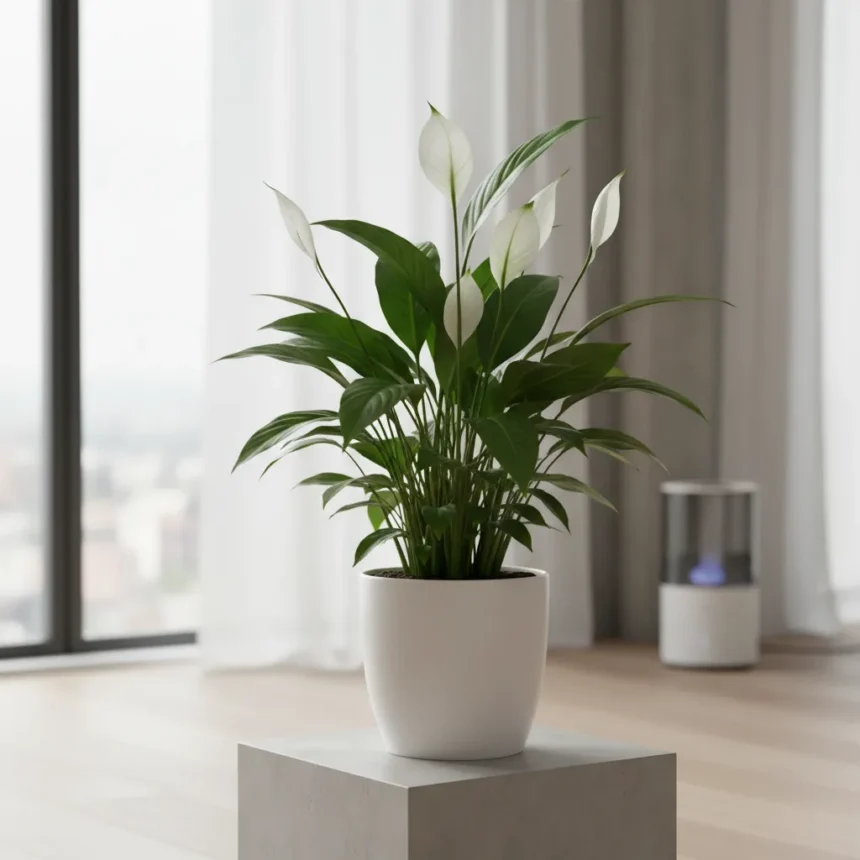
The best air-purifying plant for most homes is the Peace Lily (Spathiphyllum wallisii), according to houseplant experts consulted on natural air purification. This tropical plant removes benzene, formaldehyde, trichloroethylene, ammonia, and xylene—common VOCs found in cleaning products, furniture, and synthetic materials. Unlike mechanical air purifiers, the Peace Lily works passively, filtering toxins through its broad, glossy leaves via stomata while also increasing indoor humidity, a bonus in dry climates.
Key Takeaways
- Peace Lily removes five major indoor toxins including formaldehyde and benzene from household sources.
- NASA’s Clean Air Study identified Peace Lily as highly effective in sealed laboratory conditions for VOC breakdown.
- Real-world effectiveness is milder than lab results; 10-100 plants per 100 sq ft needed for measurable purification.
- Peace Lily requires low to indirect light, consistently moist soil, and thrives in bathrooms or low-light spaces.
- Peace Lily is toxic to cats and dogs if ingested; pet owners should choose alternatives like Spider Plant or Areca Palm.
Why Experts Recommend the Peace Lily as the Best Air-Purifying Plant
The Peace Lily earned its reputation as the best air-purifying plant largely due to its prominence in NASA’s Clean Air Study, a 1989 research project that tested plants in sealed laboratory chambers. The study found the Peace Lily’s ability to break down volatile organic compounds remarkable, making it a benchmark for comparing other houseplants. Its broad leaves absorb toxins efficiently, and it signals when watered by drooping slightly—a feature that helps new plant owners avoid underwatering.
What sets the Peace Lily apart from other contenders is its dual function: it purifies air while raising humidity levels, creating a healthier microclimate in bedrooms, living rooms, and particularly bathrooms where moisture naturally accumulates. For homeowners seeking a single plant that addresses multiple air quality concerns without requiring specialized care, the Peace Lily remains the expert consensus choice.
How the Best Air-Purifying Plant Performs in Real Homes
A critical caveat: the best air-purifying plant’s effectiveness in actual homes differs significantly from laboratory results. NASA’s tests occurred in sealed chambers, not in lived-in spaces with windows, doors, and air circulation. To achieve measurable VOC reduction in a typical home, you need multiple plants—roughly 10 to 100 Peace Lilies per 100 square feet, depending on room size and air exchange rates. A single plant provides modest filtration, not dramatic purification.


Despite this limitation, the Peace Lily remains practical for homes seeking natural air improvement without mechanical filters. It works best as part of a layered strategy: combining plants with adequate ventilation, reducing source pollutants (choosing low-VOC furniture and cleaners), and opening windows regularly.
Care Requirements for the Best Air-Purifying Plant
The Peace Lily thrives in low to indirect light, making it ideal for offices, bathrooms, and bedrooms where bright sunlight is limited. It prefers consistently moist (not soggy) soil—overwatering causes root rot, the most common reason Peace Lilies fail. Water when the top inch of soil feels dry, and ensure the pot has drainage holes to prevent standing water.


Medium maintenance is required: wipe leaves monthly with a soft, damp cloth to remove dust and maximize toxin absorption. Repot every 12-18 months as the plant grows. Keep humidity moderate to high; misting or placing the pot on a pebble tray with water helps replicate its tropical origins. Most Peace Lilies adapt well to indoor temperatures between 65-80°F.
Alternatives to the Best Air-Purifying Plant for Different Needs
If the Peace Lily doesn’t fit your home, experts recommend several alternatives. The Snake Plant (Dracaena trifasciata) is ideal for bedrooms because it releases oxygen at night via CAM photosynthesis, while removing formaldehyde and benzene. It tolerates neglect and low light, making it nearly indestructible for forgetful plant owners.
The Spider Plant (Chlorophytum comosum) is the gold standard for easy care, removing formaldehyde, xylene, and toluene across any room. Pothos (Epipremnum aureum) is similarly low-effort and tolerates dim conditions while filtering multiple toxins. For large rooms, the Areca Palm (Chrysalidocarpus lutescens) removes xylene, toluene, and formaldehyde while remaining pet-safe—a crucial advantage if you have cats or dogs. The Boston Fern ranks highly for formaldehyde and xylene removal but demands consistent humidity, making it challenging in dry climates.
Pet Safety Considerations
A major drawback of the best air-purifying plant: the Peace Lily is toxic to cats and dogs if ingested. Toxicity causes oral irritation, vomiting, and difficulty swallowing in pets. For households with curious animals, the Areca Palm and Spider Plant are safer alternatives that still deliver solid air purification without toxicity risks.



Is the Peace Lily truly the best air-purifying plant for every home?
The Peace Lily is the best choice for homes without pets, with moderate to low light, and where humidity is welcome. However, pet owners, bright-light spaces, and drought-prone climates benefit from alternatives like the Spider Plant or Snake Plant, which sacrifice minimal purification effectiveness for better fit.
How many plants do I need for noticeable air purification?
A single Peace Lily provides modest filtration. Real-world studies suggest 10-100 plants per 100 square feet for measurable VOC reduction, depending on room size and ventilation. Combining multiple plant types—Peace Lily, Snake Plant, Spider Plant—distributes purification across your home more effectively than relying on one species.
Can I use the best air-purifying plant instead of an air purifier?
Houseplants complement but do not replace mechanical air purifiers. The Peace Lily and other plants work slowly and require multiple specimens for significant impact. For homes with severe air quality issues, allergies, or asthma, a HEPA filter remains more effective. Plants excel as a natural, aesthetic supplement to mechanical filtration and improved ventilation.
The Peace Lily remains the expert-backed choice for homeowners seeking a single best air-purifying plant that balances effectiveness, aesthetics, and ease of care. Its ability to remove multiple toxins while thriving in low light makes it a practical addition to most interiors—as long as you manage expectations about real-world purification and keep it away from pets. For pet owners or those in bright spaces, the Spider Plant or Snake Plant deliver comparable benefits with fewer constraints. Start with one plant, observe its performance in your space, and expand your collection if you notice improved air quality and plant vitality.
Where to Buy
17% OFFFelco F2 Pruning Shears$71$86shop now | Amazing StuffGarden Gloves$9.99shop now | 11% OFFGrampa's Weeder$39$44shop now
This article was written with AI assistance and editorially reviewed.
Source: Tom's Guide