


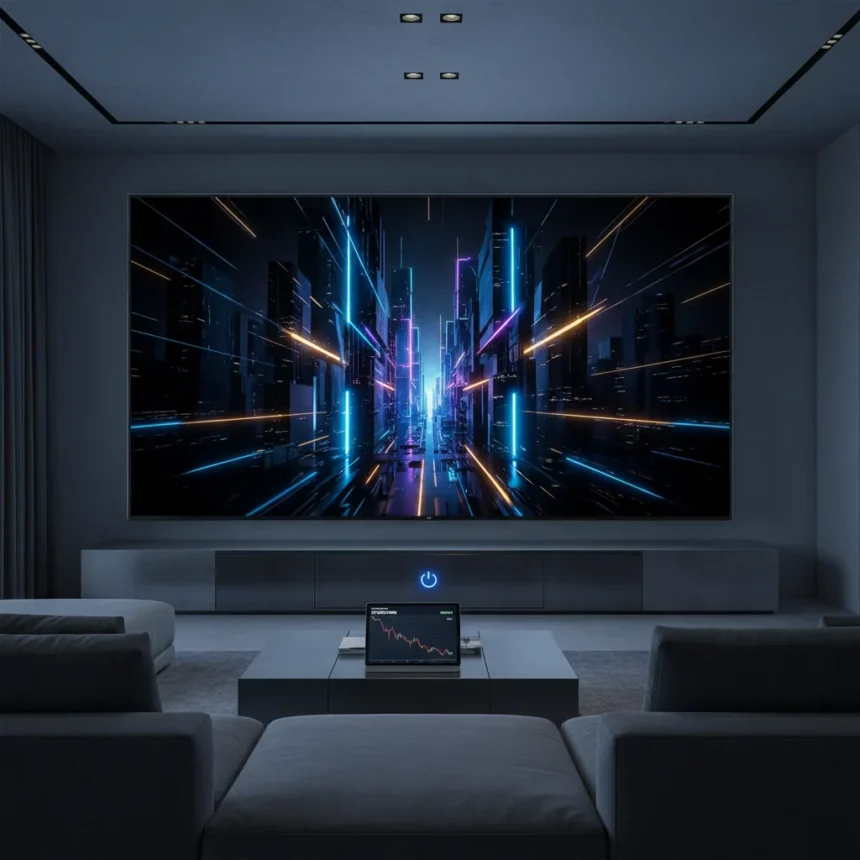
TCL’s new micro-LED TV pricing strategy just upended the ultra-premium display market. The company unveiled two 163-inch 4K micro-LED models in China—the Max163M and Max163M Pro—that slash the cost of micro-LED technology from roughly $110,000 to between $36,000 and $50,000. For context, Samsung’s 110-inch micro-LED TV launched at $155,000, and LG’s 136-inch model costs $300,000, making TCL’s aggressive pricing a genuine market shift.
Key Takeaways
- TCL Max163M costs CNY 249,999 (~$35,900 USD); Max163M Pro costs CNY 349,999 (~$50,300 USD) in China
- Both models deliver 10,000 nits XDR brightness with self-emissive pixels for true blacks, no LCD backlight required
- Max163M Pro supports 4K@120Hz refresh rate; standard model refresh rate unannounced
- Previous 163-inch X11H Max cost CNY 800,000 (~$110,000), making new models roughly half the price
- No confirmed US or international availability; TCL’s US lineup features only smaller Mini-LED TVs
How micro-LED TV pricing compares to previous generations
TCL’s pricing reduction is dramatic. The prior X11H Max 163-inch micro-LED TV cost approximately $110,000 in China, placing it in the same stratosphere as Samsung and LG’s flagship micro-LED displays. The new Max163M at $35,900 undercuts that by 68 percent, while the Pro model at $50,300 still saves buyers $60,000 versus the previous generation. This is not a minor discount—it represents a fundamental shift in what ultra-premium display technology costs.
Micro-LED is self-emissive, meaning each pixel can be turned on and off independently without needing an LCD panel underneath. That architecture delivers 10,000 nits of peak brightness and perfect blacks because inactive pixels emit zero light. Mini-LED, by contrast, uses an LCD panel with thousands of tiny LED backlights, a less costly but less precise approach that TCL still sells in the US in smaller sizes (55 to 85 inches).
What the Max163M and Max163M Pro actually offer
The Max163M features 10,000 nits XDR brightness, 100% BT.2020 color gamut coverage, an ultra-low reflection rate, a slim body, and TCL’s Spirit Control System 3.0 software for streaming apps. Connectivity includes four HDMI 2.1 ports, one USB 3.0, and USB 2.0, standard for a TV of this caliber. The Max163M Pro steps up with over 10,000 nits brightness and 4K@120Hz refresh rate, though TCL has not announced the standard Max163M’s refresh rate. Both models target home cinema enthusiasts willing to spend tens of thousands on display perfection, though they remain inaccessible to most consumers outside China.

Why micro-LED TV pricing matters for the display market
Samsung and LG have been pushing micro-LED for years, but the technology remained prohibitively expensive. TCL’s aggressive pricing does not necessarily mean micro-LED will reach mainstream consumers tomorrow—$36,000 is still a luxury purchase—but it signals that manufacturing costs are falling faster than expected. If TCL can sustain these prices while maintaining quality, it could accelerate adoption among high-end home theater buyers worldwide, assuming the company eventually exports these models beyond China.
The broader question is whether micro-LED will eventually challenge OLED’s dominance in the premium TV market. OLED delivers stunning contrast and color, but it faces burn-in risks and brightness ceilings. Micro-LED eliminates both problems, offering perfect blacks without the burn-in vulnerability and brightness levels OLED cannot match. At $50,000, micro-LED is still expensive, but it is no longer exclusively for billionaires.

The 300Hz ‘Super Quantum Dot’ TV remains a mystery
TCL also announced a new 300Hz ‘Super Quantum Dot’ TV alongside these micro-LED models, but the company has released no specifications, screen size, pricing, or availability details. Without concrete information, it is impossible to assess whether this is a genuine innovation or marketing hyperbole. Quantum Dot is a mature technology—TCL, Samsung, and others have used it for years—and 300Hz refresh rate is unusual for TVs, which typically max out at 120Hz. Until TCL shares actual specs, this announcement remains more headline than substance.
Is the micro-LED TV pricing cut enough to matter?
For buyers in China, yes. A 163-inch 4K micro-LED TV at $36,000 is still eye-watering, but it is genuinely half the price of the previous model. For everyone else, it does not matter yet because TCL has not announced international availability. US buyers interested in TCL’s premium displays are currently limited to Mini-LED models like the 115-inch QM89 QLED at $17,997.99, which uses an LCD panel with mini-LED backlighting rather than true micro-LED.
The real test will come if and when TCL brings these models to North America, Europe, or other markets. At that point, we will see whether the company can maintain its pricing advantage or whether import costs and regional markups push prices back toward $100,000. For now, TCL has proven that micro-LED does not have to cost what Samsung and LG charge—a meaningful victory in a market where breakthroughs are rare.
Will micro-LED TV pricing drop further?
Manufacturing costs for micro-LED are falling, but the technology remains capital-intensive. TCL’s $36,000 entry point suggests the company is willing to accept lower margins to gain market share. Whether competitors follow suit or maintain premium pricing remains unclear. OLED will likely remain cheaper for several more years, but micro-LED’s brightness and burn-in immunity give it a compelling advantage for specific use cases—professional displays, high-brightness environments, and home theaters where peak brightness matters.


When will these micro-LED TVs be available outside China?
TCL has not announced any plans to sell the Max163M or Max163M Pro outside China. The company’s US website lists only smaller Mini-LED TVs, suggesting either supply constraints or a strategy to test demand in the Chinese market first. International availability could come later in 2025, but buyers should not assume it.
What is the difference between micro-LED and Mini-LED?
Micro-LED uses diodes as individual sub-pixels with no LCD panel, enabling perfect blacks and independent pixel control. Mini-LED is an LCD TV with thousands of tiny LED backlights behind the panel, offering better contrast than standard LCD but inferior blacks compared to micro-LED. Micro-LED is more expensive but superior in almost every way except cost.
TCL’s micro-LED TV pricing cut is real and significant, but it is also geographically limited. For Chinese buyers, the Max163M and Max163M Pro represent a genuine opportunity to own ultra-premium display technology at half the previous cost. For everyone else, it is a sign that micro-LED prices are moving in the right direction—just not fast enough to reach your living room yet.
Edited by the All Things Geek team.
Source: TechRadar