






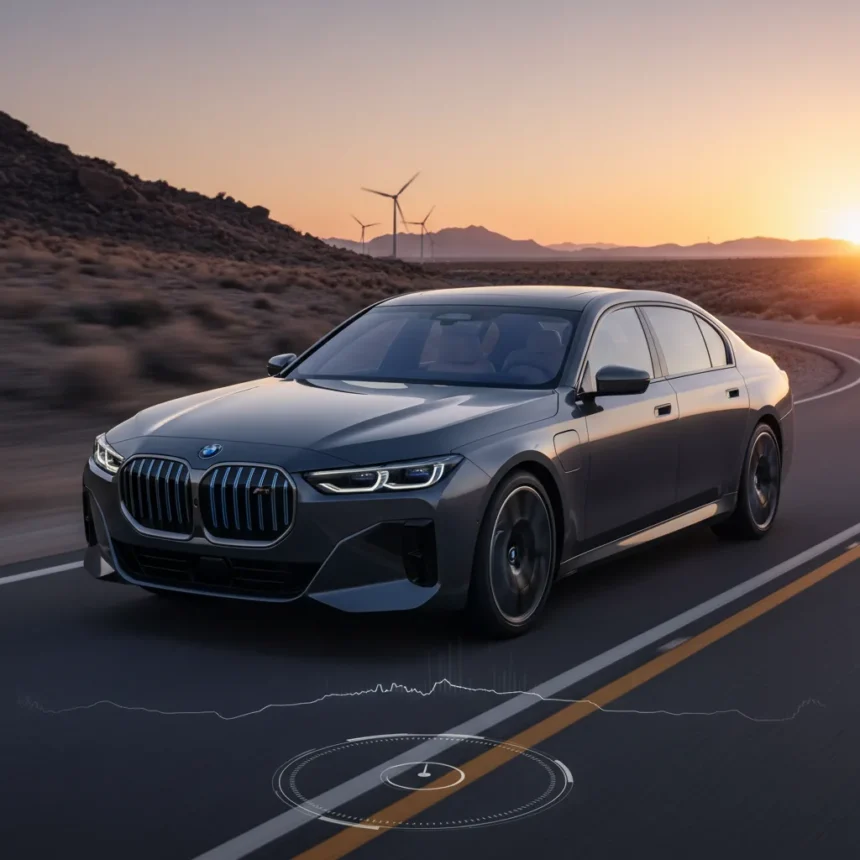
The BMW i7 M70 xDrive is a 650-horsepower all-electric luxury sedan that costs $192,000, delivers 3.5-second acceleration, and weighs more than three tons. After a week behind the wheel, the question isn’t whether BMW’s flagship EV is impressive—it’s whether impressive matters when your battery-powered sedan handles like a luxury liner in a parking lot.
Key Takeaways
- BMW i7 M70 xDrive produces 650 hp and 749 lb-ft torque with dual all-electric motors, hitting 0-60 mph in 3.5 seconds.
- EPA range is 268-285 miles per charge; DC fast charging adds 71-80 miles in 10 minutes at peak 195 kW.
- Curb weight reaches 6,191 lbs, making it heavier than most gas-powered luxury sedans and affecting handling dynamics.
- Base MSRP starts at $168,500, with the tested model priced at $192,075 before taxes and dealer fees.
- BMW i7 xDrive60 (536 hp) offers better range (296-311 mi) and lower cost ($125,375+) for most buyers.
What $192,000 Actually Gets You in the BMW i7 M70 xDrive
The BMW i7 M70 xDrive is positioned as BMW’s most powerful electric sedan, combining dual all-electric motors with a 101.7-105.70 kWh liquid-cooled lithium-ion battery. The result: 650 horsepower and 749 lb-ft of torque delivered through all-wheel drive to a vehicle that tips the scales at 6,191 lbs. That curb weight matters. A BMW 760i xDrive gas sedan—the traditional performance alternative—weighs roughly 1,000 lbs less and starts at $124,700, yet delivers only 536 hp. BMW is asking you to pay nearly $70,000 more for electric power, and the tradeoff is a heavier car.
The 3.5-second 0-60 time is quick, though it represents BMW’s preliminary testing and actual results vary by conditions and configuration. The M70 tops out at 130-150 mph under governor limitation. City/highway efficiency rates at 72/78 MPGe combined, which sounds respectable until you consider the vehicle’s three-ton mass means every mile drains the battery faster than lighter competitors.
Range and Charging: The Real Limitation
EPA range for the BMW i7 M70 xDrive sits at 268-285 miles per full charge. That is roughly 50-100 miles less than the less-powerful i7 xDrive60 model, which delivers 296-311 miles of range despite producing only 536 horsepower. The physics is straightforward: more power, heavier powertrain, shorter distance. For a $192,000 sedan, 268 miles feels tight for cross-country trips, especially in winter when cold weather degrades battery efficiency.



DC fast charging helps. At peak 195 kW, the M70 can add 71-80 miles in just 10 minutes, and reach 10-80% battery capacity in 34 minutes. Level 2 charging on a 240V home outlet takes 10-12 hours for a full charge. That is convenient for daily commuting but impractical if you forget to plug in overnight. The gap between the M70’s charging speed and its real-world range means highway driving requires strategic planning—something owners of gas luxury sedans abandoned decades ago.
The Weight Problem: Why Physics Matters More Than Horsepower
At 6,191 lbs, the BMW i7 M70 xDrive is genuinely heavy. For context, a 2025 Porsche 911 Turbo weighs roughly 3,500 lbs and produces 645 hp. The M70 carries nearly twice the mass while chasing similar acceleration numbers. That weight shows up immediately in cornering. The turning circle stretches to 40.3 feet, longer than many full-size trucks. Ground clearance sits at 5.4 inches, and the interior cargo space maxes out at 17.7 cubic feet—neither class-leading for a sedan of this price.



The 5-seat cabin is luxurious, as expected at this price point, but the weight also means the suspension has to work harder to absorb bumps and control body roll. This is not a sports car masquerading as a sedan. It is a luxury sedan with electric performance bolted on top. Buyers expecting the BMW i7 M70 xDrive to drive like a smaller, lighter EV will be disappointed. The car prioritizes comfort and presence over agility.
Should You Buy the BMW i7 M70 xDrive or Step Down to the xDrive60?
The honest answer is probably the xDrive60. At $125,375 to $129,725, BMW’s mid-tier i7 delivers 536 horsepower, faster real-world range (296-311 miles), and 4.5-second 0-60 acceleration. The performance difference is barely noticeable in daily driving, and the xDrive60 is lighter, more efficient, and $60,000-$65,000 cheaper. The M70 makes sense only if you specifically want the extra 114 horsepower and are willing to sacrifice range and efficiency to get it.
For buyers committed to the M70, the $192,000 price tag (before taxes and dealer markup) buys you the most powerful production EV sedan BMW currently makes, plus the prestige that comes with M performance branding. You get a 4-year/50,000-mile basic warranty and a German-built vehicle with all the luxury appointments expected at this level. But you also get a three-ton car that requires careful trip planning, charges slower than lighter competitors, and handles like a luxury yacht rather than a sports sedan.
How does the BMW i7 M70 xDrive compare to the gas 760i?
The BMW 760i xDrive gas V8 produces 536 hp and 553 lb-ft torque, weighs roughly 1,000 lbs less, and starts at $124,700. It accelerates in approximately 4 seconds and offers unlimited range on a full tank. The M70 beats it on acceleration and zero-emission driving, but costs $67,000 more and requires charging infrastructure. For long-distance driving, the 760i remains the practical choice.



What is the real-world range of the BMW i7 M70 xDrive?
EPA rating is 268-285 miles per charge, though actual range depends on driving conditions, weather, and driving style. Cold weather and highway speeds will reduce this figure. DC fast charging adds 71-80 miles in 10 minutes, making it useful for road trips but not a substitute for overnight charging at home.
Is the BMW i7 M70 xDrive worth $192,000?
The BMW i7 M70 xDrive delivers genuine performance and luxury, but the price-to-capability ratio favors the xDrive60 for most buyers. The M70 is a statement purchase—you are paying for M branding, maximum horsepower, and the exclusivity of owning the most powerful BMW EV sedan. If that appeals to you, the performance is real. If you want the best value in the i7 lineup, step down and pocket $60,000.
This article was written with AI assistance and editorially reviewed.
Source: Tom's Guide