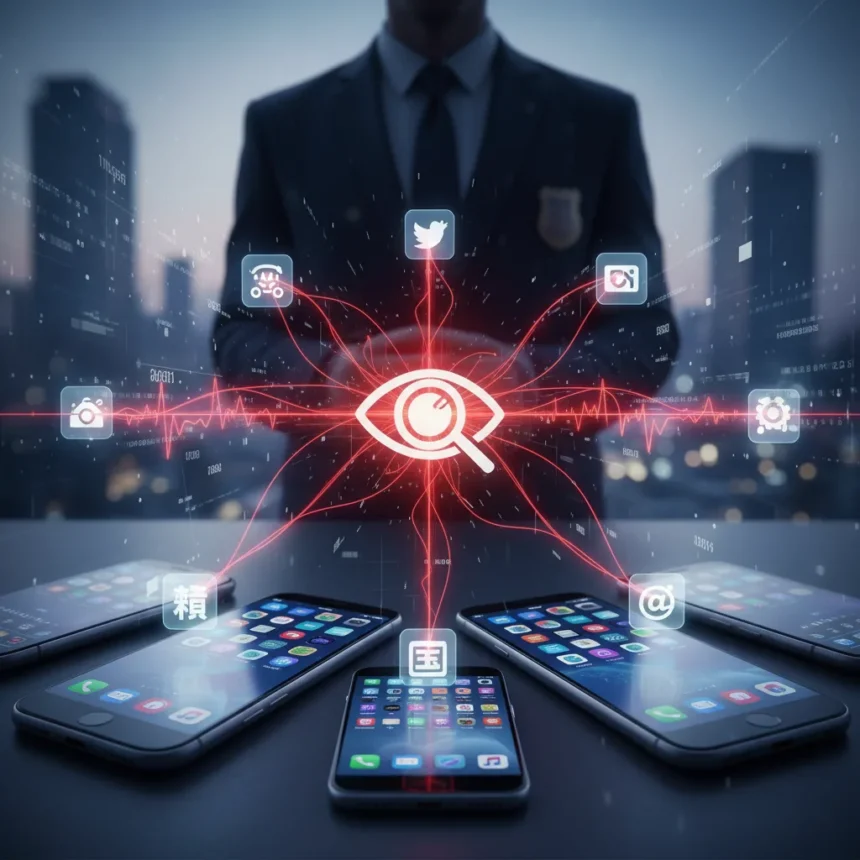
Chinese mobile apps pose serious privacy and security threats to US users, according to a new FBI public service announcement. The agency is warning Americans that many of the most downloaded and top-grossing apps in the United States are developed and maintained by foreign companies, particularly those based in China, with capabilities to access personal data far beyond what most users realize.
Key Takeaways
- Chinese apps store user data on servers in China for as long as developers decide, subject to Chinese national security laws.
- Apps collect data from non-users through contact lists, including names, phone numbers, email addresses, and physical addresses.
- Data collection persists even when apps are inactive or permissions are set to use-only mode.
- Warning signs include unusual battery drain, unexpected data usage spikes, and unauthorized account activity.
- FBI recommends downloading only from official app stores and disabling unnecessary data sharing permissions.
How Chinese Apps Collect Your Data
The scope of data collection by Chinese mobile apps extends far beyond what happens inside the app itself. Apps operating under Chinese jurisdiction can persistently collect data and private information throughout your device, not just within the application or while it is active. This means they may access your address book, location history, browsing data, and device identifiers even when you are not using the app.
The most troubling aspect is that data collection affects people who never downloaded the app at all. If a contact in your address book grants an app permission to access their contacts, that app gains your name, phone number, email address, user ID, and physical address—even if you never installed it yourself. Some apps require users to consent to data sharing simply to operate at all, leaving no option for privacy-conscious users.
Chinese apps store all collected data on servers in China for as long as developers deem necessary. This creates a permanent record of user behavior, location patterns, and personal relationships on foreign infrastructure with minimal transparency about retention policies or deletion procedures.


Why Chinese Government Access Is a Real Threat
The apps that maintain digital infrastructure in China are subject to China’s extensive national security laws, enabling the Chinese government to potentially access mobile app users’ data. This is not a theoretical risk—it is a structural reality of operating in China. Any company with servers or significant operations in China must comply with government requests for data access.
This differs fundamentally from US-based app developers, who operate under different legal frameworks and regulatory oversight. While no app is perfectly private, Chinese apps face legal obligations to hand over user data to government authorities upon request, with no requirement to notify users that their information has been accessed.



Beyond government access, Chinese apps may contain malicious code, backdoors, or additional downloaded packages designed to expand device access without user knowledge. Apps downloaded from unofficial app stores carry even higher risk of containing compromised versions with additional surveillance capabilities.
Red Flags and Protection Strategies
Users should watch for warning signs of excessive data collection on their devices. Unusual battery drain, spikes in data usage, and unauthorized account activity suggest an app is consuming resources in the background. These symptoms often indicate persistent data collection or transmission occurring without user awareness.
The FBI recommends several concrete steps to reduce exposure. Turn off unnecessary data sharing in app permissions—most apps request access to contacts, location, and camera far beyond what their core function requires. Regularly update your device software to patch security vulnerabilities that apps might exploit. Download apps only from official app stores like Google Play or the Apple App Store, which offer at least some vetting of malicious code, rather than third-party stores with minimal security screening.
Use password managers like Bitwarden or 1Password to generate and store strong, unique passwords for each app rather than reusing passwords or relying on weak ones you can remember. This limits damage if one app’s database is compromised or accessed by bad actors.



Which Apps Are at Risk?
While the FBI did not name specific companies in its alert, media reporting has identified several Chinese-developed apps among the most downloaded in the US. CapCut, a video-editing app, has achieved massive popularity despite its Chinese ownership. Shopping apps like Temu and SHEIN, social media platform Lemon8, and AI tool DeepSeek have all faced scrutiny over data collection practices. TikTok, the social media platform owned by Chinese parent company ByteDance, remains at the center of ongoing policy debates over foreign app data access, though the concern now extends to the broader ecosystem of Chinese-developed applications.
The FBI’s warning signals a shift from focusing solely on TikTok to addressing the systemic risk posed by the sheer number of popular foreign apps collecting data from millions of Americans simultaneously. Many users have no idea which apps they use daily are foreign-developed or what data those apps are harvesting.
Is the FBI warning about all foreign apps, or just Chinese ones?
The FBI’s alert specifically highlights Chinese apps and those subject to China’s national security laws. While foreign apps from other countries may also collect data, the combination of extensive data collection capabilities and government access under Chinese law creates a distinct risk profile that prompted this warning.
Can I still use popular apps like CapCut or Temu?
The FBI is not banning these apps—it is warning users about the risks and recommending protective measures. If you choose to use Chinese-developed apps, disable unnecessary permissions, monitor your device for unusual activity, and avoid storing sensitive information within the app.
What should I do if I have already installed a Chinese app?
Review the app’s permissions immediately and disable access to contacts, location, camera, and microphone unless the app absolutely requires them to function. Delete the app if you no longer use it. Monitor your device for unusual battery drain or data usage spikes, which may indicate ongoing background activity.
The FBI’s warning reflects a hard reality: the apps we download daily often come from companies whose primary allegiance is not to user privacy but to the governments where they operate. Taking control of your app permissions and being selective about which apps you install is no longer optional—it is essential security hygiene in an era when foreign-developed apps dominate the US app market.
Edited by the All Things Geek team.
Source: TechRadar