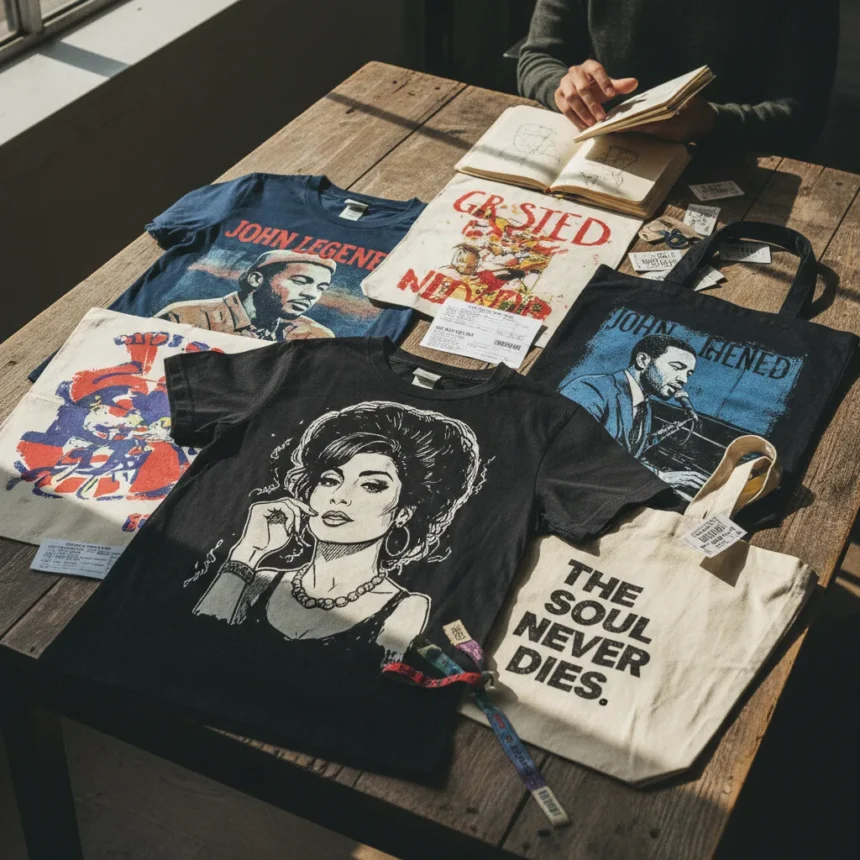
The emotional limits of AI-generated art are not a technical problem—they are a human one. Anyone who has sold merchandise at a live concert understands this intuitively, even if they have never thought about it in terms of artificial intelligence. Working as a merch girl for Amy Winehouse and John Legend in the 2000s revealed something that no algorithm, no matter how sophisticated, can replicate: the irreplaceable value of human presence and intention behind creative work.
Key Takeaways
- Live concert merchandise carries emotional weight because it represents direct human connection between artist and fan.
- AI-generated art lacks the contextual authenticity that makes human-created work resonate emotionally.
- The 2000s music industry offered real-world lessons about why fans value tangible, artist-backed creative experiences.
- Emotional authenticity cannot be engineered or algorithmically approximated—it must be genuinely present.
- The future of creative work depends on understanding what AI cannot replace: human intention and lived experience.
What selling concert merch revealed about fan emotion
When you stand behind a merch table at a concert, you are not just selling t-shirts or posters. You are facilitating a moment where a fan’s emotional investment in an artist becomes tangible. That moment matters. A fan buys a shirt not because they need clothing—they buy it because holding something the artist has blessed, something that carries the artist’s name and image, makes their connection to the music feel real and permanent. The transaction is secondary to the ritual.
This is what the emotional limits of AI-generated art fail to account for. An AI can generate a technically competent image, a well-composed design, even something aesthetically pleasing. But it cannot generate the sense that someone—a real human with intention, taste, and creative vision—made something specifically for you. When you buy a concert tee, you are not buying pixels on a screen. You are buying evidence that the artist exists, that the music is real, that your fandom is validated by something tangible and intentional.
The 2000s music industry operated on this principle without needing to articulate it. Artists understood that their fans wanted connection, and merch was one of the most direct ways to provide it. Every design choice, every color, every limited edition variant communicated something: this was made for you, by people who know who you are.



Why AI cannot replicate human creative intention
The fundamental problem with AI-generated art is not that it is imperfect—it is that it is untethered from human intention in a way that matters emotionally. When John Legend’s team designed merch for his shows, they made choices. They chose colors that reflected the tour’s aesthetic. They decided which songs to feature. They understood their audience and created for that specific audience, in that specific moment. Those choices carried weight because they came from a person who cared about the outcome.
AI-generated art, by contrast, optimizes for patterns. It learns what works and reproduces variations of success. But optimization is not the same as intention. An AI does not care whether its output resonates with you—it has no capacity to care. It cannot decide that something matters, that this design is for this person, that this image will mean something to someone. These are human acts, and they are what give creative work its emotional power.



This distinction becomes sharper when you consider what fans actually want from the artists they love. They do not want perfect art. They want evidence of choice, of attention, of someone saying: I made this for you. AI cannot provide that evidence because AI does not make choices—it executes probability distributions. No amount of fine-tuning will change that fundamental difference.
The emotional limits of AI-generated art in a creator economy
As AI tools become more accessible, creators face a temptation to use them as shortcuts. Why spend hours designing merch when an AI can generate options in seconds? The answer lies in what gets lost in that transaction. Every piece of AI-generated art that replaces human creativity is a missed opportunity for connection. It is a signal to fans that their emotional investment is not worth the artist’s time.
The creator economy thrives on authenticity—or at least the appearance of it. But there is a difference between manufactured authenticity and genuine human effort. Fans can sense that difference. They could sense it in the 2000s when they bought concert merch, and they can sense it now when they encounter AI-generated content from creators they follow. The emotional limits of AI-generated art are not a limitation of the technology—they are a fundamental feature. AI cannot want to connect with you. It can only simulate the patterns of connection.
This matters because the future of creative work depends on understanding what AI cannot do. It cannot replace the human decision to make something for someone else. It cannot provide the emotional reassurance that comes from knowing a real person chose to spend their time and skill on your behalf. These are not technical problems waiting for a better algorithm. They are existential features of what makes human creativity valuable.



What the future of authentic creative work looks like
The lesson from the 2000s music industry is not that technology is bad—it is that human intention matters. As AI becomes more capable, the value of human-made, intentionally-crafted creative work will likely increase, not decrease. Fans will not want more AI-generated merch. They will want less. They will seek out creators who prove they still care enough to do the work themselves.
This does not mean rejecting AI tools entirely. It means understanding their proper role: as assistants to human creativity, not replacements for it. An artist might use AI to generate options, then choose the one that aligns with their vision. That choice—the human curation—is where the emotional weight enters. The AI-generated art itself is just raw material until a human being decides it matters.
The emotional limits of AI-generated art are actually an opportunity. In a world where AI can produce endless content, human-made, intentionally-crafted work becomes scarcer and more valuable. Fans will pay for it, support it, and treasure it precisely because it carries the mark of human choice. That is what selling concert merch taught me: people do not want perfection. They want evidence that someone cared enough to create something for them.
Can AI-generated art ever carry emotional weight?
Not in the way human-made art does. AI can approximate emotional responses—it can generate images designed to trigger certain feelings in viewers. But the emotional weight of art comes not just from how it makes you feel, but from knowing that a human being intentionally created it to make you feel that way. That knowledge is the missing ingredient in all AI-generated art, and no amount of algorithmic improvement will add it.
Why do fans prefer human-made merch over AI-generated designs?
Fans understand, often without articulating it, that human-made merch represents a choice. An artist or designer decided this design was worth their time and effort. AI-generated merch, by contrast, signals that the creator did not think the fan was worth that investment. The emotional message matters more than the visual quality.
Will AI-generated art replace human creativity in the music industry?
Not entirely, because the market for authentic human creativity will persist and likely grow. However, AI will likely replace human creativity in contexts where emotional authenticity does not matter—generic content, filler, background material. The work that requires genuine human intention will remain human, and it will become more valuable precisely because it is rare.
The emotional limits of AI-generated art are not a temporary problem waiting for a technological fix. They are a permanent feature of what AI is and what it is not. Understanding this distinction is crucial for anyone creating work in the 2000s or beyond. Human creativity matters because humans care. That care is irreplaceable, and it is what fans actually pay for when they buy a concert tee or support an artist. The merch table taught me that lesson, and it remains true in the age of AI.
Edited by the All Things Geek team.
Source: Tom's Guide