





What do AI companies and government contracts actually allow?
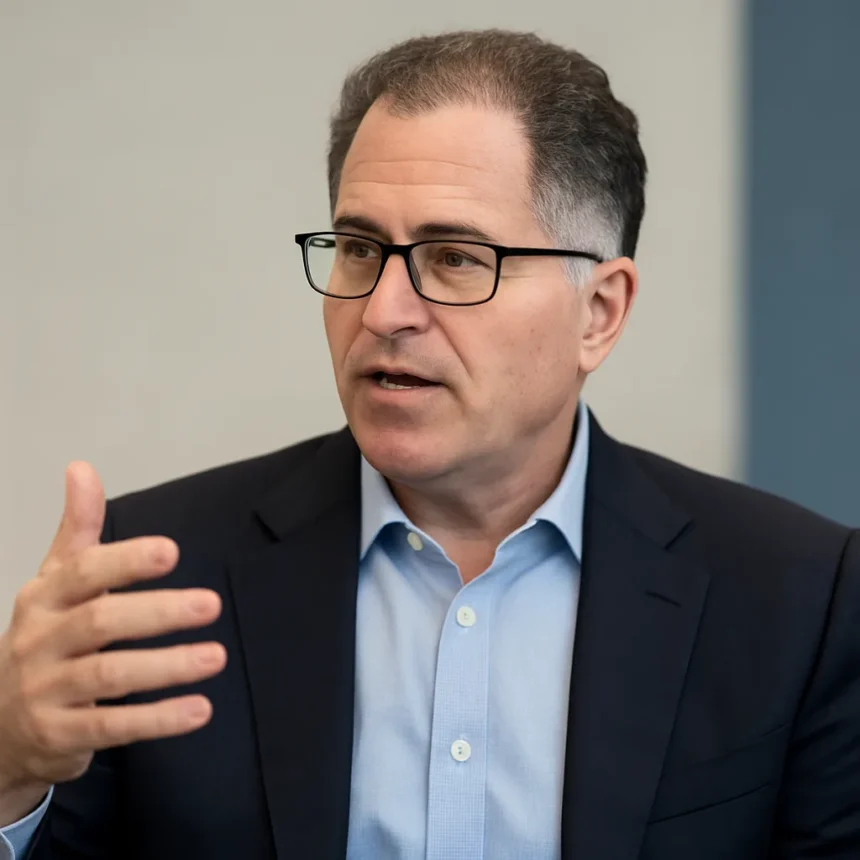
AI companies and government contracts have collided in spectacular fashion in 2026, and Dell CEO Michael Dell is the latest major tech voice to weigh in. Michael Dell is CEO of Dell Technologies, known for building one of the world’s largest enterprise hardware and services businesses. Speaking at a forum in Washington focused on federal government contracting on March 13, 2026, he argued that no company can realistically control what a sovereign government does with technology it has purchased.
His comments came eight days after the Pentagon designated Anthropic a supply-chain risk to national security on March 5, 2026, a move that took effect immediately and gave Anthropic six months to wind down its defense-related business. Defense Secretary Pete Hegseth announced the designation following a breakdown in negotiations over the terms under which the Pentagon could use Anthropic’s Claude AI. The core dispute: the Pentagon wanted what it described as the ability to use Claude for all lawful purposes, while Anthropic refused to remove restrictions on mass domestic surveillance and fully autonomous lethal weapons systems.
Michael Dell aligns with Sam Altman on the Anthropic fallout
Dell‘s position echoes that of OpenAI CEO Sam Altman, who suggested the collapse was the result of high-pressure negotiations deteriorating rapidly rather than a fundamental incompatibility. Altman told the forum that he had seen what happens when tense negotiations get stressed and fall apart fast, and that he believed that dynamic was a significant part of what occurred between Anthropic and the Pentagon. Dell agreed, stating plainly that companies have various controls and systems to ensure they are selling to authorized users, but that dictating how a sovereign government subsequently uses its tools is simply not a workable model.
President Trump escalated the political dimension by ordering all federal agencies to stop using Anthropic’s products and labeling the company on Truth Social in terms that Anthropic has contested. Anthropic CEO Dario Amodei pushed back hard, stating the Pentagon’s action is not legally sound and announcing the company would challenge it in court. Amodei also argued that Anthropic has far more in common with the Department of War than it has differences, framing the company’s position as patriotic rather than obstructive.



AI companies and government contracts: the OpenAI comparison
The contrast with OpenAI is instructive. OpenAI is now positioned to fill the gap left by Anthropic in Pentagon procurement, having agreed to terms that Anthropic would not. Amodei has not been quiet about his view of that choice, accusing OpenAI of telling straight-up lies in its messaging, placating employees with vague reassurances rather than establishing real safeguards, and accepting an all-lawful-use clause without meaningful restrictions. OpenAI has not publicly responded in detail to those specific characterizations.
Lockheed Martin, one of the largest defense contractors in the world, stated it is not dependent on Anthropic and is already seeking alternative AI providers. Microsoft, which has a significant commercial relationship with Anthropic, confirmed it can continue non-defense work with the company despite the Pentagon’s designation. The situation illustrates a fracture that has been building across the AI industry: how much control should an AI developer retain over how its models are used once deployed, particularly when the customer is a government with legal authority to define its own operational requirements?



What the Pentagon’s supply-chain risk designation actually means
A supply-chain risk designation is a serious instrument. It signals that a vendor is considered a potential threat to the integrity or reliability of defense procurement, which in practice bars that vendor from federal contracts and requires existing relationships to be wound down. The Pentagon framed its action around a single principle, with an official stating that the military will not allow a vendor to insert itself into the chain of command by restricting the lawful use of a critical capability in ways that could put warfighters at risk. Anthropic’s lawsuit argues the designation is legally flawed and that the company’s refusal to enable mass surveillance or autonomous lethal weapons is a responsible safeguard, not a security threat. That legal challenge will now determine whether the Pentagon’s position holds.
Can an AI company legally restrict how governments use its tools?
That is precisely the question Anthropic’s lawsuit will test. Anthropic argues its usage restrictions are lawful and that the Pentagon’s designation is not legally sound. The outcome will likely set a precedent for how AI vendors can structure terms of service with government clients going forward.
Why did negotiations between Anthropic and the Pentagon collapse?
Sam Altman described the breakdown as a negotiation under intense pressure that deteriorated rapidly, suggesting the collapse was partly circumstantial rather than purely principled. Both sides were reportedly close to agreement before the talks fell apart, and the Pentagon moved quickly to the supply-chain risk designation once they did.
What happens to Anthropic’s existing defense contracts?
Anthropic has six months to wind down its defense-related business following the March 5, 2026, designation. Microsoft can continue non-defense collaboration with Anthropic, and Lockheed Martin has indicated it will seek other AI providers to replace Anthropic’s role in its operations.


The Anthropic-Pentagon dispute has crystallized a tension that the entire AI industry will eventually have to resolve: whether AI developers can impose ethical constraints on the world’s most powerful government customers, or whether signing a defense contract means ceding that control entirely. Dell’s view is clear, and it is the pragmatic one. But Anthropic’s lawsuit may yet prove that pragmatism and legality are not always the same thing.
Edited by the All Things Geek team.
Source: TechRadar




