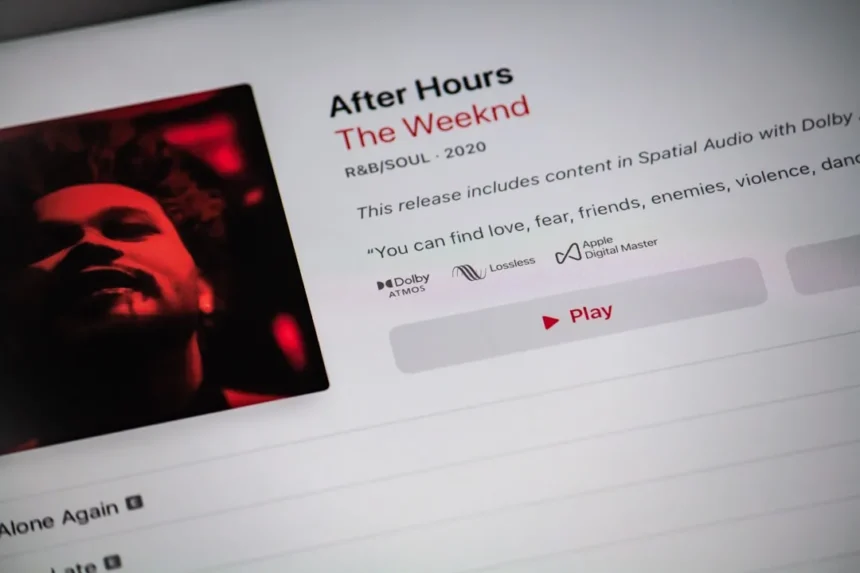
Apple Music lossless audio remains one of the streaming world’s most divisive features since its June 2021 launch. Oliver Schusser, Apple Music’s executive, recently ignited a firestorm by claiming that passionate music listeners will hear the difference between lossless and standard compressed audio—a statement that has pitted What Hi-Fi? readers against each other in heated debate.
Key Takeaways
- Apple Music launched lossless and Hi-Res Lossless audio at no extra cost in June 2021, up to 24-bit/192 kHz
- Oliver Schusser claims 98-99% of people cannot identify lossless audio in blind tests
- Lossless requires wired headphones and external DAC; Bluetooth devices like AirPods use lossy AAC codec
- Reviewers report audible differences like more detail and wider stereo field when using proper wired gear
- Tidal and Qobuz offer better device integration for lossless playback than Apple Music
The Contradiction at the Heart of Apple’s Argument
Schusser’s position contains a fundamental contradiction that has infuriated readers. He tells passionate music fans they will absolutely hear the difference in Apple Music lossless audio quality. Yet in the same breath, he admits that roughly 98 or 99 percent of people cannot identify lossless audio when tested blind—meaning they cannot tell the difference without knowing which version they are listening to. This creates an uncomfortable question: if nearly everyone fails blind tests, on what basis can he promise that passion alone will unlock audible differences?
The claim lacks methodological transparency. Schusser references the 98-99% figure casually, offering no details about sample size, test conditions, or the specific blind test protocol used. This vagueness has only deepened reader skepticism, particularly among those who suspect confirmation bias plays a larger role than genuine audio quality in perceived differences.
What Actually Happens When You Enable Apple Music Lossless Audio
Apple Music lossless audio comes in two tiers, both included at no extra cost. Lossless reaches up to 24-bit/48 kHz sampling frequency, while Hi-Res Lossless extends to 24-bit/192 kHz. Enabling either requires navigating to Settings > Apps > Music, then Audio Quality, where users can choose between Lossless and Hi-Res Lossless for cellular, Wi-Fi, and download streams.



Here is where the practical barrier emerges: Apple Music lossless audio only works through wired connections. Bluetooth devices—including AirPods, AirPods Pro, and even the premium AirPods Max—automatically revert to the AAC codec, which is lossy compression. This means the vast majority of Apple users, who rely on wireless earbuds, never actually experience lossless audio at all. To hear the full benefit, listeners must use an iPad, iPhone, or iPod Touch paired with an external digital-to-analog converter (DAC) and wired headphones.
On Mac, the process is similarly straightforward but equally limited. Users open the Music app, navigate to Music > Settings > Playback, and check the Lossless Audio box. Again, the constraint applies: only wired output captures the lossless stream.



Do People Actually Hear the Difference in Apple Music Lossless Audio?
When reviewers conduct controlled A/B comparisons using proper wired gear, the differences become noticeable. Mark Ellis, a reviewer quoted in testing, reported that compressed audio versus uncompressed lossless is night and day when directly compared. He described the lossless version as louder, better-sounding, with much more detail and a wider stereo field. These observations align with the technical reality: lossless removes no data, so properly equipped systems can reproduce more information from the master recording.
The catch is equipment dependency. A listener using budget wired headphones may not perceive these differences. A listener using a high-quality DAC and audiophile-grade headphones almost certainly will. This is why Schusser’s blanket claim—that passion alone guarantees audibility—rings hollow to skeptics. Passion does not replace hardware. Enthusiasm does not substitute for a proper signal chain.
Schusser’s admission that 98-99% cannot identify lossless in blind tests suggests that without visual cues, product branding, or expectation bias, most ears simply do not detect a difference. This does not mean lossless audio is worthless—it means the benefit is real but conditional, not universal.
How Apple Music Lossless Stacks Up Against Rivals
Tidal and Qobuz both offer lossless and hi-res streaming, but with a crucial advantage: better integration into consumer devices. These platforms have worked more closely with hardware manufacturers to ensure lossless streams reach listeners without the Bluetooth limitation that hobbles Apple Music. For someone serious about lossless audio quality, the ecosystem friction on Apple Music creates a genuine disadvantage.


Spotify remains the streaming giant, but it uses lossy compression and has shown no plans to add lossless. This makes the Spotify versus Apple Music lossless comparison straightforward: Apple offers something Spotify does not, but only to users willing to invest in wired infrastructure and external DACs. For casual listeners, the difference is immaterial. For committed audiophiles, Apple’s implementation feels half-baked compared to dedicated hi-fi platforms.
The Real Issue: Marketing Versus Reality
What has riled What Hi-Fi? readers is not the existence of lossless audio on Apple Music—it is the gap between Schusser’s marketing claim and the practical reality. He suggests that passion is enough. The technical facts say otherwise: passion requires wired headphones, an external DAC, a compatible Apple device, and ideally an understanding of audio signal chains. For most users, especially those using AirPods, Apple Music lossless audio is a feature that exists but cannot be experienced.
The debate also reflects a broader tension in audio culture. Audiophiles argue that lossless quality matters and that proper equipment reveals audible differences. Casual listeners and skeptics counter that if 98-99% of people cannot identify lossless in blind tests, the practical benefit is marginal and the marketing is oversold. Schusser’s comment has crystallized this divide, forcing readers to choose a side.
Can You Hear the Difference in Apple Music Lossless Audio?
Yes, but only under specific conditions. You need wired headphones, an external DAC, and ideally high-quality gear. Bluetooth will never deliver lossless audio, so AirPods users cannot experience the feature regardless of passion level. Even then, the difference may be subtle—more detail, wider stereo separation, punchier dynamics—rather than a dramatic transformation.
How Do I Enable Lossless Audio on My iPhone?
Go to Settings > Apps > Music, select Audio Quality, then toggle Lossless Audio on or off. Choose your preferred quality for cellular, Wi-Fi, and downloads. Remember: lossless only works with wired headphones, not Bluetooth.
Is Apple Music Lossless Worth It?
For Bluetooth users, no—you cannot access it. For wired listeners with proper equipment, possibly, if you can detect subtle audio improvements. For casual listeners, the data usage increase and equipment investment probably outweigh the benefit. The real value depends on your ears, your gear, and your willingness to abandon the wireless convenience that defines modern Apple devices.
Schusser’s claim that passionate listeners will hear the difference in Apple Music lossless audio has exposed a fundamental marketing problem: passion alone does not create audible differences. Equipment, knowledge, and favorable listening conditions do. Apple offers a technically superior product but has packaged it in a way that makes it inaccessible to most users and unverifiable for everyone else. That contradiction is why readers remain divided—and why the debate shows no sign of ending.
Edited by the All Things Geek team.
Source: What Hi-Fi?