The best thriller movies to stream free are hiding in plain sight on ad-supported streaming platforms. As Netflix and Prime Video push subscription prices higher, free ad-supported streaming services (FAST) have quietly assembled libraries of genuinely gripping films. No paywall. No credit card. Just tense, twisty cinema.
Key Takeaways
- Five acclaimed thrillers available free with ads on Tubi, Pluto TV, Freevee, and Roku Channel.
- The Invisible Man (2020) and Hush (2016) deliver psychological suspense without blockbuster budgets.
- Lake Mungo (2008) proves indie horror can outthink mainstream productions.
- Coherence (2013) uses quantum physics and improvisation for mind-bending twists.
- Free FAST services offer hidden gems while paid platforms hike prices to $15+ monthly.
Why Free Streaming Services Now Host Premium Thrillers
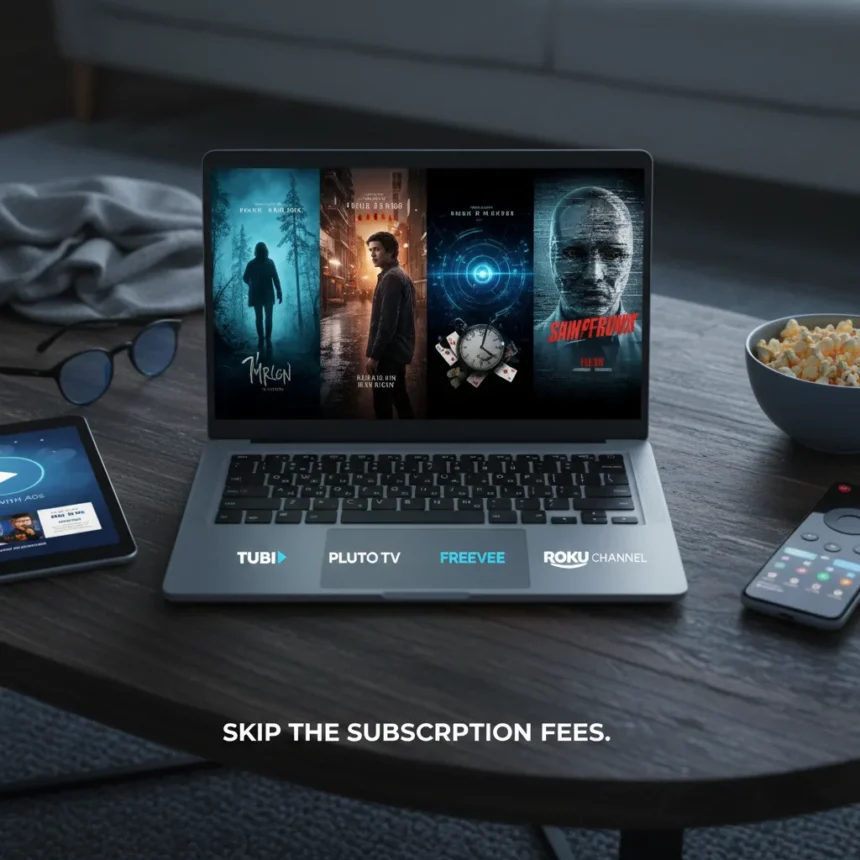
Streaming fatigue is real. Netflix’s ad-free tier costs $15.49 per month or more, and subscription stacking has made cord-cutting expensive again. Meanwhile, Tubi, Pluto TV, Freevee, and The Roku Channel have licensed deep back catalogs of independent and overlooked films. The trade-off—ads every 15 minutes—feels trivial when the alternative is paying for yet another service. These platforms are where prestige indie thrillers land after theatrical and premium VOD windows close.
The five films recommended here share a common DNA: they prioritize atmosphere and character over spectacle. They were made on modest budgets. Most premiered at film festivals or streamed on specialty platforms before finding wider audiences. And crucially, they remain genuinely suspenseful. Not one relies on jump scares or gore as a crutch.
The Invisible Man (2020) on Tubi
Leigh Whannell’s reimagining of The Invisible Man is a masterclass in tension. Elisabeth Moss plays Cecilia Kass, a woman who escapes an abusive relationship only to realize her ex-boyfriend has found a way to stalk her while invisible. The 124-minute thriller uses negative space—what you cannot see—as its primary weapon. Whannell frames empty doorways, blank walls, and silent rooms as threats. The camera lingers on spaces where danger might be lurking. You feel watched without seeing the watcher.


The film works as both intimate character study and social commentary. Cecilia’s frustration when no one believes her, when police dismiss her claims, when friends doubt her sanity—these emotional beats matter as much as the set pieces. Moss delivers a performance of raw vulnerability and hard-won agency. The R-rated runtime is earned through violence and language, not gratuitous shock value.
Hush (2016) on Pluto TV
Mike Flanagan’s Hush takes a high-concept premise and executes it with surgical precision. Kate Siegel plays Maddie Young, a deaf-mute author living alone in a remote house who becomes the target of a masked intruder. The 82-minute runtime moves with purpose—no fat, no filler. Flanagan uses silence as an active ingredient. When Maddie cannot hear the killer approaching, neither can the audience. The sound design becomes a character itself.



What distinguishes Hush from standard home-invasion thrillers is its empowerment arc. Maddie does not wait for rescue. She adapts. She fights back. Her disability becomes a source of tactical advantage, not victimhood. The film respects its protagonist’s agency while maintaining relentless dread. Siegel’s performance carries the entire film—she conveys fear, determination, and cunning with minimal dialogue.
The Autopsy of Jane Doe (2016) on Freevee
André Øvredal’s The Autopsy of Jane Doe is claustrophobia distilled into 86 minutes. Brian Cox and Emile Hirsch play a father-and-son coroner team performing a late-night autopsy on a mysterious female corpse. As they examine the body, they uncover impossible evidence—wounds that defy explanation, organs that suggest supernatural intervention. The film never leaves the morgue. It never needs to.
The confined setting becomes a pressure cooker. The two men are trapped with something they cannot understand, something that seems to defy the laws of physics and medicine. Øvredal escalates the dread methodically. What begins as professional curiosity curdles into existential horror. The R-rated film earns its rating through visceral imagery and the slow realization that rational explanation is failing. Cox and Hirsch’s chemistry—the tension between skepticism and fear—anchors the mounting absurdity.
Coherence (2013) on Tubi
James Ward Byrkit’s Coherence is a low-budget indie that punches far above its weight. The premise: a dinner party is disrupted when a comet passes overhead, causing reality to fracture into parallel versions. The 89-minute film unfolds almost entirely in real-time conversation. It relies on improvisation, clever writing, and the audience’s willingness to follow increasingly tangled logic.


The genius of Coherence is that it makes you work. It does not spoon-feed exposition. You piece together what is happening alongside the characters. Byrkit trusts the audience’s intelligence. The film mines suspense from ideas rather than action—the existential horror of encountering alternate versions of yourself, the moral dilemmas that arise when you realize your choices have infinite variations. It is a thought experiment wrapped in thriller pacing. The R rating reflects language and some violence, but the real tension is psychological.
Lake Mungo (2008) on The Roku Channel
Joel Anderson’s Lake Mungo is an Australian mockumentary that defies easy categorization. It follows a family’s grief after their teenage daughter Alice drowns. Then, strange things begin happening. Wet footprints appear in the house. A ghostly figure is spotted in family photos. The 87-minute film unfolds as interviews, found footage, and photographs—a documentary about a haunting that feels disturbingly real.
What makes Lake Mungo exceptional is its restraint. Anderson does not rely on orchestral stings or jump scares. The horror emerges from emotional vulnerability and the uncanny. The film respects grief as its own kind of haunting. The supernatural elements serve the family’s trauma, not the other way around. Lake Mungo is the only PG-13 film on this list, yet it carries a chill that R-rated films often fail to achieve. It lingers. It unsettles.
How do these free thrillers compare to paid streaming options?
Paid services like Netflix and Prime Video offer larger production budgets and theatrical releases, but they also charge monthly fees. The five films here were selected specifically for their presence on free ad-supported platforms. They represent a curated alternative for viewers who want quality suspense without ongoing subscription costs. Independent and international thrillers often find their audience on FAST services after their premium windows close.
Can I watch these movies outside the United States?
Tubi, Pluto TV, Freevee, and The Roku Channel have varying international availability through their apps, though licensing varies by region. Availability of these specific titles may differ outside the US. Check your local app store to confirm whether these services and films are accessible in your country.
Why are these films better than mainstream thriller blockbusters?
These five thrillers succeed because they prioritize craft over budget. They use confined spaces, minimal casts, and psychological tension instead of action sequences and visual effects. They trust the audience’s intelligence. They do not need $200 million to create genuine suspense—just smart writing, committed performances, and filmmakers who understand that what you do not see is often scarier than what you do.
The real win here is financial freedom. Watch all five for zero dollars. That is five hours of quality cinema, five different approaches to suspense, and zero commitment to another subscription service. In 2026, when streaming costs have spiraled and fatigue has set in, free services have become the unlikely home of genuinely gripping films. Stop paying for mediocrity. Start streaming the thrillers that actually earn your attention.
Where to Buy
Edited by the All Things Geek team.
Source: Tom's Guide