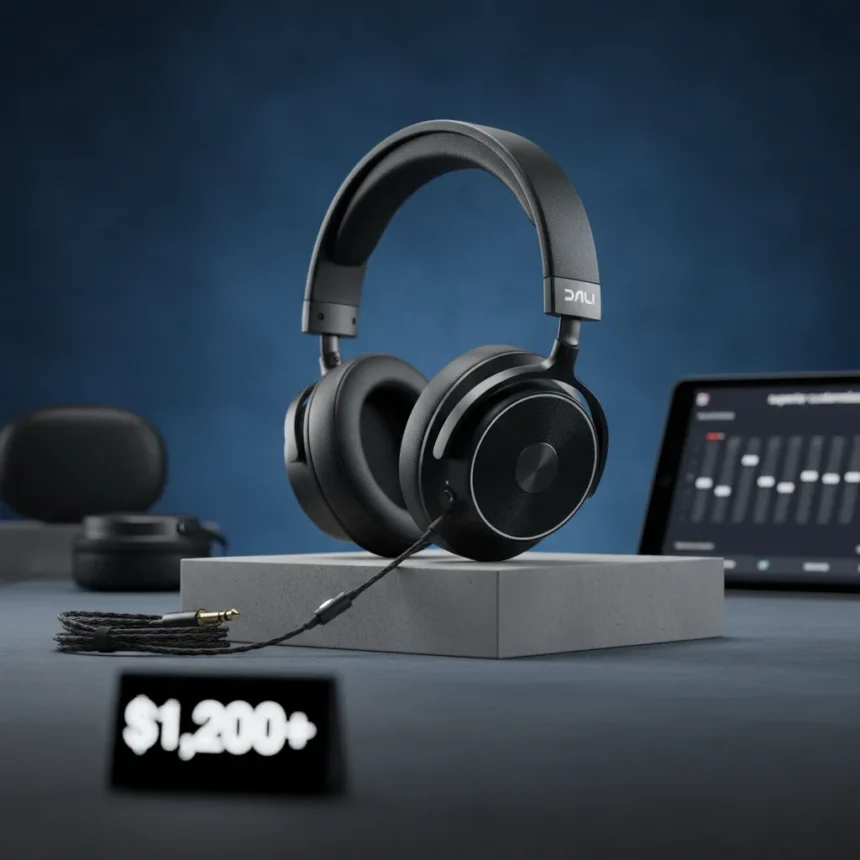
The DALI IO-12 Bluetooth headphones represent a bold gamble: can a pair of wireless cans command a four-figure price tag on sound quality alone? The Danish audio specialist has built a reputation for meticulous engineering, but the IO-12 arrives in a crowded market where premium alternatives offer not just excellent sound but granular control over how that sound reaches your ears. After examining what DALI brings to the table, the answer becomes complicated.
Key Takeaways
- DALI IO-12 Bluetooth headphones pursue premium audio at four-figure pricing, positioning them as a luxury product.
- Sound quality alone does not overcome the lack of detailed EQ controls available on competing models.
- Rival headphones offer superior customization options at significantly lower price points.
- The review questions whether audio excellence can justify premium pricing without additional features.
- Buyers seeking both sound and flexibility should consider alternatives with more granular tuning capabilities.
The Sound-First Philosophy That Misses the Mark
DALI has staked the IO-12’s reputation on sound quality, going big on audio performance and equally big on price. This philosophy assumes that listeners will value pristine acoustics above all else—a reasonable assumption for a niche market, but one that ignores how modern headphone buyers actually use their gear. Most consumers want both excellent sound and the ability to shape that sound to their preferences, room acoustics, or mood. The DALI IO-12 Bluetooth headphones deliver on the first promise but fall short on the second.
The absence of detailed EQ controls is the critical weakness here. While DALI’s engineering team has clearly invested in tuning the drivers and acoustic design, they have left users with a take-it-or-leave-it listening experience. This is a luxury brand problem: premium pricing should unlock premium flexibility, not restrict it. A four-figure headphone should offer the listener multiple sonic signatures, not force them to accept a single house sound, no matter how well executed.
Why Competitors Win on Value and Versatility
Other models in the premium headphone space offer detailed EQ controls that let users fine-tune frequency response, adjust soundstage width, or compensate for hearing characteristics. These alternatives deliver comparable audio quality while giving buyers tools to personalize their experience. The gap between DALI IO-12 Bluetooth headphones and these rivals is not in raw sound reproduction—it is in the philosophy of control. Competitors understand that audiophiles and casual listeners alike want agency over their listening experience, not just a well-engineered default.



This creates a tough recommendation calculus. A buyer willing to spend four figures on headphones is likely sophisticated enough to want granular control. They may already own room correction software, use hearing aids, or have specific preferences about bass response and treble extension. The DALI IO-12 Bluetooth headphones offer no pathway to accommodate these needs. Rivals do, and they do it without asking for a premium that approaches luxury watch pricing.
The Four-Figure Question: Is Premium Sound Enough?
The central tension of the DALI IO-12 Bluetooth headphones cannot be resolved by audio quality alone. Yes, the engineering is solid. Yes, the sound is refined. But the market has moved beyond the era when pristine audio could stand alone as justification for extreme pricing. Streaming quality has plateaued, wireless codec improvements have diminished, and the real battleground is now features, flexibility, and ecosystem integration. DALI has chosen to ignore all three and double down on acoustic purity—a strategy that works for turntable manufacturers but struggles for wireless headphones in 2025.



The problem is not that the DALI IO-12 Bluetooth headphones are bad. It is that they are incomplete. A four-figure product should feel like a complete solution, not a one-dimensional showcase of audio engineering. Buyers at this price point expect customization, intuitive controls, and a sense that their investment unlocks capabilities beyond what mid-range alternatives provide. The IO-12 fails this test because it offers none of these things.
Should You Buy the DALI IO-12 Bluetooth Headphones?
Only if you value uncompromising audio quality above all else and have no desire to adjust the sound signature. If you want to shape your listening experience, explore different EQ profiles, or integrate your headphones into a broader ecosystem of audio tools, look elsewhere. The DALI IO-12 Bluetooth headphones are a tough one to recommend because they ask you to accept significant limitations in exchange for marginal sonic advantages that most listeners will never notice in real-world use.
For the same investment, competitors offer more flexibility, better feature sets, and comparable audio performance. That is not a judgment on DALI’s engineering—it is a judgment on whether four-figure pricing for Bluetooth headphones should demand more than just sound.
What makes the DALI IO-12 Bluetooth headphones different from budget alternatives?
The DALI IO-12 Bluetooth headphones prioritize acoustic engineering and driver design in ways that budget models cannot. However, this difference in sound quality is subtle enough that most listeners will not detect it in everyday use. The real gap is in materials and build quality, where premium pricing does show tangible benefits.



Do the DALI IO-12 Bluetooth headphones offer noise cancellation?
The research available does not specify whether the DALI IO-12 Bluetooth headphones include active noise cancellation. This is a critical omission from DALI’s marketing materials, as ANC is now standard on most premium wireless headphones. If the IO-12 lacks this feature, it becomes even harder to justify the four-figure price.
Are there better alternatives to the DALI IO-12 Bluetooth headphones?
Yes. Competitors offering detailed EQ controls, ANC, and comparable audio quality at lower price points represent better value for most buyers. The DALI IO-12 Bluetooth headphones make sense only for listeners who prioritize acoustic purity over customization and are willing to pay a premium for that singular focus.
The DALI IO-12 Bluetooth headphones represent a gamble that did not pay off. Premium sound alone cannot carry a four-figure product in a market where rivals offer more features, more flexibility, and more reasons to justify the investment. DALI built an excellent headphone but forgot to build a complete one.
Where to Buy
$1,699 DALI iO-12 | $1,499 Focal Bathys MG | $230 Sennheiser Momentum 4
Edited by the All Things Geek team.
Source: Creativebloq