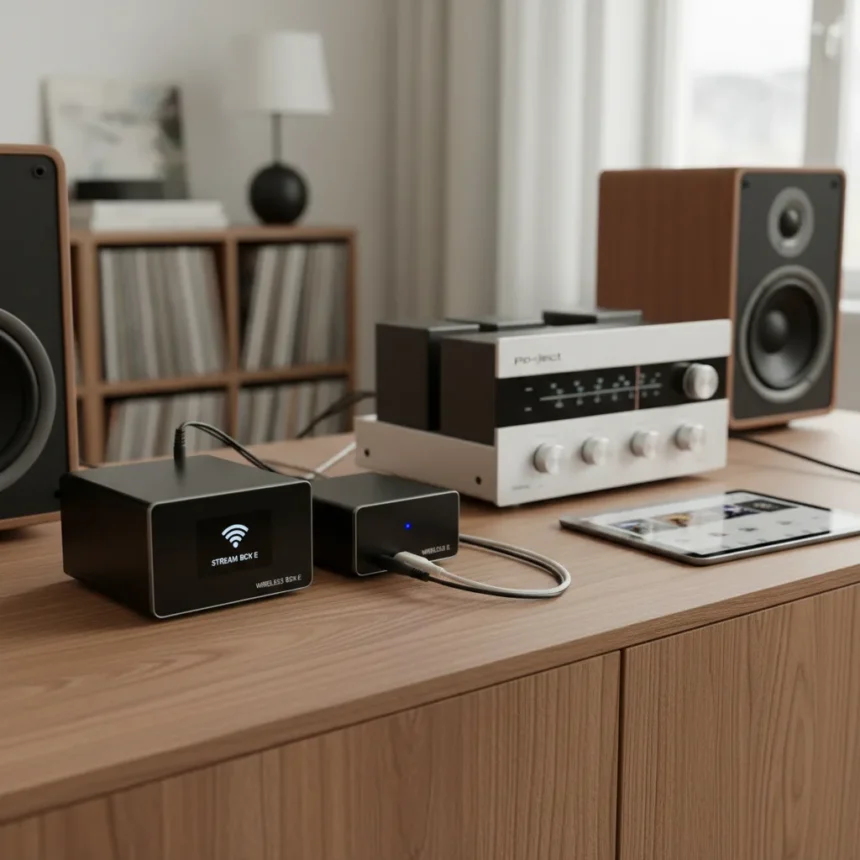
Pro-Ject Audio Systems has announced two new entry-level streaming devices—the Stream Box E and Wireless Box E—designed to add wireless hi-fi streaming capabilities to existing audio systems without requiring a complete overhaul. These compact boxes represent the company’s latest push to modernize wired hi-fi setups with affordable, plug-and-play wireless convenience.
Key Takeaways
- Stream Box E and Wireless Box E are part of Pro-Ject’s budget-focused E-series for adding wireless streaming to passive hi-fi systems
- Both devices enable Wi-Fi and wireless connectivity without replacing existing amplifiers or speakers
- Pro-Ject’s E-series emphasizes compact design and affordability, with related products like Juke Box E and Stereo Box E
- Entry-level positioning targets budget-conscious listeners upgrading from wired-only setups
- Wireless Box E likely improves on earlier Bluetooth Box E with enhanced connectivity options
What Are Pro-Ject’s New Wireless Hi-Fi Streaming Devices?
The Stream Box E and Wireless Box E are dedicated streaming adapters that retrofit wireless capability into passive hi-fi systems. The Stream Box E functions as a dedicated Wi-Fi streamer, supporting streaming services and app-based control, while the Wireless Box E provides wireless receiver functionality—likely Bluetooth or Wi-Fi connectivity—to make non-networked amplifiers and speakers compatible with modern streaming sources. Both sit within Pro-Ject’s E-series philosophy: affordable, compact components that enhance existing hi-fi setups without forcing users into expensive full-system replacements.
Pro-Ject’s E-series has established itself as the entry point for budget hi-fi enthusiasts. The Juke Box E, for instance, combines a turntable, 25-watt-per-channel amplifier, and Bluetooth 2.1 connectivity in a single compact unit, priced as part of a HiFi Set at $829. The Stereo Box E adds a compact amplifier with Bluetooth 5.0 and aptX HD support, phono input, and digital connectivity options. These devices demonstrate Pro-Ject’s commitment to making hi-fi wireless without premium pricing.
Why Wireless Hi-Fi Streaming Devices Matter for Budget Setups
Upgrading a passive hi-fi system to wireless streaming often means replacing core components—the amplifier, the preamp, or both. The Stream Box E and Wireless Box E sidestep this problem. Users with existing amplifiers, passive speakers, or turntable setups can add wireless functionality as a separate layer, preserving their current equipment while gaining modern streaming access. This modularity appeals to listeners invested in analog gear or vintage amplifiers who want streaming without sacrificing their sonic foundation.



The demand for wireless convenience in budget hi-fi is real. Bluetooth has become the standard for wireless audio, but it carries compromises—Bluetooth 2.1, found in older E-series products like the Juke Box E, lacks lossless codec support and delivers compressed audio that can sound less spacious than wired or vinyl playback. By offering dedicated Wi-Fi streaming alongside wireless options, Pro-Ject is addressing a gap: listeners who want streaming quality and convenience but refuse to pay flagship prices for it.
How Stream Box E and Wireless Box E Compare to Pro-Ject’s Existing Options
Pro-Ject’s earlier Bluetooth Box E receiver provided wireless connectivity but relied on Bluetooth compression, limiting audio fidelity. The new Wireless Box E likely improves on this foundation with enhanced wireless options and better integration with the broader E-series ecosystem. Meanwhile, the Stream Box E targets a different use case—dedicated streaming rather than wireless reception—offering app-based control and service integration that pure Bluetooth receivers cannot match.



The Stereo Box E stands as a closer competitor within the E-series itself. This compact amplifier combines Bluetooth 5.0, aptX HD support, digital inputs, and a phono stage in a single chassis. For users who need both amplification and wireless streaming, the Stereo Box E is an all-in-one solution. The Stream Box E and Wireless Box E, by contrast, are modular—they assume users already own an amplifier and simply need the wireless layer added. Neither approach is objectively superior; the choice depends on whether a listener’s existing system needs amplification or just wireless connectivity.
Entry-Level Pricing and the E-Series Philosophy
Pro-Ject has not yet announced specific pricing for the Stream Box E or Wireless Box E, but the E-series track record suggests aggressive affordability. The Phono Box E phono preamp costs $89, while the Juke Box E HiFi Set reaches $829. If the new streaming boxes follow this pattern, they should land in the $100–$400 range, making wireless hi-fi streaming accessible to listeners who cannot justify $1,000+ on premium streamers. This budget positioning is where Pro-Ject’s E-series thrives—it sacrifices some features or refinement for price, but it refuses to compromise on the core functionality that matters to users upgrading from analog-only setups.
What to Expect from Wireless Hi-Fi Streaming Devices in This Price Range
Entry-level wireless streaming boxes typically offer Wi-Fi connectivity, app-based control, and support for major streaming services like Tidal and Spotify. The Stream Box E will likely follow this formula, providing straightforward access to streaming without the complexity of higher-end streamers that add features like upsampling, MQA decoding, or extensive configuration options. The Wireless Box E, positioned as a receiver, should deliver Bluetooth or Wi-Fi reception with minimal setup—plug it into an amplifier’s analog input, and it becomes wireless-ready.
The trade-off at this price tier is simplicity. Entry-level streamers lack the refinement of boutique audiophile gear. They may not support lossless codecs, offer limited customization, or include premium design touches. But for listeners upgrading from systems with no wireless capability at all, even basic streaming functionality represents a significant quality-of-life improvement. The ability to queue music from a phone without running cables or standing near the amplifier matters more than marginal sonic tweaks.



Is a Wireless Hi-Fi Streaming Device Right for Your System?
If you own a passive amplifier, vintage receiver, or turntable-based system without built-in streaming, the Stream Box E or Wireless Box E could be your entry point to modern audio. These devices are designed for listeners who value their existing gear and want to add wireless capability without replacing it. They are not for audiophiles chasing latest sound quality or for those willing to invest heavily in premium streaming infrastructure. They are for pragmatists: people who want convenience, afford ability, and the ability to keep using the equipment they already own.
Will the Wireless Box E replace my Bluetooth receiver?
The Wireless Box E is designed to enhance or replace older Bluetooth receivers by offering improved wireless connectivity options. If you currently use a basic Bluetooth adapter with your amplifier, the Wireless Box E likely provides better integration with Pro-Ject’s ecosystem and potentially cleaner wireless performance, though exact specs have not been announced.
Can I use the Stream Box E with a turntable?
Yes. The Stream Box E is a dedicated streamer, separate from turntable functionality. You can connect it to your amplifier alongside a turntable, giving you both streaming and analog playback options. Many listeners use both sources interchangeably depending on mood or available music.
How does the Stream Box E compare to the Juke Box E?
The Juke Box E is an all-in-one turntable with integrated amplification and Bluetooth 2.1. The Stream Box E is a dedicated streamer designed to add Wi-Fi streaming to existing systems. If you already own an amplifier and speakers, the Stream Box E is more modular. If you need everything in one box, the Juke Box E is simpler, though it relies on Bluetooth rather than Wi-Fi streaming.
Pro-Ject’s Stream Box E and Wireless Box E represent a pragmatic approach to modernizing budget hi-fi: add wireless streaming without forcing listeners to abandon their existing amplifiers, speakers, or turntables. For anyone with a passive system gathering dust because it lacks wireless convenience, these compact boxes offer an affordable path back into active listening. They are not revolutionary, but they solve a real problem at a price that respects the budget-conscious listener’s wallet.
Edited by the All Things Geek team.
Source: What Hi-Fi?