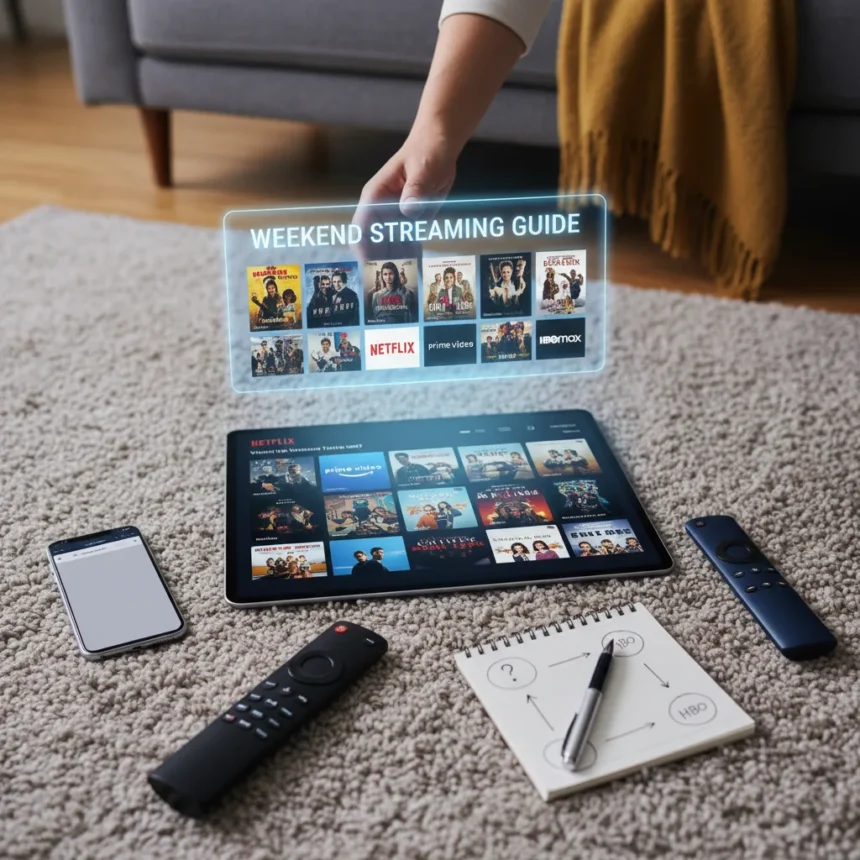
Finding what to watch across Netflix, Prime Video, HBO Max, and competing streaming services this weekend remains unnecessarily complicated. Streaming services weekend viewing has become a fragmented experience, forcing viewers to jump between apps, check multiple websites, and piece together recommendations from scattered sources rather than accessing a single authoritative guide.
Key Takeaways
- Streaming platforms lack integrated weekend programming guides visible across services.
- Viewers spend more time searching for content than actually watching it.
- A unified streaming guide would reduce decision fatigue and improve user retention.
- Fragmentation benefits no one except the platforms hoping you stay within their walled gardens.
- Third-party aggregators attempt to solve this but lack official partnerships and real-time accuracy.
Why Streaming Services Weekend Viewing Remains Broken
The core problem is architectural: each streaming platform operates as a silo. Netflix does not care what you watch on Prime Video. HBO Max has no incentive to surface content you might prefer on Apple TV Plus. This creates a market failure where the customer bears the cost of discovery. When you want to know what to watch this weekend, you cannot open a single app and see everything available across all services you subscribe to. Instead, you open Netflix, scroll, switch to Prime Video, scroll again, check HBO Max, and repeat. This is not a feature—it is a design choice that prioritizes lock-in over user experience.
The streaming industry has normalized this friction. A viewer with five subscriptions effectively has five separate entertainment universes to navigate. No wonder people report spending 18 minutes choosing what to watch before giving up entirely. The platforms know this happens. They benefit from it, paradoxically, because you are more likely to stick with Netflix if you have already invested time learning its interface and scrolling its library. Fragmentation is not a bug; it is a retention strategy.
What Streaming Services Weekend Viewing Guides Should Actually Do
A proper weekend guide would aggregate new releases, trending titles, and curated picks across every platform you subscribe to in one place. It would show you what premiered Friday, what is leaving Sunday, what critics are praising, and what your friends are watching—all without forcing you to context-switch between apps. This exists in theory. Several third-party services attempt to aggregate streaming content. But they lack the official partnerships, real-time data feeds, and algorithmic sophistication that the platforms themselves possess. A guide built by Netflix using its own data and partnerships would be infinitely more useful than a scraper trying to reverse-engineer what is available where.



The technical barrier to building this is nearly zero. The platforms already know their catalogs. They could expose APIs to a central aggregator. They could partner with each other on a voluntary standard for content discovery. They choose not to because fragmentation serves their business model. A viewer who finds exactly what they want to watch across all services in 30 seconds might watch two hours of content and then leave. A viewer who spends 20 minutes navigating Netflix’s interface, gives up, and defaults to scrolling its recommendations stays engaged longer and is more likely to binge within that single ecosystem.
The Real Cost of Streaming Services Weekend Viewing Fragmentation
This fragmentation has a measurable cost. Viewers cancel subscriptions not because the content is bad but because the friction of discovery outweighs the value. A person with six streaming subscriptions might spend 90 minutes per week just searching for something to watch across all of them. That is 7.8 hours per year—a full workday—spent navigating interfaces instead of enjoying content. The platforms are essentially charging you in attention and time, not just money.



For creators and studios, fragmentation is equally damaging. A brilliant limited series on a third-tier platform might reach 2 million viewers because discoverability is terrible, while a mediocre show on Netflix reaches 50 million because it is algorithmically promoted to death. Market share concentrates further. Smaller platforms cannot compete on content quality alone if their content is invisible. The entire ecosystem becomes less efficient at matching viewers with the shows and movies they actually want to watch.
Why This Problem Persists and What Might Change It
Streaming services have no financial incentive to solve this. Each platform wants you to believe it is the only service you need. They spend billions on exclusive content precisely to create lock-in. A unified weekend viewing guide would undermine that strategy by making it obvious that you do not need five subscriptions—you could get by with two or three and still see everything worth watching. That is the last thing Netflix or Disney Plus wants you to realize.
Change would require either regulation or consumer pressure strong enough to force the platforms’ hands. The EU has explored rules around interoperability in other tech sectors; streaming could be next. Alternatively, a dominant third-party aggregator could emerge with enough users that platforms feel pressured to officially partner with it rather than let it compete on scraping alone. But neither scenario is imminent. For now, viewers are stuck piecing together weekend recommendations from Reddit threads, YouTube reviews, and the TechRadar streaming guides that attempt to curate the chaos.
Can Individual Platforms Fix This Internally?
Netflix could theoretically solve streaming services weekend viewing for its own ecosystem by building a better discovery interface. It has the data and the engineering talent. But even Netflix’s own recommendation engine leaves viewers overwhelmed by choice. The problem is not just technical—it is psychological. Too many options paralyze decision-making. A platform with 10,000 titles is less useful than a platform with 500 if the 500 are expertly curated and the 10,000 are buried under poor recommendations.



Some platforms have experimented with curation. HBO Max has a strong editorial presence. Apple TV Plus focuses on quality over quantity. But these are exceptions. Most platforms optimize for engagement metrics—watch time, session length, retention—not for user satisfaction. A viewer who watches one hour of content is more valuable than a viewer who finds the perfect 30-minute show and stops. The incentives are misaligned with the user’s actual goal: spending a weekend watching something they genuinely enjoy.
What Would Actually Solve Streaming Services Weekend Viewing?
The ideal solution would be a device-level aggregator, similar to how your phone’s home screen shows notifications from all your apps in one place. Your TV could display a unified weekend guide pulling from every streaming service you subscribe to. You would see new releases, trending titles, and personalized recommendations sorted by platform, genre, and rating. You would click once and it would open the right app at the right content. This is technically feasible. It is not happening because the platforms would lose their ability to manipulate your attention.
Until then, viewers are stuck with the status quo: fragmented services, scattered recommendations, and the constant friction of choosing between platforms before choosing what to watch. Streaming services weekend viewing remains a solved problem in theory and an unsolved problem in practice. The platforms know how to fix it. They simply choose not to because fragmentation is profitable.
Should I subscribe to all the major streaming services?
No. Subscribing to five or six services rarely makes financial sense unless you use each one regularly. Choose two or three based on the exclusive content you actually want to watch, then rotate subscriptions seasonally when new shows premiere. This reduces decision fatigue and keeps your monthly costs manageable.
Why do streaming platforms make it hard to find new content?
Fragmentation keeps you within a single platform’s ecosystem longer. If Netflix’s interface makes it easy to discover everything you want to watch, you might realize you do not need other subscriptions. Platforms profit from making you dependent on their recommendations, not from helping you find content efficiently across all available options.
Is there a website that aggregates all streaming content?
Several third-party sites attempt to aggregate streaming catalogs, but none have official partnerships with all major platforms. They rely on scraping and user-submitted data, which means their information is often incomplete or slightly out of date. A platform-official aggregator would be far more reliable, but the streaming services have not built one.
Streaming services weekend viewing will remain fragmented until the platforms see a competitive advantage in solving it or until regulation forces them to. Until then, your best strategy is accepting the friction, using a single primary service, and checking one or two others when you want a broader view. The industry has built a system that works against your interests. Knowing that is the first step to working around it.
Where to Buy
Watch The Boys season 5 on Prime Video | Amazon Prime Video – Free Trial | Amazon Prime – Monthly
Edited by the All Things Geek team.
Source: TechRadar