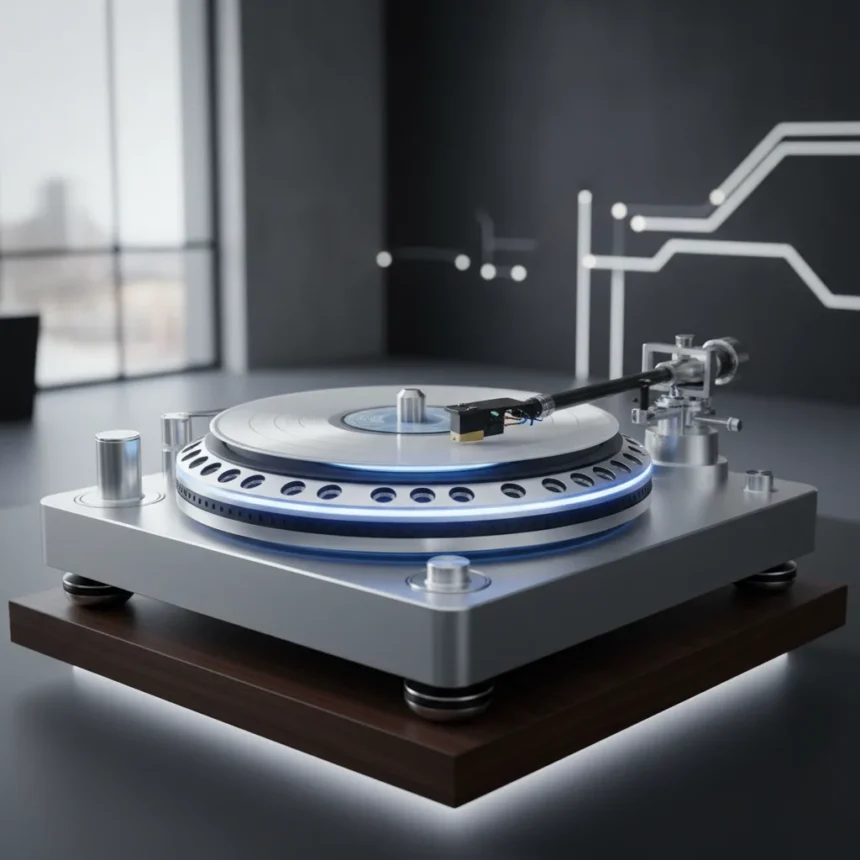
The TechDas vacuum-clamp turntable represents a bold engineering statement for Record Store Day vinyl collectors and serious audiophiles willing to embrace extreme design in pursuit of sonic perfection. This Japanese high-end audio manufacturer has built a deck that secures records using vacuum clamping while floating its heavyweight platter on an air-bearing suspension system, a combination designed to eliminate vibration and unlock extraordinary sound from LP grooves.
Key Takeaways
- TechDas’s vacuum-clamp turntable uses air-bearing suspension to float the platter frictionlessly, minimizing vibration during playback.
- The deck clamps vinyl records via vacuum pressure, securing them to the platter for superior groove tracking and stability.
- Heavyweight platter design works alongside air-bearing tech to deliver clarity from vinyl that standard turntables cannot match.
- Positioned as an elite Record Store Day product for serious audiophiles with demanding listening standards.
- The turntable’s extreme engineering approach intimidates casual listeners while attracting committed vinyl enthusiasts.
How the vacuum-clamp turntable achieves sonic clarity
The vacuum-clamp turntable’s core innovation lies in its dual-system approach to stability. Rather than relying on conventional bearing designs, TechDas floats the platter on an air-bearing suspension that eliminates physical contact between rotating components. This frictionless rotation dramatically reduces vibration transmission into the tonearm and cartridge, allowing the stylus to track vinyl grooves with precision that mass-market turntables simply cannot achieve.
The vacuum-clamping mechanism works in tandem with this air-bearing foundation. By drawing the record flush against the platter’s surface using negative pressure, the system ensures consistent contact between the vinyl and the platter’s mass. This eliminates micro-movements that blur detail and smear dynamics across the frequency spectrum. For Record Store Day releases—often limited-edition pressings with premium mastering—this level of control extracts the full intended performance from the grooves.
The heavyweight platter itself functions as a mechanical filter, absorbing vibrations generated by the motor and the stylus’s tracking force, then dissipating them away from the audio signal path. Combined with the air-bearing suspension, this mass-driven design creates a playback platform fundamentally different from conventional turntables that rely on springs, rubber damping, or simple bearing designs to manage vibration.



Why the vacuum-clamp turntable unnerves and impresses simultaneously
The engineering sophistication behind this vacuum-clamp turntable inspires conflicting reactions. For casual vinyl listeners accustomed to plug-and-play turntables, the sheer complexity of air-bearing suspension and vacuum clamping reads as intimidating—a technological overreach that prioritizes esoteric performance metrics over user experience. The deck demands respect, understanding, and significant financial investment to justify its existence.
Yet for serious audiophiles, this unease is precisely the point. The vacuum-clamp turntable represents uncompromising design philosophy: every engineering choice exists to serve sound quality, not convenience or aesthetics. There are no shortcuts, no cost-cutting compromises, no feature bloat. This is a machine built by engineers for people who care deeply about how vinyl sounds, not just that it plays.



The contrast between standard turntables and this vacuum-clamp design illustrates a fundamental divide in hi-fi philosophy. Most turntables prioritize ease of use and broad appeal. TechDas prioritizes extraction of detail from the vinyl groove, accepting that this pursuit requires complexity, maintenance knowledge, and willingness to embrace unfamiliar technology. For Record Store Day collectors investing in rare pressings, that trade-off makes sense. For someone simply wanting to play records on a Sunday afternoon, it does not.
Vacuum-clamp turntable positioning within the audiophile landscape
TechDas has positioned this vacuum-clamp turntable as the ultimate playback device for serious vinyl enthusiasts during Record Store Day season, when exclusive and limited-edition releases flood the market. These pressings often feature meticulous mastering and premium vinyl compounds, investments that are wasted on mediocre playback equipment. A turntable capable of extracting extraordinary sound from grooves justifies its existence through the revelation of detail in these premium releases.
The vacuum-clamp turntable’s engineering approach differs fundamentally from conventional designs. Where standard turntables use springs, rubber feet, or simple bearing systems, this deck employs air-bearing suspension—technology borrowed from precision laboratory equipment and industrial applications. This is not innovation for innovation’s sake; it is the application of proven precision engineering to the specific problem of playing vinyl records without introducing vibration artifacts.
For audiophiles who view turntables as precision instruments rather than appliances, this engineering philosophy makes absolute sense. The vacuum-clamp turntable demands to be understood, maintained, and respected. In return, it promises to reveal aspects of vinyl playback that remain hidden to users of conventional equipment. That promise—backed by genuine engineering sophistication—is what makes the deck compelling despite its intimidating complexity.



Is a vacuum-clamp turntable worth the investment?
The vacuum-clamp turntable makes sense only for listeners with specific priorities: a substantial vinyl collection of quality pressings, a listening environment optimized for critical playback, and genuine interest in extracting maximum detail from records. If you collect Record Store Day releases or limited-edition pressings, own a quality tonearm and cartridge, and listen critically in a treated room, this turntable’s engineering sophistication directly serves your goals.
For casual listeners or those new to vinyl, the vacuum-clamp turntable represents overkill. The complexity of air-bearing suspension and vacuum clamping adds no value if you are not equipped to appreciate the sonic improvements they deliver. A more conventional turntable will serve you better, both practically and financially. The vacuum-clamp turntable is built for a specific audience: committed audiophiles for whom vinyl playback is a serious pursuit, not a casual hobby.
What makes air-bearing suspension different from conventional turntable designs?
Air-bearing suspension eliminates physical contact between the platter and its bearing, instead floating the platter on a pressurized air layer. This frictionless rotation removes vibration transmission that occurs with conventional ball bearings or sleeve bearings, allowing the stylus to track grooves with greater precision. The result is cleaner dynamics, improved separation between instruments, and reduced surface noise artifacts that plague standard turntables.
How does vacuum clamping improve vinyl playback?
Vacuum clamping draws the record flat against the platter’s surface using negative pressure, ensuring consistent contact throughout the groove. This eliminates micro-movements that blur detail and prevents the record from lifting during playback, particularly important for warped pressings or aggressive stylus tracking. The result is more stable groove contact and clearer signal extraction from the vinyl.
Should you buy a vacuum-clamp turntable for Record Store Day releases?
A vacuum-clamp turntable makes sense only if you already own quality playback components and listen critically. Record Store Day releases deserve excellent playback equipment, but a conventional turntable with a quality tonearm and cartridge will reveal most of what these pressings offer. Reserve the vacuum-clamp turntable for listeners for whom vinyl is a serious pursuit and sonic perfection justifies complexity and investment.
The TechDas vacuum-clamp turntable is not a product for everyone, nor should it be. It is built for a specific audience: audiophiles committed to extracting every detail from vinyl grooves, willing to embrace engineering sophistication in service of sound quality, and ready to invest significantly in their playback chain. For that audience, this turntable represents genuine innovation in precision analog playback. For everyone else, it remains an intimidating reminder of how far audio engineering can push when cost and convenience are secondary concerns.
Edited by the All Things Geek team.
Source: TechRadar