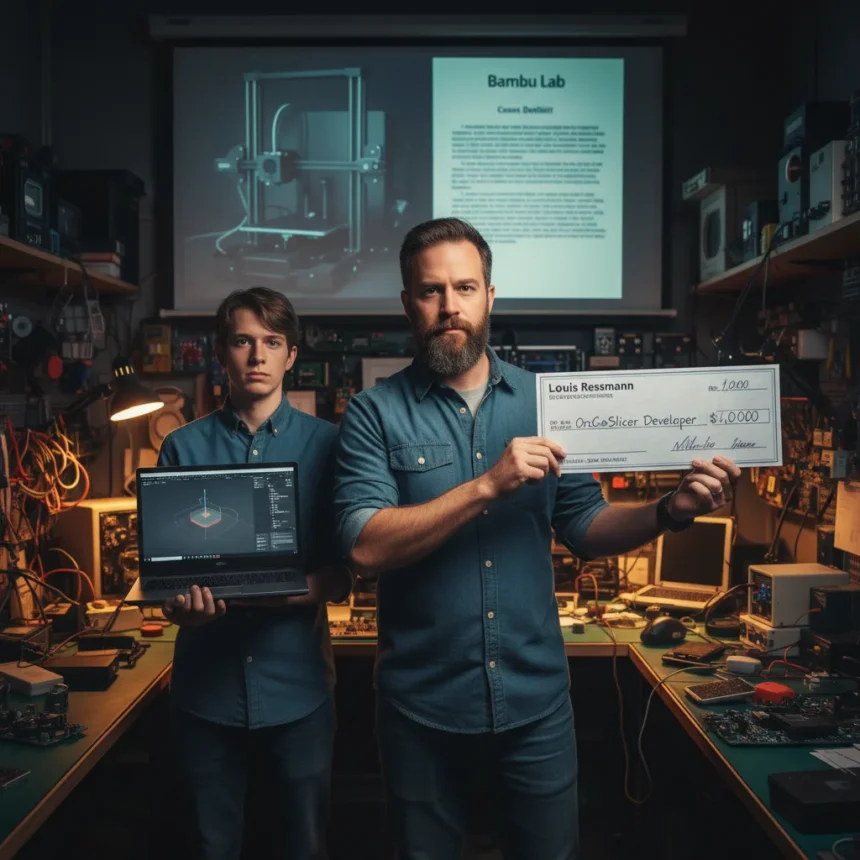
Louis Rossmann, a prominent Right to Repair advocate, has pledged $10,000 to cover initial legal fees for an independent software developer threatened with a cease and desist letter from 3D printer manufacturer Bambu Lab. The developer, jarczakpawel, created OrcaSlicer-bambulab, an open-source slicer software designed to work with Bambu Lab 3D printers. Rossmann’s intervention marks a direct escalation in the ongoing tension between manufacturers and the repair community over software freedom and device control.
Key Takeaways
- Louis Rossmann pledged $10,000 to cover initial legal defense costs for a threatened open-source developer
- Bambu Lab sent a cease and desist letter to the OrcaSlicer-bambulab creator over alleged Terms of Use violations
- Rossmann posted a video Saturday mobilizing the Right to Repair community to crowdfund additional legal support
- The conflict centers on third-party software access to Bambu Lab 3D printer hardware
- This dispute exemplifies broader Right to Repair battles between manufacturers and enthusiast communities
Why Rossmann Is Backing the Developer
Rossmann characterized Bambu Lab’s legal action as a direct attack on the Right to Repair movement. In his video posted Saturday, he called on the broader repair and maker community to support the developer through crowdfunding, positioning this case as emblematic of manufacturers using legal threats to suppress third-party software development. Rossmann’s $10,000 pledge represents his personal commitment to defending what he views as a fundamental principle: the right of users to modify and enhance the software running on devices they own.
The Right to Repair advocate framed Bambu Lab’s cease and desist letter as overreach. By threatening legal action against an independent developer for creating an open-source tool, Rossmann argued, Bambu Lab was attempting to lock down its ecosystem and prevent users from accessing alternative software interfaces. This mirrors similar battles Rossmann has fought in the electronics repair space, where manufacturers have used intellectual property claims to block independent technicians from servicing devices.
The OrcaSlicer-bambulab Project and Bambu Lab’s Response
OrcaSlicer-bambulab is an open-source slicing software that allows users to prepare 3D printer jobs using an alternative interface to Bambu Lab’s proprietary software. The project emerged from the maker community’s desire for more control over their printing workflows and compatibility with existing open-source tools. Bambu Lab’s cease and desist letter claimed the project violated its Terms of Use and cited other unspecified concerns, but did not provide detailed technical or legal grounds for the action.


The dispute highlights a fundamental tension in the 3D printing ecosystem. While Bambu Lab manufactures the hardware, independent developers have created tools that enhance or replace the manufacturer’s software stack. From Bambu Lab’s perspective, such projects may pose support, security, or brand control risks. From the Right to Repair perspective, users should have the freedom to run whatever software they choose on hardware they purchase, and open-source alternatives strengthen the community rather than weaken it.
Mobilizing the Right to Repair Community
Rossmann’s video announcement Saturday was designed to transform this legal threat into a rallying point for the repair movement. By publicly pledging $10,000 and calling for crowdfunding support, he elevated the case from a niche developer dispute to a broader ideological conflict. His strategy mirrors tactics used in other Right to Repair campaigns: drawing media attention, mobilizing grassroots support, and demonstrating that the community will financially back its principles when manufacturers push back.



This approach differs sharply from how individual developers typically respond to cease and desist letters. Most independent creators, facing legal threats from well-funded corporations, back down or remove their projects rather than escalate. By offering financial backing, Rossmann removed a major barrier to the developer’s ability to mount a legal defense. The crowdfunding mechanism also signals to other developers that they will not face legal pressure alone—the community has demonstrated willingness to fund defenses against manufacturer litigation.
Broader Implications for 3D Printing and Open Source
The Bambu Lab conflict is not isolated. It reflects a recurring pattern in technology where manufacturers attempt to restrict software access, and open-source communities push back. Similar disputes have emerged in automotive repair (right to fix car software), consumer electronics repair (smartphone components and diagnostics), and gaming hardware (console modification). In each case, the underlying question remains: does owning hardware grant users the right to run alternative software on it?
For the 3D printing community specifically, this case may influence how manufacturers approach third-party software development. If Bambu Lab’s legal threat succeeds in shutting down OrcaSlicer-bambulab, other manufacturers may adopt similar strategies. Conversely, if the developer mounts a successful defense backed by community support, it could establish a precedent that discourages manufacturers from pursuing such actions. The outcome will likely shape the ecosystem’s openness over the coming years.
What does a Right to Repair advocate do?
A Right to Repair advocate is someone who campaigns for consumers’ legal right to repair, modify, and maintain devices they own, including access to repair manuals, replacement parts, and software tools. Advocates like Rossmann push back against manufacturer restrictions that lock users into official repair channels or prevent third-party servicing. The movement spans consumer electronics, automobiles, medical devices, and increasingly, software-dependent hardware like 3D printers.



Why did Bambu Lab send a cease and desist letter?
Bambu Lab claimed the OrcaSlicer-bambulab project violated its Terms of Use and cited other unspecified issues. The manufacturer likely viewed the open-source slicer as a threat to its proprietary software ecosystem, support infrastructure, or brand control. However, the specific legal grounds remain unclear, and Rossmann’s intervention suggests the developer intends to contest the claim rather than comply.
Will Rossmann’s pledge guarantee a legal victory?
Financial backing does not guarantee a favorable court outcome, but it dramatically improves the developer’s ability to mount a credible defense. With $10,000 plus community crowdfunding, the developer can now afford experienced legal counsel rather than attempting self-representation or settling quickly. The case will ultimately depend on how courts interpret the balance between manufacturer control and user rights in software running on purchased hardware.
This confrontation between Rossmann and Bambu Lab underscores a widening fault line in consumer technology. As devices become more software-dependent, the question of who controls that software—manufacturer or user—grows more urgent. Rossmann’s willingness to fund a legal defense signals that the Right to Repair movement views software freedom as non-negotiable, and is prepared to fight manufacturer restrictions in court rather than accept them quietly.
Edited by the All Things Geek team.
Source: Tom's Hardware