





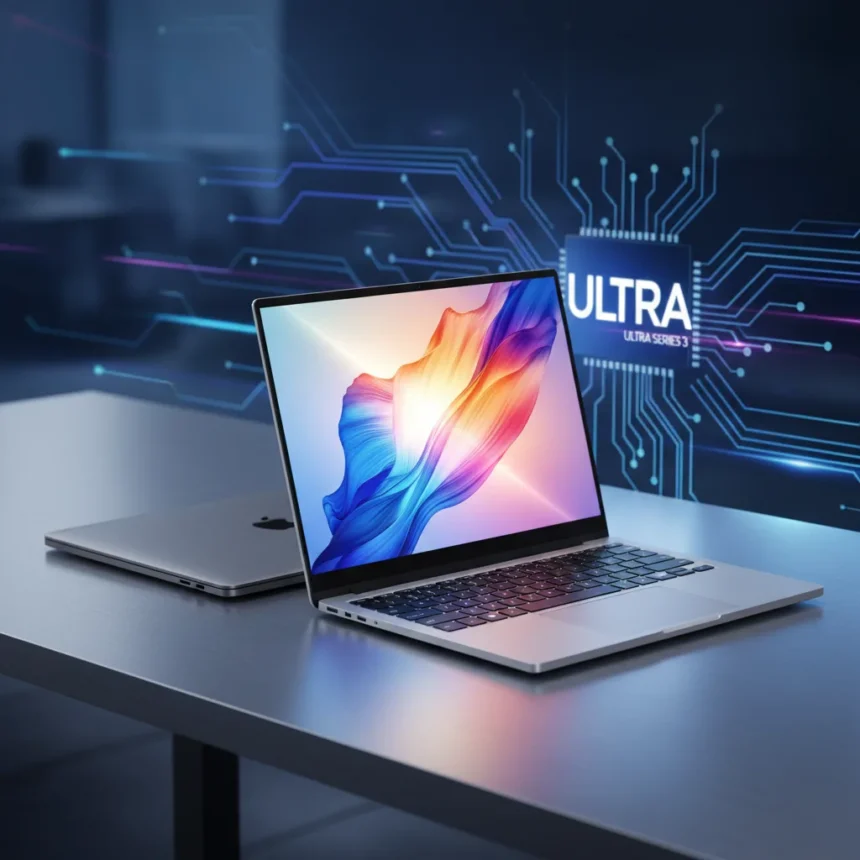
The Samsung Galaxy Book6 Pro OLED display is the standout feature that makes you forget about MacBook Air for a moment, but the real upgrade hiding inside this machine is the Intel Core Ultra Series 3 processor that fundamentally changes what a thin Windows laptop can do. Samsung has built a competitor that doesn’t just match Apple’s ultraportables—it challenges them on their own terms while offering something Apple cannot: a 16-inch OLED touchscreen that makes creative work feel less like a compromise and more like an invitation.
Key Takeaways
- 16-inch Dynamic AMOLED 2X display reaches 1,000 nits peak brightness with 120Hz refresh rate and 100% DCI-P3 color coverage
- Intel Core Ultra Series 3 processor delivers 60% faster multi-threaded performance than previous Galaxy Book models
- Battery life reaches up to 30 hours local video playback, longest tested for 16-inch Windows laptops
- Design measures 11.9mm thick and weighs 1.59kg, matching ultraportable standards
- Price remains undisclosed, raising questions about value proposition against MacBook Air
Samsung Galaxy Book6 Pro OLED Display Sets a New Bar
The Samsung Galaxy Book6 Pro OLED display is a 16-inch Dynamic AMOLED 2X touchscreen with 2,880×1,800 resolution that runs at up to 120Hz, though it intelligently scales between 30Hz and 120Hz depending on content. The panel hits 1,000 nits peak HDR brightness with 100% DCI-P3 color gamut coverage and 120% color volume, meaning colors are both accurate and vivid. This is not a marketing number—it’s a display that makes photo editing, video grading, and even spreadsheet work feel less tedious because the screen is genuinely beautiful to look at for hours.
Samsung added an AI-powered Advanced Vision Booster that adjusts brightness and contrast in real-time based on ambient lighting, and blue light reduction reaches 78% compared to LCD displays. For creators who spend their days staring at screens, that’s meaningful. The touchscreen is responsive, and the 16-inch format gives you actual workspace—not the cramped 13-inch compromise that forces you to choose between portability and usability.
Intel Core Ultra Series 3 Processor Delivers the Real Upgrade
Inside the Galaxy Book6 Pro sits an Intel Core Ultra Series 3 processor (the reviewed unit featured the Core Ultra 7 358H with 16 cores running up to 5.1GHz) that delivers 60% faster multi-threaded performance than Samsung’s previous Galaxy Book models, all while drawing similar power levels. The 12-core Intel Arc B390 integrated GPU offers 70% improved graphics performance over prior generations, and the NPU hits 50 TOPS for AI-accelerated tasks. This matters because it means the laptop handles photo editing, video export, and light gaming without throttling or thermal issues.

The generational leap from Intel’s prior mobile processors is substantial. You’re not buying yesterday’s chip in a prettier chassis—this is a fundamentally more capable machine. For productivity workflows, the performance gains translate to faster file operations, smoother multitasking, and less waiting around for renders or exports to finish.
Battery Life That Actually Lasts
Samsung claims up to 30 hours of local 1080p video playback at 150 nits brightness in airplane mode, and testing confirmed up to 18 hours 31 minutes of video playback at 170cd/m² brightness. The 78Wh battery makes the Galaxy Book6 Pro the longest-lasting 16-inch Windows laptop tested, which is significant because most Windows ultraportables max out around 12-15 hours in real-world use. Real-world battery life varies depending on workload and brightness, but Samsung’s claims are conservative enough that daily use easily clears a full workday without hunting for a charger.



This battery performance comes despite the thinner chassis—11.9mm thick and 1.59kg for the 16-inch model—which usually means compromised endurance. Samsung managed to squeeze both thinness and longevity into the same product, which is rare at this price tier.
Design That Doesn’t Apologize
The aluminum unibody features centered keyboard placement and a larger touchpad, paired with a quad speaker system that delivers fuller sound than most Windows laptops. Samsung’s design language leans minimalist with subtle shark-like lines, avoiding the fussy details that plague some competitors. The 14-inch variant measures 11.6mm thick and weighs 1.23kg, making it even more portable if you prioritize weight over screen real estate.
The touchscreen is responsive and the keyboard travel feels solid without being mushy. This is not a laptop that feels like it’s cutting corners to hit a thinness target—it feels deliberate and refined.
AI Features That Feel Superfluous
Samsung bundled Galaxy AI features including AI Select for text highlighting and instant information lookup, AI Cutout for background removal in photos and slides, and natural-language file search. These tools work, but they feel more like checkbox features than genuine productivity wins. The AI Select feature is convenient if you’re constantly copying text from web pages, but it’s not something that justifies the laptop’s positioning as an AI-first device. The file search is useful, though most users will continue using Windows Search out of habit.


The MacBook Air Comparison That Matters
The Galaxy Book6 Pro positions itself as a MacBook Air alternative, but the comparison is incomplete. Apple’s MacBook Air M5 (or prior generations) slightly outperforms in battery life on some benchmarks, but the Galaxy Book6 Pro’s OLED display and larger 16-inch option give it advantages Apple doesn’t match at the same price tier. The real difference is ecosystem: MacBooks lock you into Apple’s software and services, while the Galaxy Book6 Pro runs Windows, giving you access to Adobe Creative Suite, professional software, and gaming libraries that MacBooks cannot touch.
If you need Final Cut Pro or Logic Pro, buy a MacBook. If you need a powerful, beautiful Windows laptop with a stunning display, the Galaxy Book6 Pro is the argument against the MacBook Air.
Price Remains the Unanswered Question
Samsung has not disclosed pricing for the Galaxy Book6 Pro, which is suspicious. High-end Windows ultraportables at this specification level typically start between 1,400 and 2,000 USD, and without a confirmed price, it’s impossible to assess whether Samsung is offering genuine value or simply repackaging familiar hardware in a shinier box. The OLED display and Intel Core Ultra Series 3 processor justify a premium, but Samsung needs to prove the total package is worth the investment.
Should You Buy the Samsung Galaxy Book6 Pro?
If you want a Windows laptop with an exceptional display, impressive battery life, and current-generation performance, the Galaxy Book6 Pro is worth considering once pricing is confirmed. The OLED screen is genuinely excellent for creative work, and the Intel processor delivers real performance gains. However, the AI features feel tacked-on, and the lack of pricing transparency suggests Samsung is unsure about market positioning. Wait for the price announcement before committing—the hardware is compelling, but the value proposition remains incomplete.
What makes the Samsung Galaxy Book6 Pro OLED display different from standard laptop screens?
The Dynamic AMOLED 2X panel reaches 1,000 nits peak brightness, supports 120Hz refresh rate, covers 100% DCI-P3 color gamut, and includes AI-powered real-time brightness adjustment based on ambient light. Standard LCD displays in Windows laptops typically max out at 400-500 nits and cannot match the color depth or refresh rate, making the OLED screen substantially better for photo editing, video work, and general visual quality.
How much longer does the Galaxy Book6 Pro battery last compared to other 16-inch Windows laptops?
The Galaxy Book6 Pro achieved up to 30 hours of local video playback at 150 nits brightness in airplane mode, making it the longest-lasting 16-inch Windows laptop tested. Most competing 16-inch Windows ultraportables deliver 12-15 hours in real-world use, so Samsung’s battery performance is genuinely exceptional and addresses one of Windows laptops’ traditional weaknesses against MacBooks.
Does the Intel Core Ultra Series 3 processor make a noticeable difference in daily use?
The 60% performance boost over Samsung’s previous models translates to faster file operations, smoother multitasking, and quicker export times for creative applications. For productivity work, video editing, and photo processing, the difference is noticeable. For basic web browsing and document editing, the improvement is less apparent, but you’re paying for headroom that keeps the laptop relevant for several years.
The Samsung Galaxy Book6 Pro proves that Windows laptops can compete with MacBooks on design, display quality, and battery life. The OLED screen is genuinely stunning, the processor delivers real performance, and the battery outlasts most competitors. The missing piece is pricing—once Samsung confirms the cost, you’ll know whether this is a premium alternative or simply an expensive machine with excellent specs. For now, it’s the best Windows ultraportable argument against the MacBook Air, assuming the price doesn’t undermine the value proposition.
Where to Buy
Edited by the All Things Geek team.
Source: TechRadar