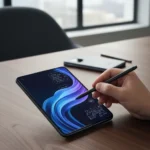
The Muxcard credit card computer is a fully functional prototype that fits in your wallet, powered by the ESP32-C3 microcontroller and featuring an integrated eInk display. This pocket-sized device measures just 1mm thick, challenging everything we thought we knew about portable computing form factors. The project demonstrates that serious computing capability no longer requires a laptop, tablet, or even a smartphone-sized device.
Key Takeaways
- The Muxcard is a credit card-sized computer powered by the ESP32-C3 microcontroller.
- The device features an eInk display and is only 1mm thick.
- It is a fully working prototype with project details available on GitHub.
- The ESP32-C3 is a low-power, single-core microcontroller designed for affordability and efficiency.
- The Muxcard represents a new category of ultra-portable computing devices.
What Makes the Muxcard Different
The Muxcard credit card computer stands apart because it achieves genuine functionality within a form factor that fits in a standard wallet slot. Most portable computing devices sacrifice either power or size. The Muxcard refuses that trade-off by leveraging the ESP32-C3, a microcontroller engineered specifically for low-power operation without sacrificing capability. At 1mm thick, it is thinner than most credit cards, yet it remains a fully operational computer rather than a passive display or simplified gadget.
The eInk display is the critical design choice here. Unlike LCD or OLED screens, eInk consumes power only when the image changes, making it ideal for a battery-constrained device. This technology allows the Muxcard to maintain a persistent visual interface without draining its power source in minutes. The combination of eInk and the ESP32-C3’s efficiency creates a device that can operate for extended periods on minimal battery capacity.
The ESP32-C3 Microcontroller at the Heart
The ESP32-C3 is a single-core microcontroller designed with affordability and efficiency as core priorities. It delivers enough processing power for real applications while consuming minimal energy, making it the natural choice for a credit card-sized computer. The chip includes built-in Wi-Fi connectivity, allowing the Muxcard to communicate wirelessly despite its tiny footprint. This wireless capability transforms the device from an isolated gadget into a connected system that can interact with other devices and networks.


Low-power operation is not a limitation of the ESP32-C3—it is a feature. The microcontroller was engineered to run for extended periods on battery power, a critical requirement for any device designed to live in a wallet. The single-core architecture keeps costs down and power consumption minimal, while still delivering sufficient computational ability for practical applications. This philosophy of doing more with less is precisely what enables the Muxcard to exist as a truly portable computer.
Design and Physical Form Factor
The Muxcard credit card computer achieves its impossibly thin 1mm profile through meticulous component selection and layout optimization. Every millimeter matters when the total thickness is measured in single digits. The eInk display is the thickest component, yet it remains slim enough to not dominate the overall design. The circuit board, microcontroller, and power system are stacked and arranged with surgical precision to keep the device as flat as possible.



Fitting a complete computer into a credit card shape requires rethinking every design assumption. Traditional computers assume space for cooling, cable routing, and modular expansion. The Muxcard assumes none of these luxuries. Instead, it prioritizes integration and efficiency. The project details are available on GitHub, allowing makers and engineers to understand exactly how the design achieves this form factor and potentially build their own versions or iterate on the concept.
Practical Applications and Use Cases
A credit card-sized computer with wireless connectivity opens possibilities that conventional devices cannot address. The Muxcard could serve as a portable authentication token, a wireless sensor network node, a minimalist text editor, or a reference display for critical information. Its thinness means it can slip into a wallet alongside actual credit cards, making it the most portable computing device ever built. The eInk display remains visible even without power, allowing the device to display static information indefinitely.
The low-power nature of the device makes it suitable for scenarios where conventional computers would require frequent charging or external power. A wallet-sized computer that can operate for weeks on a single charge is genuinely useful, not merely a novelty. The Muxcard credit card computer represents a shift in how we think about portable devices—not as replacements for phones or laptops, but as specialized tools for specific tasks where size and power efficiency matter more than raw processing power.
How does the Muxcard compare to other microcontroller projects?
The Muxcard credit card computer differs from typical microcontroller projects in its integration of a full eInk display and its extreme size constraints. Most ESP32-C3 projects use smaller displays or no display at all, prioritizing other functions. The Muxcard’s emphasis on visual feedback and its wallet-sized form factor make it unique in the maker ecosystem. Its design philosophy focuses on creating a genuinely portable computing device, not just a development board.



Can you build a Muxcard yourself?
The Muxcard project details are available on GitHub, meaning makers with microelectronics experience can attempt to build their own version. The project provides the design files and documentation needed to understand the component selection and layout. Building one requires soldering skills, access to specialized components including the eInk display, and patience with extremely tight tolerances. It is not a beginner project, but it is not impossible for experienced makers.
What is the battery life of the Muxcard credit card computer?
The research brief does not specify the exact battery life of the Muxcard. The ESP32-C3’s low-power design and the eInk display’s minimal power consumption suggest extended operating periods are possible, but specific runtime figures depend on the exact battery capacity and usage patterns of individual builds. Makers building their own Muxcard can adjust battery size based on their power requirements and portability preferences.
The Muxcard credit card computer represents a genuine breakthrough in portable computing design. By combining the ESP32-C3’s efficiency with an eInk display and extreme size discipline, it proves that a fully functional computer can fit in your wallet. This is not a marketing gimmick or a simplified gadget—it is a working prototype that challenges assumptions about what computing devices must look like. For makers, engineers, and anyone who thinks about the future of portable technology, the Muxcard is a reminder that innovation often comes from asking what happens when you remove constraints rather than add features.
Edited by the All Things Geek team.
Source: Tom's Hardware