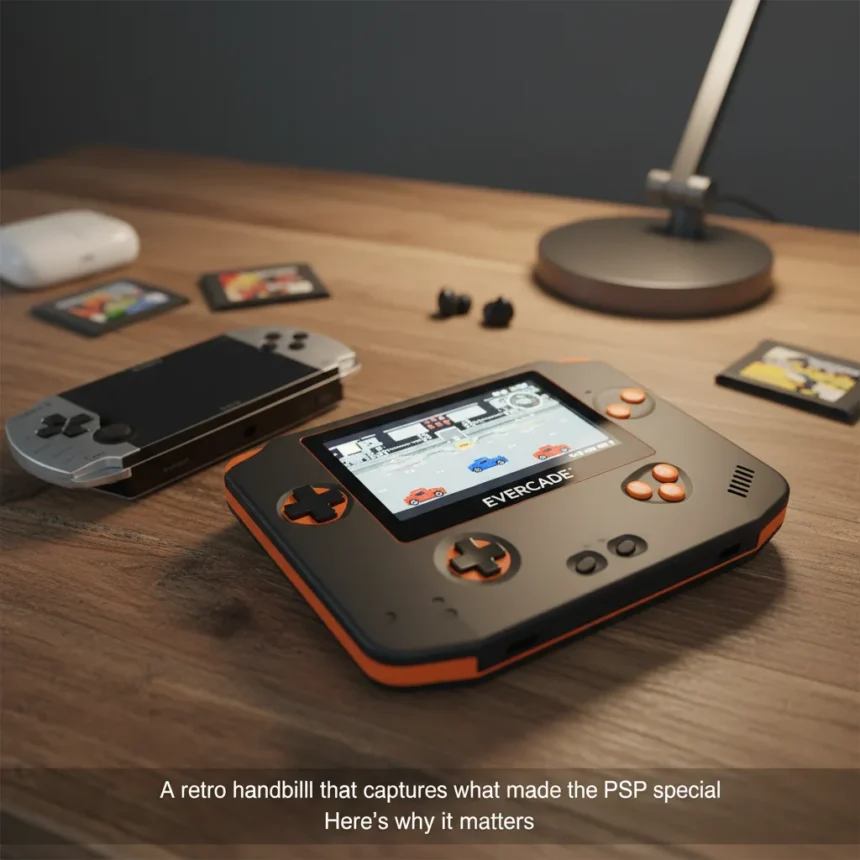
The Evercade Nexus retro handheld is the device that finally answers the question: what if the PSP came back, but better? Blaze Entertainment has announced this new handheld console as its most ambitious retro gaming device to date, and it arrives at a moment when players are hungry for a proper successor to Sony’s iconic portable system.
Key Takeaways
- Evercade Nexus is Blaze Entertainment’s most ambitious retro handheld console to date
- The device features an RGB logo and TATE mode for vertical gaming orientation
- Design philosophy mirrors PSP aesthetics while modernizing the overall experience
- Positioned as a genuine alternative to other retro gaming handhelds on the market
- Targets players seeking a PSP-era gaming experience with contemporary refinements
Why the Evercade Nexus Fills a Real Gap
The PSP left a void when Sony discontinued it. For years, gamers have relied on emulation, original hardware, or niche alternatives to recapture that era of portable gaming. The Evercade Nexus steps into that space with a design philosophy that respects what made the PSP special—its library, its form factor, its cultural moment—while avoiding the hardware limitations that frustrated users back then. This is not a generic retro box designed to play everything; it is a handheld built with intention.
What separates the Evercade Nexus from a sea of other retro gaming devices is its commitment to specific features that matter to serious players. The RGB logo is not just aesthetic window dressing—it signals that this device is designed for enthusiasts who care about presentation. The inclusion of TATE mode, which allows the handheld to rotate for vertical game orientation, shows that Blaze Entertainment understands niche gaming preferences and is willing to implement them. These are not flagship features that appeal to casual buyers; they are the kinds of details that make a device feel purpose-built rather than mass-produced.
Design and Features That Set It Apart
The Evercade Nexus represents Blaze Entertainment’s most ambitious effort in the retro handheld space. Rather than chasing raw processing power or trying to emulate modern consoles, the design leans into what makes portable retro gaming distinctive. The RGB logo serves as both a visual signature and a nod to retro arcade culture, while TATE mode support acknowledges that vertical-scrolling shooters and arcade classics deserve proper hardware support. These features feel considered, not arbitrary.

Compared to predecessors in the Evercade line, the Nexus represents a significant step forward in ambition. The device is not competing directly with Switch-level handheld gaming or latest mobile processors. Instead, it competes with the PSP’s legacy—the idea that a dedicated handheld can offer a curated, specific gaming experience that feels more intentional than a jack-of-all-trades device. For players who grew up with the PSP or who have spent years wishing for a proper successor, this distinction matters enormously.
The PSP Comparison That Actually Matters
Calling something a PSP successor is not casual marketing language in the retro gaming community—it is a claim that demands respect. The PSP succeeded because it offered a genuine alternative to Nintendo’s Game Boy Advance, with its own library, its own aesthetic, and its own audience. The Evercade Nexus is not trying to replicate the PSP’s hardware specs or its commercial dominance. Instead, it is trying to capture the spirit of what made the PSP appealing: a device built for players who wanted something different, something with personality, something that felt premium.
The critical difference is that the Evercade Nexus arrives in a market where retro gaming is no longer niche. Emulation is mainstream. Retro handheld gaming is a recognized category with established players. The Nexus enters this landscape not as a nostalgic curiosity but as a serious piece of hardware designed for a specific audience. That clarity of purpose is what separates it from other retro devices that try to be everything to everyone.
Who Should Actually Buy the Evercade Nexus?
This handheld is not for everyone, and that is precisely why it works. If you are a casual player looking for a device to play thousands of games, you will find better options elsewhere. If you are a PSP enthusiast, a retro arcade devotee, or a player who values specific features like TATE mode support and thoughtful design, the Evercade Nexus is worth serious consideration. The RGB logo and premium build quality signal that this is a device for players who care about the experience, not just the game library.
The positioning as Blaze Entertainment’s most ambitious handheld to date suggests that the company is betting on a growing market of players who want curated, purpose-built gaming experiences rather than all-in-one emulation machines. That bet feels smart. The PSP proved that there is an audience for premium portable gaming, and the Evercade Nexus is betting that audience has only grown in the years since the PSP’s discontinuation.
Is the Evercade Nexus actually a PSP successor?
Not in the literal sense—it is not a Sony product and it will not play PSP games natively. But in spirit and positioning, it absolutely is. The Evercade Nexus captures what made the PSP special: a dedicated handheld with its own identity, designed for players seeking something different from the mainstream. If you have been waiting for a device that feels like a proper spiritual successor to the PSP, this is the closest thing the market currently offers.

What makes the RGB logo and TATE mode important features?
The RGB logo is a design choice that appeals to retro gaming enthusiasts and signals premium build quality. TATE mode support means the handheld can rotate for vertical game orientation, which is essential for classic arcade shooters and vertical-scrolling games. Together, these features show that Blaze Entertainment is designing for specific player preferences rather than generic mass appeal.
How does the Evercade Nexus compare to other retro handhelds?
While many retro handhelds aim to play every game ever made, the Evercade Nexus takes a more focused approach, prioritizing specific features and a curated experience. This makes it less of a direct competitor to all-in-one emulation devices and more of an alternative for players who value design intention and purpose-built hardware. The distinction matters if you are choosing between options.
The Evercade Nexus represents something the handheld gaming market has needed for years: a device that respects the PSP’s legacy while moving forward. It is not trying to be everything to everyone. It is trying to be the right device for players who have been waiting for a proper successor to one of gaming’s most beloved handhelds. That focus, that clarity of purpose, is exactly what makes it worth paying attention to.
Edited by the All Things Geek team.
Source: TechRadar