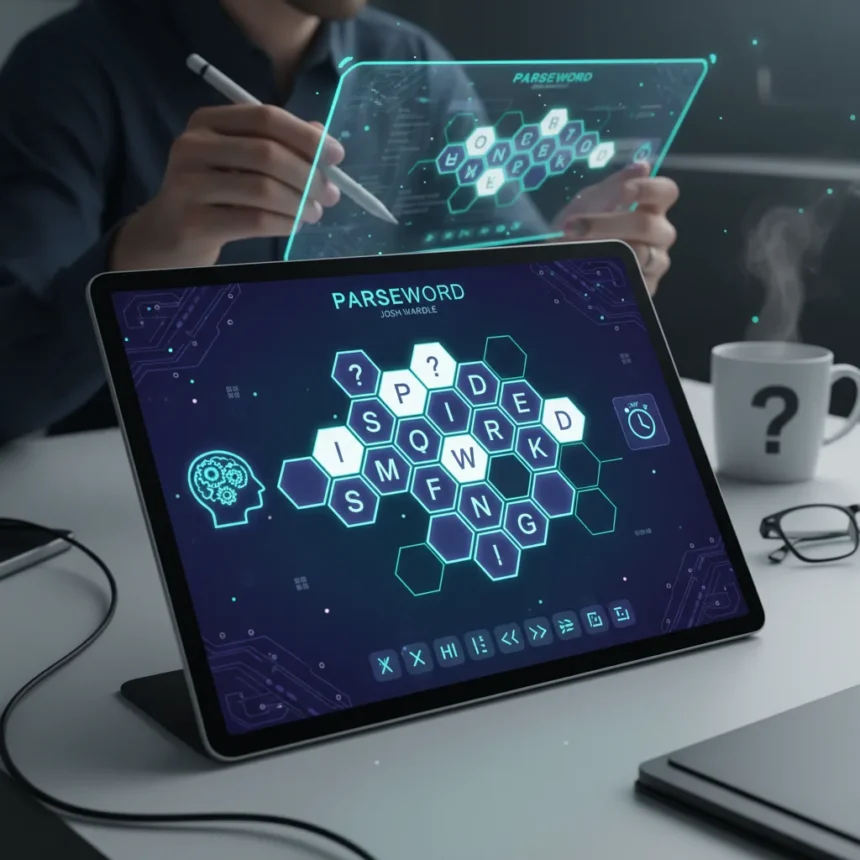
Parseword cryptic puzzle game is Josh Wardle’s follow-up to Wordle, launched in March 2026 as a free daily browser-based puzzle that abandons simple letter-guessing for cryptic wordplay logic. After swapping Wordle for Parseword every day for a week, the verdict is clear: this game is not trying to be Wordle 2.0. It is deliberately, unapologetically harder.
Key Takeaways
- Parseword is a free daily cryptic puzzle game created by Josh Wardle, available at parseword.com
- Based on cryptic crossword logic, using nine keyword types like Container, Anagram, and Homophone
- Three difficulty modes: Learn (hints included), Play (standard), Challenge (hardest)
- Designed for puzzle enthusiasts, not mass-market virality like Wordle
- No ads, no app required, accessible worldwide via browser
What Makes Parseword Different From Wordle
Wordle is a guessing game. You have six attempts to find a five-letter word. Parseword is a logic puzzle. You receive a clue word and three helper words, then decode wordplay to form a simile connecting them. On the March 10 puzzle, the clue was curse. The helper words were blade, catching, and clothes. The solution required replacing blade with sword, clothes with wear, then using the Container keyword to nest sword catching wear inside each other—which forms swear, a simile for curse.
That is not a guess. That is decryption. Wardle told The New Yorker that Parseword is happening more on his own terms, unlike Wordle’s overwhelming viral explosion. The game targets puzzle enthusiasts, not the mass audience that made Wordle a cultural phenomenon. The complexity is intentional.
The Nine Keywords That Power Parseword Cryptic Puzzle Game
Every Parseword cryptic puzzle game solution uses one or more of nine keyword types: Deletion, Container, Selection, Reverse, Hidden, Join, Anagram, Homophone, and Translation. Learning these keywords is the entire game. The tutorial teaches them through starter puzzles and videos, not through trial and error.


Replacement swaps a word or phrase for a synonym or abbreviation—time becomes T, scheme becomes plot. Container inserts one word inside another; M in Poe’s verses becomes poems. Reverse spells a word backward. Anagram rearranges letters. Homophone uses sound-alike words. Each puzzle combines these mechanics in different ways. The Learn mode provides definitions and keyword hints. Play mode removes the hints. Challenge mode hides the solution length and all indicators, forcing you to solve blind.
The tutorial is generous. Videos walk you through each keyword. Starter puzzles let you practice before facing the daily challenge. This is where Parseword cryptic puzzle game succeeds: it makes cryptic crossword logic accessible to people who have never solved one before. Traditional cryptic crosswords assume you already know the language. Parseword teaches it.

Why Parseword Won’t Match Wordle’s Success—And Why That’s Okay
Wordle exploded because it was simple, shareable, and solved in under two minutes. Parseword takes longer. It requires sustained logical thinking. A single puzzle can demand 10 to 15 minutes of decoding, especially on Challenge mode. The game is not designed for casual players who want a quick dopamine hit. It is built for people who enjoy cryptic crosswords, logic puzzles, and wordplay that demands sustained attention.
Wardle understands this. The controlled release—launching Parseword quietly in March 2026 without the media blitz that surrounded Wordle—signals that virality is not the goal. The New York Times owns Wordle now. Parseword is Wardle reclaiming creative control. Success, for this game, means a dedicated audience of puzzle lovers, not global ubiquity.
Compared to Wordle’s five-letter guessing, Parseword cryptic puzzle game is fundamentally different in scope and audience. Wordle targets everyone. Parseword targets people who read cryptic crosswords in The Guardian and solve logic puzzles for fun. The two games are not competitors—they serve different audiences entirely.
The Seven-Day Verdict
After a week of daily play, Parseword cryptic puzzle game delivers on its promise: it makes cryptic wordplay accessible without dumbing it down. The Learn mode prevents frustration for beginners. Play and Challenge modes reward deeper thinking. The daily puzzle structure mirrors Wordle’s ritual without copying its mechanics.


The only friction is the learning curve. Day one feels confusing. By day three, the keyword patterns click. By day seven, you start spotting Containers and Anagrams before reading the hints. This is not a flaw—it is the point. Parseword expects you to become a better puzzle solver as you play.
The game is free, ad-free, and available worldwide at parseword.com. There is no reason not to try it. If you loved Wordle but want something that demands more of your brain, Parseword is worth the daily commitment. If you want a quick morning puzzle and nothing more, stick with Wordle. Both games are good. They are just good for different people.
Does Parseword have an app?
No. Parseword cryptic puzzle game is browser-based only, available at parseword.com or pword.com. You do not need to download anything. Open the site, play the daily puzzle, and close it. This keeps the game lightweight and accessible on any device with a web browser.
Is Parseword free to play?
Yes. Parseword cryptic puzzle game is completely free with no ads. There are no paywalls, no premium tiers, and no in-app purchases. The daily puzzle is available to everyone worldwide.
How long does a Parseword puzzle take to solve?
It depends on the mode and your experience. Learn mode with hints might take 5 to 10 minutes. Play mode typically takes 10 to 15 minutes. Challenge mode, with no hints or solution length indicators, can take 20 minutes or longer. Unlike Wordle, speed is not the goal—understanding the wordplay is.
Parseword cryptic puzzle game succeeds because it does not try to be Wordle. It is cryptic crosswords for the modern internet: accessible, daily, and designed to make you smarter with every puzzle you solve. If that appeals to you, play it tomorrow.
Edited by the All Things Geek team.
Source: Tom's Guide