The Steam Controller stock situation is becoming one of the most dramatic hardware launches in Valve’s history. The device went live on the Steam Store on May 4, 2026, and disappeared from inventory in under 30 minutes across multiple territories. This was not a surprise to those watching Valve’s ecosystem closely—demand for the company’s gaming hardware has been climbing steadily. But the speed of the sellout still caught many observers off guard, especially given the controller’s premium price positioning.
Key Takeaways
- Steam Controller launched May 4, 2026, and sold out globally within 30 minutes
- Retail pricing ranges from £85 (UK) to $99.99 (US), positioning it 40-50% above standard competitors
- Secondary market listings show units reselling at £150+, nearly double the retail price
- The controller ranks #1 on Steam Store’s Top Sellers chart despite immediate unavailability
- Supply chain pressures from tariffs and import duties are contributing to scarcity
Why the Steam Controller Stock Vanished So Fast
The Steam Controller stock depletion happened at a pace that suggests either Valve severely underestimated demand or production capacity remains constrained by broader hardware manufacturing challenges. At £85 in the UK and $99.99 in the US, the controller costs roughly 40 to 50 percent more than an Xbox controller or PlayStation DualSense. Premium pricing typically dampens enthusiasm, yet the device still sold out in minutes. This tells you something important: consumers are willing to pay significantly more for Valve-branded gaming hardware, and the company’s ecosystem loyalty runs deep.
The sellout occurred as part of a larger hardware expansion. Valve is shipping three major devices in the first half of 2026: the Steam Controller, Steam Machine, and Steam Frame VR headset. The controller’s rapid depletion suggests that interest in Valve’s entire hardware strategy is far stronger than expected. The device ranks number one on the Steam Store’s Top Sellers chart, a remarkable achievement for a product currently unavailable. This is not a slow-burn product finding its audience—this is sustained, immediate demand colliding with finite supply.
Steam Controller Stock Availability and Secondary Market Reality
As of now, the Steam Controller is listed as out of stock on the Steam Store with no pre-order option available. Valve has provided no official restock date. For consumers desperate to get the device immediately, the secondary market tells an uncomfortable story. eBay listings show presale units commanding £150 and higher, nearly double the retail price. This price arbitrage reflects both scarcity and confidence that supply will remain tight for weeks or months.

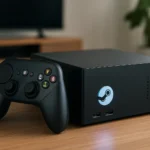
The availability gap between retail and secondary markets is a classic sign of supply-demand imbalance. When legitimate retail channels cannot meet demand, resellers step in and capture the margin. The fact that people are willing to pay 75 percent premiums suggests they either need the controller urgently or believe prices will climb further. Neither scenario is good for Valve’s reputation if the company cannot restock quickly.
Global Pricing and Supply Chain Headwinds
Valve’s Steam Controller stock challenges are rooted partly in global supply chain friction. The company cited supply chain pressures including imports, tariffs, and duties as factors affecting both pricing and availability. These are not temporary hiccups—tariff regimes and import duties have become structural features of hardware manufacturing. Australia’s $149 AUD price and the EU’s €99 price reflect regional tariff burdens layered on top of base manufacturing costs.
Reports suggest Valve received approximately 50 tonnes of game console hardware in import shipments, though the exact contents of those containers have not been officially confirmed. If accurate, this translates to roughly 20,000 units in the initial batch—a substantial number that sold through in minutes. This raises the question: did Valve produce too few units, or is demand genuinely that explosive? The answer likely involves both factors. Broader supply chain constraints affecting RAM and component availability are also impacting Valve’s production across multiple product lines.
How Steam Controller Stock Compares to Competitor Launches
The Steam Controller’s 30-minute sellout is noteworthy when compared to standard gaming controller launches. Xbox controllers and PlayStation DualSense pads, while popular, do not typically sell out at retail within minutes of launch. They are cheaper, more readily available, and produced in higher volumes. The Steam Controller, by contrast, carries both a premium price and the prestige of Valve’s brand ecosystem. This creates a different buyer psychology—early adopters view it as a collectible piece of Valve’s hardware expansion, not just a functional input device.
Nintendo Switch 2 sold approximately 4 million units within days of launch, but that device represents an entire gaming console, not a peripheral. The Steam Controller’s rapid depletion is more analogous to limited-edition or exclusive hardware drops, where scarcity and brand loyalty drive urgency. The fact that it ranks number one on the Steam Store’s Top Sellers chart despite being unavailable shows that the ranking algorithm prioritizes recent velocity, not current stock—a signal that Valve’s own platform is amplifying awareness of the shortage rather than dampening it.
When Will Steam Controller Stock Return?
Valve has not announced a restock date for the Steam Controller. The company typically communicates availability updates through the Steam Store product page or official announcements, but as of May 4, 2026, no timeline has been provided. Given that the initial batch sold through in 30 minutes, a second production run is almost certainly underway, but manufacturing timelines for hardware are measured in months, not weeks. Consumers should expect a wait of at least 4 to 8 weeks before the next batch becomes available, though this is speculation based on typical hardware lead times rather than official guidance.

The lack of pre-order functionality is another red flag. Pre-orders would allow Valve to gauge demand more precisely and secure production commitments from manufacturers. The absence of pre-orders suggests either that Valve is uncertain about its ability to fulfill orders at a reasonable timeline, or the company is intentionally limiting availability to create scarcity and buzz. Either way, the message to consumers is clear: if you want a Steam Controller, you will need to monitor the Steam Store closely or be prepared to pay secondary market premiums.
Is the Steam Controller worth the premium price?
The Steam Controller costs 40 to 50 percent more than an Xbox controller or DualSense pad. Whether that premium is justified depends on your use case. If you are deeply invested in the Steam ecosystem and plan to use the device with Steam Deck or the upcoming Steam Machine, the integration may justify the higher cost. If you are a casual buyer looking for a general-purpose gaming controller, cheaper alternatives exist. The secondary market prices, which have climbed to £150+, suggest early adopters believe the premium is justified—or at least that scarcity will drive future value.
Why is the Steam Controller selling out if it costs more than competitors?
Premium pricing typically reduces demand, yet the Steam Controller sold out in 30 minutes. This paradox reflects Valve’s strong ecosystem loyalty and the perception that the device is a limited, collectible piece of hardware. Consumers are willing to pay more for products aligned with their preferred platforms, especially when scarcity signals exclusivity. The fact that the controller is part of a larger hardware strategy—Steam Machine and Steam Frame VR—also amplifies interest. Buyers may see it as an essential accessory for an upcoming device ecosystem.
Will Valve restock the Steam Controller before 2026 ends?
Valve’s stated goal was to ship all three hardware devices—Steam Controller, Steam Machine, and Steam Frame VR—in the first half of 2026. If that timeline holds, the company will likely prioritize Steam Machine and Steam Frame production, with controller restocks following. A restock before the end of 2026 is probable, but supply will likely remain constrained through the summer. Valve has not disclosed production numbers for the initial batch, making it impossible to predict exact restock timing with confidence.
The Steam Controller stock situation reveals both Valve’s growing influence in hardware and the company’s ongoing struggle with supply chain constraints. A product that costs 40 to 50 percent more than its competitors should not sell out in 30 minutes—unless consumer loyalty, ecosystem integration, and perceived scarcity are driving purchasing decisions beyond rational price comparison. For now, the Steam Controller remains a symbol of Valve’s ambitions in hardware and a cautionary tale about underestimating demand. Consumers who missed the initial launch should expect a long wait for the next batch and should monitor the Steam Store closely for restock announcements.
Where to Buy
Edited by the All Things Geek team.
Source: T3