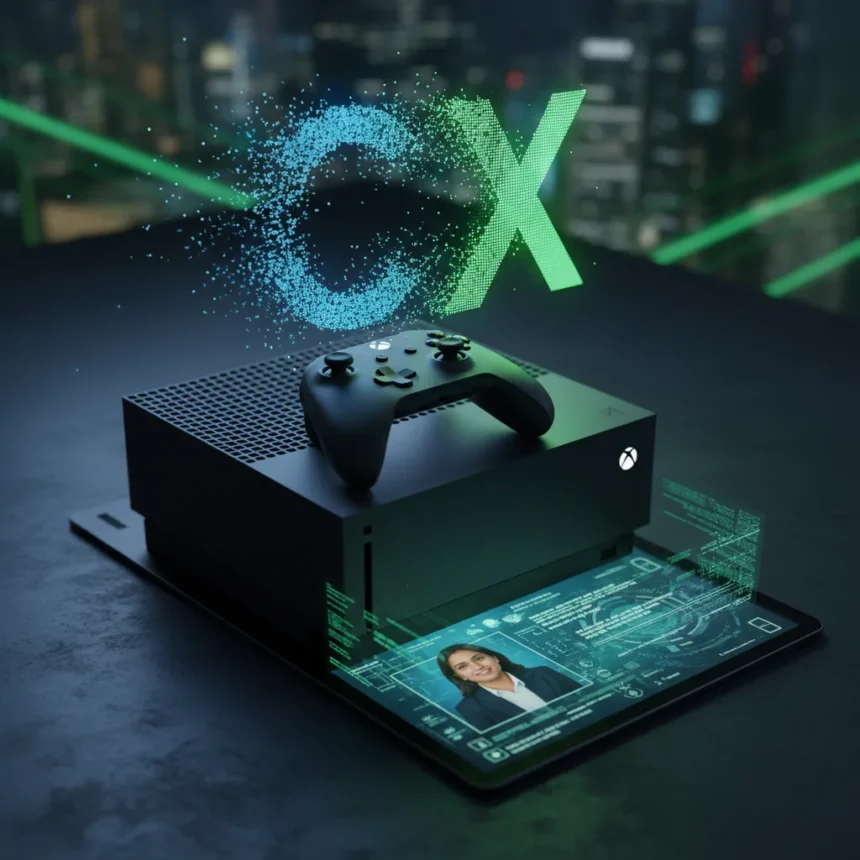
Xbox Copilot discontinuation marks a significant pivot in how Microsoft approaches artificial intelligence on its gaming consoles. The decision to remove Copilot from Xbox hardware reflects broader strategic realignment under Asha Sharma’s leadership, signaling that the company is stepping back from experimental AI integrations to focus on what players actually want: faster performance and stronger community features.
Key Takeaways
- Xbox is ending Copilot support on consoles as part of platform restructuring.
- The move reflects Microsoft’s shift away from AI-first thinking toward speed and community focus.
- Asha Sharma’s leadership is driving a “Return to Xbox” initiative prioritizing core gaming.
- This decision reveals tension between profit margins and platform innovation.
- Microsoft is consolidating strategy around next-generation console plans for 2027.
Why Xbox Is Killing Copilot
The discontinuation of Xbox Copilot is not a technical failure—it is a strategic choice. Microsoft introduced Copilot on Xbox as part of its broader push to embed AI assistants across every consumer device. However, the feature never gained meaningful traction with players, who viewed it as a distraction rather than an enhancement to their gaming experience. Rather than continue investing in a feature that did not resonate, Asha Sharma’s team decided to reallocate resources toward priorities that directly impact gameplay and user satisfaction.
This decision reveals how Microsoft’s gaming leadership is rethinking the company’s approach to innovation. For years, Microsoft pursued an “AI everywhere” strategy, assuming that adding AI capabilities to every product would drive adoption. The Xbox Copilot experience proved that assumption wrong. Players do not want an AI assistant helping them navigate menus or offering gaming tips—they want a console that boots faster, loads games quicker, and connects them with their community more effectively.
Asha Sharma’s “Return to Xbox” Strategy
Asha Sharma has been tasked with reshaping Xbox’s identity and priorities, and the Copilot discontinuation is a concrete example of that mandate. Rather than chase every emerging technology trend, Sharma’s approach focuses on what made Xbox competitive in the first place: speed, reliability, and community. This represents a departure from previous leadership’s tendency to experiment with tangential features that distracted from core gaming functionality.

The broader context matters here. Microsoft is preparing for a next-generation console launch planned for 2027, and every decision made now affects how that hardware will be positioned and perceived. By cutting Copilot now, Sharma is signaling that the 2027 Xbox will prioritize gaming-first design rather than feature bloat. This is a refreshing stance in an industry often tempted to add features simply because the technology exists.
The Profit Margin Pressure Behind the Scenes
Underlying this strategic shift is financial pressure. Microsoft’s leadership has demanded aggressive profit margins from the Xbox division, creating constraints that force difficult choices about where to invest engineering resources. Rather than spread development thin across multiple AI experiments, Sharma’s team is concentrating effort on features that directly drive player engagement and retention.
This financial reality does not diminish the decision—if anything, it makes the choice smarter. A gaming platform survives on player satisfaction, not on having the most features. Xbox Copilot was a feature that added complexity without clear player benefit. Removing it frees up engineering capacity for work that actually matters: improving system performance, expanding game libraries, and strengthening online infrastructure.
What This Means for Xbox’s AI Future
The discontinuation of Copilot does not mean Xbox is abandoning artificial intelligence entirely. Rather, it signals that any future AI integration will need to prove its value to players before it ships. This is a more disciplined approach than the previous “experiment and iterate” mindset that led to Copilot’s launch in the first place.
For players, this is good news. It means Xbox’s development roadmap will focus on features that solve real problems—faster load times, better game discovery, improved matchmaking—rather than AI assistants that few players asked for. The gaming industry has learned repeatedly that players value substance over novelty, and Sharma’s strategy reflects that lesson.
How This Compares to PlayStation’s Approach
Sony’s PlayStation has taken a more measured stance on AI features, focusing on performance enhancements and gameplay innovations rather than prominent AI assistant integrations. While PlayStation has explored AI in specific games and backend systems, it has not pushed consumer-facing AI assistants the way Microsoft did with Copilot. Xbox’s decision to discontinue Copilot brings the platform closer to PlayStation’s philosophy: let the games and performance speak for themselves.


Is Xbox discontinuing all AI features?
No. Xbox is ending Copilot specifically, which was a consumer-facing AI assistant feature. Microsoft will continue exploring AI in other areas, such as game development tools and backend services, but the focus is shifting away from visible AI integrations that do not directly enhance gameplay.
What happens to users who were using Xbox Copilot?
Users currently relying on Xbox Copilot will lose access to the feature as it is phased out. Microsoft has not detailed a transition period or alternative tool, but the company is likely to communicate specific timelines directly to affected players through Xbox’s official channels and support documentation.
Will this affect the next-gen Xbox console in 2027?
The discontinuation of Copilot on current consoles sets the tone for how the 2027 Xbox will be designed. Rather than launching with experimental AI features, the next-gen console will likely emphasize proven technologies: faster processors, improved graphics, larger game libraries, and stronger online services. This approach positions the platform for long-term success rather than short-term novelty.
Xbox’s decision to end Copilot reveals a maturing approach to console strategy. Under Asha Sharma’s leadership, the platform is shedding experiments that do not serve players and doubling down on fundamentals. In a competitive market where PlayStation and Nintendo also compete for attention, this disciplined focus on what players actually want is exactly the right call. The gaming industry does not need smarter AI assistants on consoles—it needs faster systems, better games, and stronger communities. Xbox is finally building toward that vision.
Edited by the All Things Geek team.
Source: Windows Central