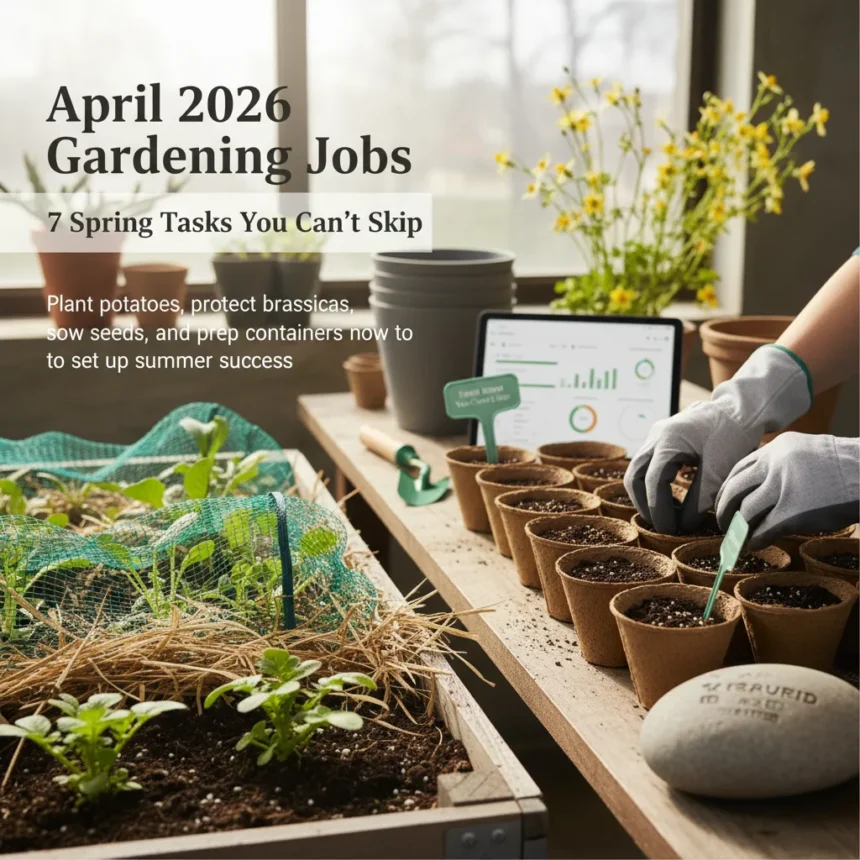
April 2026 gardening jobs are not optional if you want a thriving summer garden. This month sits at the critical intersection of spring preparation and warm-season planting, when soil temperatures rise, frost risk drops, and seedlings demand transplanting. The northern hemisphere’s post-frost window is narrow, and every day counts.
Key Takeaways
- Plant second-early and maincrop potatoes in pots or beds during April for summer harvest.
- Protect brassicas with cardboard collars to stop cabbage root fly egg-laying on stems.
- Sow outdoor tomatoes, chillies, courgettes, beans, and herbs in pots for late May transplant.
- Prick out greenhouse seedlings at first true leaf stage and transplant tomatoes into growing bags.
- Scout daily for aphids; pinch broad bean tips or spray with soap solution if infested.
Plant Potatoes Before Soil Cools Again
Potato planting in April is your last practical window for second-early and maincrop varieties. These need time to establish before summer heat arrives, and April soil conditions are ideal: warm enough to sprout, cool enough to prevent bolting. Plant in pots for small spaces or directly in beds; either approach works, though containers suit gardeners with limited ground space.
Bury seed potatoes 10-15cm deep, spaced 30cm apart, and keep soil consistently moist as shoots emerge. Second-early varieties mature in 12-14 weeks, while maincrop types need 16-20 weeks, so April planting means harvest by July or August. Skip this month and you’ll be chasing cold soil in May, delaying growth.
Defend Brassicas and Broad Beans Against Pests
April 2026 gardening jobs must include aggressive pest prevention. Cardboard collars around brassica stems block cabbage root fly from laying eggs at the soil line; this single barrier prevents devastating root damage without chemicals. Cut collars from toilet roll tubes or cardboard scraps, place them around transplant stems, and press into soil.


Broad beans attract aphids as new growth emerges. Scout daily and pinch out infested shoot tips immediately, or spray with a soap-based solution if aphid colonies cover multiple shoots. Early intervention stops populations from exploding; waiting until June means losing the crop.
Sow Seeds for Late May and June Planting
April sowing gives warm-season crops a head start indoors before outdoor planting after the last frost. Sow tomatoes, chillies, courgettes, runner beans, French beans, cucumbers, pumpkins, and sweetcorn in pots under glass or on a sunny windowsill. These seedlings will reach transplant size (4-6 true leaves) by late May, ready for hardening off and moving outside.



Herb sowing is equally critical: basil, chives, parsley, fennel, and coriander all germinate quickly in April warmth and provide harvests by midsummer. Sweet peas sown in deep pots and kept frost-free in a greenhouse or windowsill will flower by early summer, adding color and scent to borders.
Manage Seedlings and Greenhouse Transplants
Prick out seedlings the moment first true leaves appear—not the rounded cotyledons, but the first jagged or lobed leaf that shows the plant’s true identity. Move them into individual pots filled with compost-rich mix, keep soil moist, and provide bright light to prevent leggy growth. Tomatoes transplanted into growing bags or large containers at this stage need immediate support: tie stems loosely to stakes or string to prevent damage as they grow.
Plant summer bedding in hanging baskets and pots, but keep them indoors or in a frost-free greenhouse until after your region’s last frost date. Hardening off—moving plants outdoors for increasing periods over 7-10 days—prevents shock when they finally move to the garden. Skip hardening off and tender plants will wilt or die in outdoor conditions.
Prepare Containers and Manage Fruit Trees
Clean containers from last year, removing old compost and algae buildup, then refill with fresh compost-rich mix. Check drainage holes are clear; waterlogged pots kill more plants than dry spells. On peaches and nectarines, thin developing fruit to one fruit every 10cm of branch, removing crowded or misshapen specimens. This concentrates energy into fewer, larger fruits with better flavor and less disease.


Harden Off and Hoe Weeds Regularly
Weeds explode in April warmth. Hoe between vegetable seedling rows every 3-4 days to remove weeds before they compete for water and nutrients. This light cultivation also breaks soil crust, improving moisture penetration. Remove moss and weeds from lawns and apply nitrogen-rich feed to boost spring growth.
Hardening off warm-season plants is non-negotiable. Move transplants outdoors for 1-2 hours on day one, increasing duration daily until they spend full days outside by day 7-10, then leave out overnight if temperatures stay above 10°C. This toughens stems and roots, preventing transplant shock.
Collect Rainwater and Support Pollinators
April showers are reliable in temperate regions. Attach guttering to greenhouse or shed roofs and connect it to water butts to capture this free resource. Even a single butt fills quickly and reduces dependence on mains water during dry spells in May and June.
Plant colorful, nectar-rich flowers with continuous blooms to support bees and other pollinators as they emerge from winter. Borage, calendula, and phacelia flower quickly from April sowing and provide nectar when few wild flowers are open.
What are the most critical April 2026 gardening jobs?
Potato planting, brassica protection, and seed sowing are the three jobs that cannot wait. Miss these windows and you lose the entire growing season for those crops. Pest control and seedling management follow immediately after.
Can I plant warm-season crops in April?
Yes, but only indoors or in frost-free greenhouses. Sow seeds in April for transplanting after your last frost date, typically late May or early June in temperate regions. Planting tender seedlings outdoors before frost risk passes kills them.
How often should I scout for pests in April?
Check new plants daily for aphids and other pests. Early detection means a quick pinch-out or spray stops colonies before they explode. By mid-April, daily checks become routine and catch problems before damage spreads.
April 2026 gardening jobs are the foundation of summer success. Potatoes planted now feed you in July. Seeds sown this month flower or fruit by August. Pests controlled early stay controlled all season. Skip April and you spend May and June catching up—if you catch up at all. The month is short, the tasks are urgent, and the payoff is undeniable.
Where to Buy
$71 at Amazon US | $9.99 at Amazon US | $39 at Amazon US
Edited by the All Things Geek team.
Source: Tom's Guide