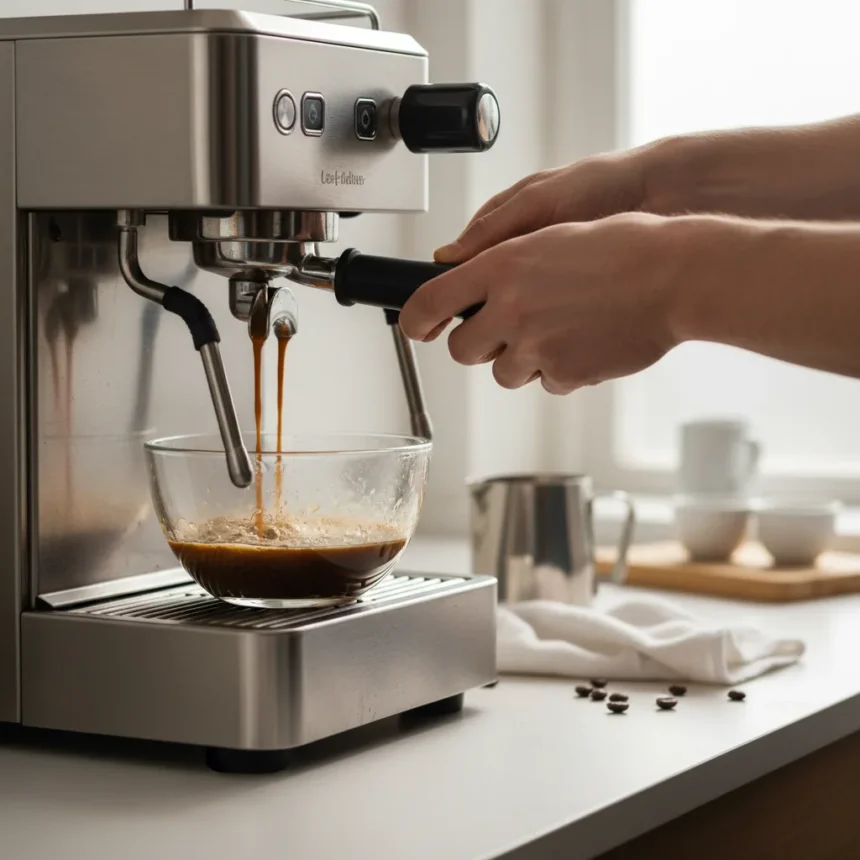
Backflushing espresso machines is the single most overlooked maintenance habit among home baristas, according to Seattle Coffee Gear experts who repair damaged machines daily. Most users have no idea they’re neglecting this critical step, which shortens machine lifespan, clogs brew pathways with coffee oils, and degrades the taste of every shot pulled. Yet the fix takes minutes and costs almost nothing.
Key Takeaways
- Backflushing removes coffee oil and residue buildup that clogs espresso machine brew pathways over time.
- Use a blind portafilter basket with coffee-specific detergent, running 2–3 scrubs every 2–3 weeks minimum.
- Daily habits—wiping the portafilter dry, rinsing the grouphead screen, purging the steam wand—prevent damage between deep cleans.
- Descaling with Dezcal every 1–2 years and professional tune-ups every 3–5 years protect internal components.
- Filtered water reduces descaling frequency and extends machine life significantly.
Why Backflushing Espresso Machines Prevents Costly Damage
Coffee oils and fine grounds accumulate inside brew pathways with every shot, creating a sticky residue that hardens over time. This buildup restricts water flow, forces the machine to work harder, and eventually clogs the group head completely. Seattle Coffee Gear’s repair center documents machines damaged by years of neglect—machines that could have been kept in perfect condition with one simple habit.
Backflushing forces hot water backward through these pathways, scrubbing away the accumulated oils before they solidify into permanent blockages. The process is straightforward: insert a blind portafilter basket (one with no holes), add coffee-specific detergent, run the hot water cycle to dissolve and force the detergent back through the group head, and repeat 2–3 times. Done every 2–3 weeks at minimum, this single step prevents the internal decay that sends machines to repair shops.
The Complete Daily and Weekly Routine
Backflushing works best when paired with simpler daily habits that prevent buildup from starting. After every shot, wipe the portafilter completely dry and run a quick water rinse through the group head screen before reattaching the portafilter. This removes loose grounds and prevents them from drying inside the group head. Optionally, scrub the dispersion screen with a tool like the Poo-Poo Coffee Tool between shots to clear residue.


The steam wand demands equal attention. After every milk frothing session, blast steam into a towel for 2–3 seconds to purge milk from the wand, then wipe it completely clean. Milk that sits inside the steam wand creates crusty buildup and risks milk being sucked back into the boiler, which causes leaks and contamination. Monthly or every 2 months, run milk system cleaner like Rinza through the steam wand per the manual’s instructions, soak the steam tips, and purge fully.
Descaling and Professional Maintenance Schedules
Beyond backflushing and daily cleaning, descaling removes mineral deposits that accumulate from water hardness. Use Dezcal solution every 1–2 years, or annually if you use unfiltered water. Dezcal is recommended over vinegar because it is safer for internal components, more effective at removing mineral buildup, and leaves minimal taste impact. Using filtered water reduces the frequency of descaling and extends machine life significantly.



Professional tune-ups every 3–5 years catch wear that home cleaning cannot address. These services replace worn parts like vacuum breakers and ensure internal seals remain intact. For grinders, run Grindz cleaning solution through every few months, and disassemble and soak burrs in cleaning solution every 3–6 months depending on usage.
Backflushing Espresso Machines vs. Neglect: The Long-Term Cost
A machine that receives regular backflushing, daily grouphead rinsing, and monthly steam wand cleaning stays responsive and produces consistent shots for years. A machine that skips backflushing accumulates oil, loses water flow pressure, and develops internal damage that repair shops struggle to reverse. The difference is not a matter of expensive upgrades—it is discipline with free or cheap supplies. Coffee-specific detergent costs very little, and a blind portafilter basket is a one-time purchase.
Superautomatic machines like the Jura Z10 include built-in cleaning cycles for milk systems, but they still require manual backflushing and descaling to prevent long-term degradation. No machine is immune to oil and mineral buildup.
What Products Actually Work
Seattle Coffee Gear recommends Dezcal for descaling, Biocaf Cleaning Power for soaking brew group parts, Rinza for milk system deep cleaning, and Grindz for grinder maintenance. These are coffee-specific formulations designed not to corrode seals or leave harmful residues, unlike generic household cleaners or vinegar. The investment is minimal compared to the cost of machine repairs or replacement.



FAQ
How often should I backflush my espresso machine?
Every 2–3 weeks at minimum, depending on usage. If you pull more than 10 shots daily, backflush twice weekly. If you pull fewer than 5 shots daily, monthly is acceptable, but 2–3 weeks is the safest interval.
Can I backflush without a blind basket?
No. A regular portafilter basket has holes that allow water and detergent to drain out instead of being forced backward through the group head. A blind basket (no holes) is essential for the scrubbing action that removes oil buildup.
Does filtered water really make a difference?
Yes. Hard water deposits minerals inside the machine faster, requiring descaling every year instead of every 1–2 years. Filtered water reduces mineral accumulation and extends the time between descaling cycles significantly.
The espresso machines that last longest are not the most expensive—they are the ones that receive consistent backflushing and daily care. Seattle Coffee Gear’s repair data proves it: machines neglected for months accumulate damage that takes hours to reverse, while machines maintained weekly stay in perfect condition. Start backflushing today and you will never have to explain to a repair technician why your machine failed.
Where to Buy
Edited by the All Things Geek team.
Source: Tom's Guide