






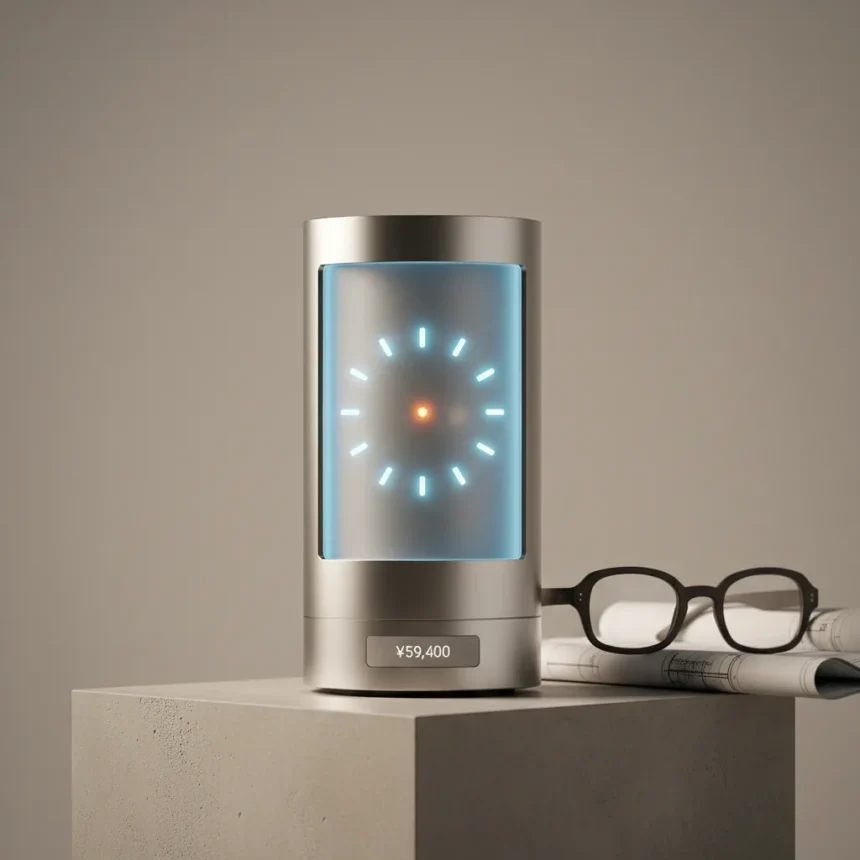
The Balmuda Clock is a hands-free bedside timepiece designed by Jony Ive’s firm LoveFrom in collaboration with Tokyo-based Balmuda, using an innovative “Light Hour” illumination system instead of traditional hour and minute hands to display the time. Launching in Japan mid-April 2026 at ¥59,400 (approximately $370 USD), the device represents Ive’s first major product collaboration outside Apple, blending premium industrial design with questionable usability.
Key Takeaways
- The Balmuda Clock ditches hands entirely, using LEDs to illuminate hour numbers and minute markers instead.
- Machined from a solid aluminum block, the 2.9-inch square device prioritizes aesthetics over functional clarity.
- Built-in stereo speakers deliver alarms, ambient sounds, and a focus timer via the Balmuda Connect app.
- Priced at ¥59,400 in Japan with no confirmed US or international release date.
- The “Light Hour” display system makes telling time at a glance surprisingly difficult despite its elegant design.
What Makes the Balmuda Clock Different
The Balmuda Clock abandons every convention of timepiece design. Instead of sweeping hands, numbers 1 through 12 illuminate to show hours, while LEDs behind the outer edge lines denote minutes. The seconds display as a slow, pendulum-like animated movement, inspired by Ive’s study of the Foucault pendulum at the National Museum of Nature and Science. This light-based approach creates a soft, painted glow rather than the harsh brightness typical of LED displays, which sounds elegant in theory but creates a fundamental problem: reading the time requires interpretation rather than instant recognition.
The device’s physical construction reflects Ive’s obsessive attention to material quality. Its pocket watch-shaped body measures just 2.9 inches square and is machined from a solid aluminum block, polished to emphasize structural weight and surface finish. According to Balmuda, achieving this level of precision required special vendors that LoveFrom helped access—a collaboration that clearly drove up manufacturing costs and justified the premium price.
Sound, Alarms, and Modes That Actually Work
Where the Balmuda Clock succeeds is in its audio capabilities. Built-in stereo speakers and a 24-hour battery power three distinct modes: Alarm Mode, which gradually builds volume over three minutes before reaching full sound; Relax Mode, which plays curated ambient tracks like rainfall, piano music, thunder, and cricket sounds produced in-house with musicians; and Focus Timer, which layers white noise over a countdown. Balmuda describes Relax Mode as delivering “something that fills the space with the sound of quiet rain or piano music, with a sound quality that is unexpected for its small size”. The app-based control via Balmuda Connect allows users to set multiple alarms, adjust dial brightness, and configure a second time zone for travel.



This audio-first approach reveals the real purpose of the device: it is a premium alarm clock and ambient sound machine first, and a timepiece second. If you need to tell time at 3 a.m., the light-based display will frustrate you. If you want to wake gradually to rain sounds or fall asleep to crickets, the Balmuda Clock delivers on that promise.
The Price and Availability Problem
At ¥59,400 (roughly $370 USD), the Balmuda Clock costs significantly more than conventional smart clocks and bedside sound machines. For comparison, you could buy a premium Bluetooth speaker, a quality alarm clock, and a white noise machine separately for less money and gain better functionality in each category. The device launches in Japan mid-April 2026, but Balmuda and LoveFrom have announced no confirmed release dates for the US or other international markets. This regional limitation, combined with the premium pricing, positions the Balmuda Clock as a niche luxury object rather than a mass-market product.



The design collaboration between Ive and Balmuda clearly prioritizes aesthetic innovation over practical timekeeping. That is a defensible choice for a luxury brand, but it raises the question: who actually needs a clock you cannot read quickly?
Should You Buy the Balmuda Clock?
The Balmuda Clock is a product for design enthusiasts and Jony Ive collectors, not for people who primarily need to tell time. If you value industrial design, premium materials, and ambient sound quality over readability and functionality, the device justifies its price within that narrow context. If you live outside Japan or need a clock that works like a clock, wait for wider availability or consider alternatives that balance form and function more evenly.
Is the Balmuda Clock available in the US?
No confirmed US release date has been announced. The device launches in Japan mid-April 2026 at ¥59,400. International availability remains unclear, so US buyers should not expect immediate access.
How does the Light Hour display work?
Numbers 1-12 light up to show the hour, while LEDs along the outer edge denote minutes. Seconds appear as a slow, pendulum-like animation. The system creates a soft glow but requires more effort to read than a traditional clock face.


What audio modes does the Balmuda Clock have?
Three modes: Alarm Mode with gradual volume buildup, Relax Mode with ambient sounds like rain and piano, and Focus Timer with white noise over a countdown. All are controlled via the Balmuda Connect app over Wi-Fi or Bluetooth 5.0.
The Balmuda Clock represents a bold statement about design priorities: beauty and innovation matter more than convention. Whether that philosophy resonates with you depends entirely on your tolerance for form triumphing over function. For the design-conscious, it is a remarkable object. For everyone else, it is an expensive novelty with questionable daily utility.
Where to Buy
Braun's cute Classic travel clocks
This article was written with AI assistance and editorially reviewed.
Source: TechRadar