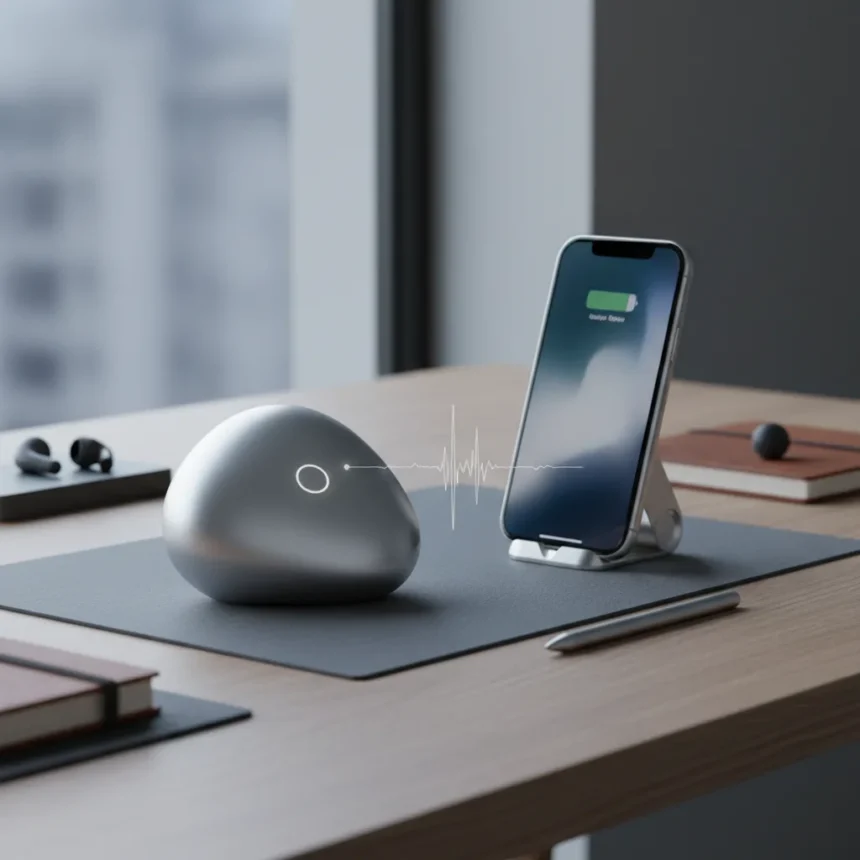
OpenAI’s AI device marks the company’s first major push into consumer hardware, partnering with former Apple designer Jony Ive to build what executives describe as a totally new category of computing. Unlike the iPhone, which remains a screen-based smartphone, the OpenAI AI device is pocket-sized, screenless, and designed to interact with the world through built-in cameras and microphones rather than a display.
Key Takeaways
- OpenAI acquired Jony Ive’s startup io for $6.4 billion in May 2025, bringing 55 engineers and designers to the project
- The device is screenless and voice-primary, gathering context from surroundings via cameras and microphones
- Positioned as a “third device” that complements phones and laptops, not a smartphone replacement
- Sam Altman aims to recapture “the delight and wonder” of early Apple computing experiences
- No launch date or pricing announced; device details remain largely confidential
What Makes the OpenAI AI Device Different From iPhone
The fundamental difference between the OpenAI AI device and the iPhone lies in interaction design and purpose. While Apple’s smartphone relies on a touchscreen interface and app-based workflows, the OpenAI AI device operates without a screen, using voice as its primary interaction method. This shift represents a departure from the smartphone paradigm that has dominated consumer electronics for nearly two decades.
The device gathers information contextually through cameras and microphones, meaning it understands its environment and user experiences without requiring explicit commands. This contrasts sharply with the iPhone, which demands deliberate user input—tapping, swiping, typing. The OpenAI AI device aims to be ambient, always listening and aware, powered by OpenAI’s latest AI models that enable natural conversation. Rather than replacing the iPhone, it is designed to work alongside smartphones and computers as what executives call a “third device”.
OpenAI unified its engineering, product, and research teams to overhaul audio models, recognizing that voice interaction is the core differentiator. The device communicates with existing phones and computers, integrating into ecosystems rather than fragmenting them—a strategic choice that positions it as a complement to, not competitor with, the iPhone.



The Design Vision Behind OpenAI’s AI Device
Sam Altman, OpenAI’s CEO, has been explicit about the vision: this is not a phone, but “a totally new kind of thing”. Altman drew a parallel to how smartphones did not kill laptops; instead, they created a new category alongside existing devices. He expressed hope that the device would bring back “the delight, wonder and creative spirit” he felt using early Apple computers.
The team behind the OpenAI AI device includes some of Apple’s most accomplished design and engineering talent. The acquisition of Jony Ive’s io startup brought approximately 55 engineers and designers to OpenAI, including former Apple veterans Scott Cannon, Evans Hankey, and Tang Tan. This roster signals serious industrial design ambitions—not a hastily assembled gadget, but a carefully considered piece of hardware.



The device has been internally referred to as “Atlas” in some reports, positioning it as a physical embodiment of ChatGPT for direct, natural interaction. OpenAI and io executives purchased at least 30 headphone sets from competitors for market research, indicating a methodical approach to understanding how people interact with voice-based devices.
How OpenAI’s AI Device Fits Into the Broader Hardware Landscape
The smartphone market has remained largely unchanged in concept for over a decade—devices get faster, thinner, and more powerful, but the fundamental form factor (screen, apps, touchscreen) persists. Apple and Samsung have refined this formula relentlessly, leaving little room for innovation within the smartphone category itself. The OpenAI AI device sidesteps this stalemate by rejecting the smartphone form factor altogether.
Unlike Apple, which controls both software and hardware but keeps ChatGPT as an optional integration within iOS, OpenAI now controls the full stack: the AI model, the hardware, and the interaction paradigm. This vertical integration allows OpenAI to optimize the entire experience around voice and contextual awareness rather than retrofitting AI into an existing smartphone framework.
The iPhone remains the market leader in consumer devices, with deep ecosystem integration and unmatched brand loyalty. However, the iPhone’s strength—its versatility as a do-everything device—may also be its limitation. The OpenAI AI device targets a specific use case: ambient, conversational AI that understands context without demanding screen time. This is not a threat to the iPhone; it is an adjacent opportunity in a market hungry for new interaction paradigms.


What Remains Unknown About the OpenAI AI Device
OpenAI has kept most details confidential, and no official launch date, pricing, or regional availability has been announced. The company has not confirmed whether the device will launch globally or in specific markets first. Battery life, processing power, and integration specifics with OpenAI’s broader ecosystem remain undisclosed.
One critical question is how the device will differentiate itself from existing AI-focused hardware and smart speakers. Amazon’s Alexa, Google Home, and Apple’s Siri already offer voice-first interaction, though they are typically stationary or phone-integrated. The OpenAI AI device’s pocket-sized, portable form factor and emphasis on contextual awareness through cameras and microphones may offer a distinct advantage, but without a release or hands-on testing, this remains speculative.
FAQ
Is the OpenAI AI device a smartphone replacement?
No. Sam Altman explicitly stated it is “a totally new kind of thing,” designed to complement phones and laptops rather than replace them. It is positioned as a third device category, not a competitor to the iPhone or Android phones.
When will the OpenAI AI device launch?
OpenAI has not announced a launch date or availability timeline. The company acquired Jony Ive’s io startup in May 2025, but no public release window has been disclosed.
How much will the OpenAI AI device cost?
Pricing has not been announced. OpenAI has kept commercial details confidential while the device remains in development.
The OpenAI AI device represents a genuine attempt to rethink what a pocket computer could be if freed from the smartphone paradigm. By partnering with Jony Ive and building a screenless, voice-first device, OpenAI is betting that the next wave of consumer hardware will not be faster phones, but fundamentally different tools for interacting with AI. Whether this gamble succeeds depends on execution, pricing, and whether consumers actually want an ambient AI companion in their pockets—questions only time and a market launch will answer.
Edited by the All Things Geek team.
Source: Tom's Guide