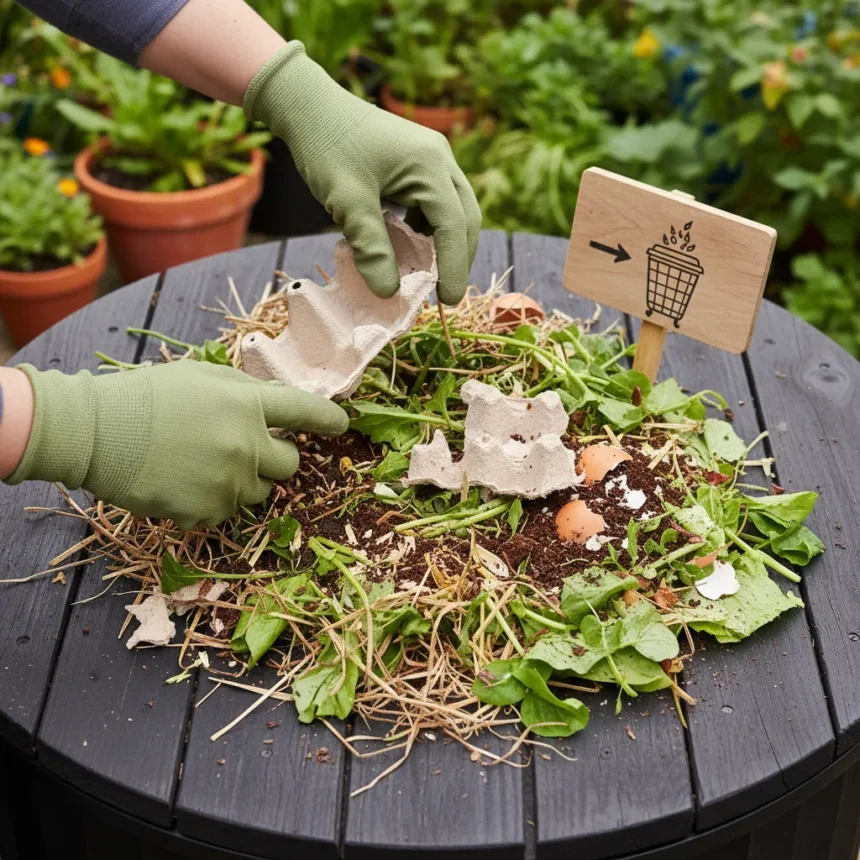
Cardboard egg cartons compost is a practical solution gardeners are being urged to adopt, yet most people throw them straight into recycling. The soft, spongier cardboard used in egg trays absorbs excess moisture in compost heaps, preventing the wet, soggy, smelly piles that frustrate home gardeners. Unlike eggshells or coffee grounds—the usual suspects in composting advice—cardboard egg cartons serve a completely different function: they act as a brown material that balances the nitrogen-rich greens in your compost.
Key Takeaways
- Cardboard egg cartons are a brown material that helps balance nitrogen-rich compost greens
- Shred cartons into pieces and remove labels before adding them to your compost heap
- The soft cardboard absorbs excess moisture, preventing soggy, smelly compost piles
- Plastic or foam egg cartons should not be composted; only cardboard works
- Sheet mulching with cardboard also suppresses weeds while feeding soil
Why Cardboard Egg Cartons Work Better Than You Think
Most gardeners focus on adding nitrogen-rich materials—vegetable scraps, grass clippings, coffee grounds—but they neglect the carbon-rich browns that keep compost balanced and healthy. Cardboard egg cartons fill this gap perfectly. The kind of soft, almost spongier cardboard that egg trays are made from is perfect for soaking up excess moisture in your compost heap, helping to prevent wet, soggy and smelly compost. This matters because overly wet compost breaks down slowly, smells terrible, and attracts pests. By shredding cardboard egg cartons into small pieces and mixing them with your greens, you create a more breathable pile that decomposes efficiently.
The comparison to other common compost additions is instructive. Crushed eggshells add calcium to compost but contribute almost nothing to moisture management. Coffee grounds contain nitrogen, potassium, and phosphorus, making them useful for enriching soil, but they are also quite wet and can compact if overused. Banana peels provide free potassium but require chopping to break down quickly. Cardboard egg cartons, by contrast, solve a structural problem that affects the entire compost pile.
How to Prepare Cardboard Egg Cartons for Composting
Before adding cardboard egg cartons to your compost, follow these straightforward steps. First, ensure the cartons are cardboard rather than plastic or foam—only cardboard breaks down properly. Remove any labels or stickers, as these may contain inks or adhesives you do not want in your finished compost. Then shred the trays into smaller pieces to help them break down faster. You do not need to pulverize them into dust; tearing or cutting them into roughly two-inch pieces is sufficient.


Once prepared, add the shredded cardboard to your compost as a brown material. Layer it with green materials like vegetable scraps, grass clippings, and other nitrogen-rich waste. The general approach is to build your pile by alternating brown and green materials, keeping the pile covered to retain heat and moisture. This layering method ensures that cardboard breaks down alongside your other organic matter rather than sitting on top as a separate problem.
Beyond Composting: Sheet Mulching With Cardboard
If you do not have an active compost pile, plain, uncoated cardboard and paper have a practical role to play in the garden beyond the recycling bin. A technique called sheet mulching uses layers of cardboard laid directly onto soil or grass to block light and suppress weed growth, while still allowing water to pass through to the ground below. This method works with egg cartons too, though whole cartons are bulkier than flat cardboard sheets.



To sheet mulch, lay down cardboard, wet it thoroughly, and cover it with compost or mulch. It keeps weeds down and feeds the soil as it breaks down. This approach is particularly useful if you are establishing a new garden bed or want to suppress weeds without chemicals. The cardboard eventually decomposes, becoming part of the soil structure and adding organic matter that improves water retention and nutrient availability over time.
What Not to Do With Egg Cartons
The most common mistake is assuming all egg cartons are compostable. Plastic and foam egg cartons do not belong in compost—they take decades to break down or never decompose at all. Only cardboard cartons work. Another frequent error is adding whole, unshredded cartons to your pile. While they will eventually break down, shredding them first accelerates the process and helps them integrate more evenly with the rest of your compost. Finally, do not forget to remove labels and stickers before composting. These adhesives and inks are not ideal for finished compost that you will use in vegetable gardens or on edible plants.
Is cardboard egg cartons compost better than other brown materials?
Cardboard egg cartons are not inherently better than other browns like shredded newspaper or dry leaves, but they offer a specific advantage: moisture absorption. If your compost tends to get soggy, egg cartons are an excellent choice. If your pile is already well-balanced, other brown materials work just as well.
Can you compost plastic or foam egg cartons?
No. Only cardboard egg cartons should be composted. Plastic and foam cartons are petroleum-based and do not break down in standard home compost piles. Check your carton before adding it—if it feels rigid or synthetic, do not compost it.



How long does it take cardboard to decompose in compost?
Shredded cardboard typically breaks down within three to six months in an active, well-maintained compost pile, though timing depends on pile temperature, moisture, and the size of the pieces. Whole, unshredded cartons take significantly longer.
The bottom line: cardboard egg cartons are a free, readily available resource that most gardeners overlook. By shredding them and adding them to your compost, you solve a real problem—excess moisture—while recycling a household waste product that would otherwise end up in the recycling bin or landfill. If you compost at all, start saving your cardboard egg cartons today.
Where to Buy
East Oak Dual Chamber Outdoor Compost Tumbler:
Edited by the All Things Geek team.
Source: Tom's Guide