






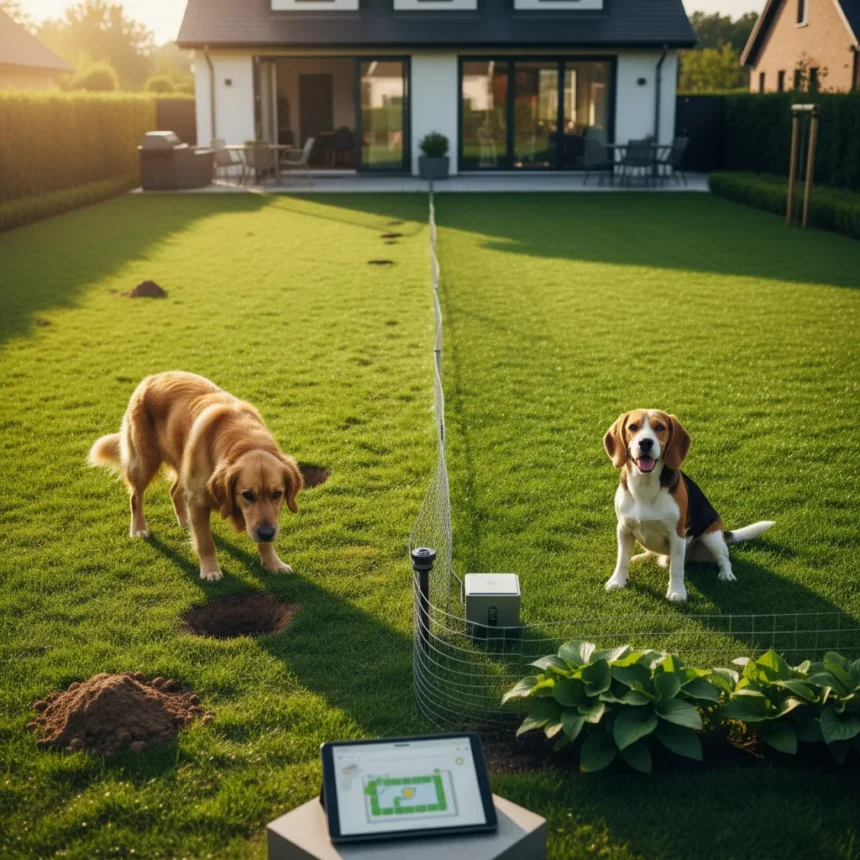
Dog-proof lawn strategies are essential for homeowners who want to maintain a healthy yard while living with active pets. Dogs cause three primary types of lawn damage: urine burn from nitrogen-rich urine that kills grass, digging behavior driven by boredom or temperature regulation, and the physical damage caused by high-speed running or zoomies.
Key Takeaways
- Dog urine creates brown patches due to nitrogen concentration in pet waste, not acidity as commonly believed
- Strategic watering and designated potty areas can reduce urine burn significantly
- Digging prevention requires addressing the root cause—boredom, heat seeking, or escape attempts
- Grass varieties and soil amendments play a role in lawn resilience to pet damage
- Dog-proof lawn strategies combine physical barriers, behavioral training, and landscape design
Understanding Dog Urine Burn and Nitrogen Damage
Dog urine causes brown, dead patches on lawns because of its high nitrogen content, not because it is acidic. When a dog urinates in one spot repeatedly, the concentration of nitrogen becomes toxic to grass rather than beneficial. This is the opposite of what many homeowners assume. The damage appears as a brown circle with sometimes a green ring around it—the outer ring receives diluted urine that acts as a mild fertilizer, while the center receives concentrated urine that kills the grass entirely. Dog-proof lawn strategies must address this nitrogen overload directly.
Immediate watering after your dog urinates is one of the most effective damage-prevention techniques. Diluting the urine with water reduces nitrogen concentration and prevents it from accumulating in the soil. Training your dog to use a designated potty area concentrates the damage to one zone rather than spreading it across the entire lawn. This approach transforms an unmanageable problem into a contained maintenance issue. Some homeowners create a dedicated dog bathroom using gravel, mulch, or artificial turf in a corner of the yard, turning a liability into intentional design.
Dog-Proof Lawn Strategies for Digging Prevention
Digging behavior stems from three primary motivations: boredom, temperature regulation, and escape attempts. Addressing the root cause is far more effective than simply filling holes. A bored dog digs to create entertainment and burn energy. A hot dog digs to reach cooler soil beneath the surface. A dog attempting escape digs along fence lines. Understanding which motivation drives your dog’s behavior determines which dog-proof lawn strategy will work.



For boredom-driven digging, increased exercise and mental stimulation are essential. Daily walks, play sessions, and puzzle toys redirect the energy that would otherwise go into destroying your lawn. For heat-seeking diggers, providing a shaded area with a kiddie pool or designated cool zone gives them an alternative to excavating your grass. For escape artists, reinforcing fence lines and removing digging triggers reduces the motivation. Physical barriers like buried fence extensions or chicken wire laid flat under the soil surface can prevent digging in specific areas, though they work best when combined with behavioral solutions rather than as standalone fixes.
Grass Types and Soil Solutions for Pet-Resistant Lawns
Not all grass varieties tolerate pet damage equally. Perennial ryegrass and tall fescue are more resilient to foot traffic and urine damage than delicate ornamental grasses or fine fescues. If you are establishing a new lawn or reseeding damaged areas, choosing a hardy grass blend designed for high-traffic areas makes maintenance easier. Soil amendments like gypsum can help leach excess nitrogen from problem areas, though results vary depending on soil type and rainfall.



Adding organic matter and improving soil drainage also improves grass recovery after damage. Well-draining soil reduces urine pooling and allows grass roots to establish more quickly. Some homeowners apply soil conditioners or use enzymatic products marketed for pet damage, though these work best as part of a broader dog-proof lawn strategy rather than as standalone solutions. The most resilient lawns combine hardy grass varieties, good drainage, and behavioral management rather than relying on any single fix.
Behavioral Training and Landscape Design Integration
Dog-proof lawn strategies succeed when they combine physical design with training. Teaching your dog to use a specific potty area requires consistency and positive reinforcement. Designating a corner with gravel, mulch, or artificial turf and rewarding your dog for using it creates a habit over time. This approach protects the rest of your lawn while containing maintenance to one manageable zone.
Creating physical barriers—like low fencing around garden beds or designated play zones—guides your dog’s movement and protects vulnerable areas. Mulched or hardscaped zones can replace grass in high-traffic areas, eliminating the conflict between lawn aesthetics and dog behavior. Some homeowners use decorative fencing to create a dog run or designated play area separate from the main lawn, turning the constraint into intentional landscape design. This approach acknowledges that a lawn perfect for dogs and a lawn perfect for aesthetics may be incompatible without strategic compromise.
Can I use salt or other treatments to prevent dog urine burn?
Salt-based products are not recommended for preventing dog urine burn. Salt can damage soil structure and harm plants. Instead, immediate watering and designated potty areas are the most effective prevention methods. Enzymatic products may help break down urine compounds, but they work best as supplements to behavioral training rather than primary solutions.



What is the fastest way to repair urine-burned grass?
Reseeding with hardy grass varieties and improving soil drainage provides the fastest recovery. Removing dead grass, loosening the soil, adding seed and compost, and keeping the area moist encourages new growth within 2-3 weeks. Prevention through watering and designated potty areas is more efficient than repeated repairs.
Should I fence off my entire lawn to protect it from my dog?
Complete fencing is unnecessary and defeats the purpose of having a lawn. Instead, create designated zones—a play area, a potty area, and protected garden beds. This approach preserves your lawn while containing dog damage to specific, manageable locations.
Dog-proof lawn strategies work best when they acknowledge that dogs and pristine lawns require compromise. The most successful approaches combine behavioral training, strategic design, and realistic expectations about what a lived-in yard with an active pet will look like. Watering immediately after your dog urinates, designating a potty zone, choosing hardy grass, and providing adequate exercise addresses the root causes of damage rather than treating symptoms. A lawn that accommodates your dog’s needs while remaining functional and attractive is achievable—but only if you plan for it from the start.
Where to Buy
29% OFFAmazonScotts Ez Seed Patch & Repair for Sun and Shade$16.99$23.99shop now | AmazonGarden Guru Handheld Seed Spreader Shaker$18.95shop now | AmazonFiskars Stand-Up Weed Puller Tool$48.98shop now | 39% OFFAmazonGreenworks 48v (24v X 2) 17" Cordless (push) Lawn Mower$229.99$379.99shop now
Edited by the All Things Geek team.
Source: Tom's Guide