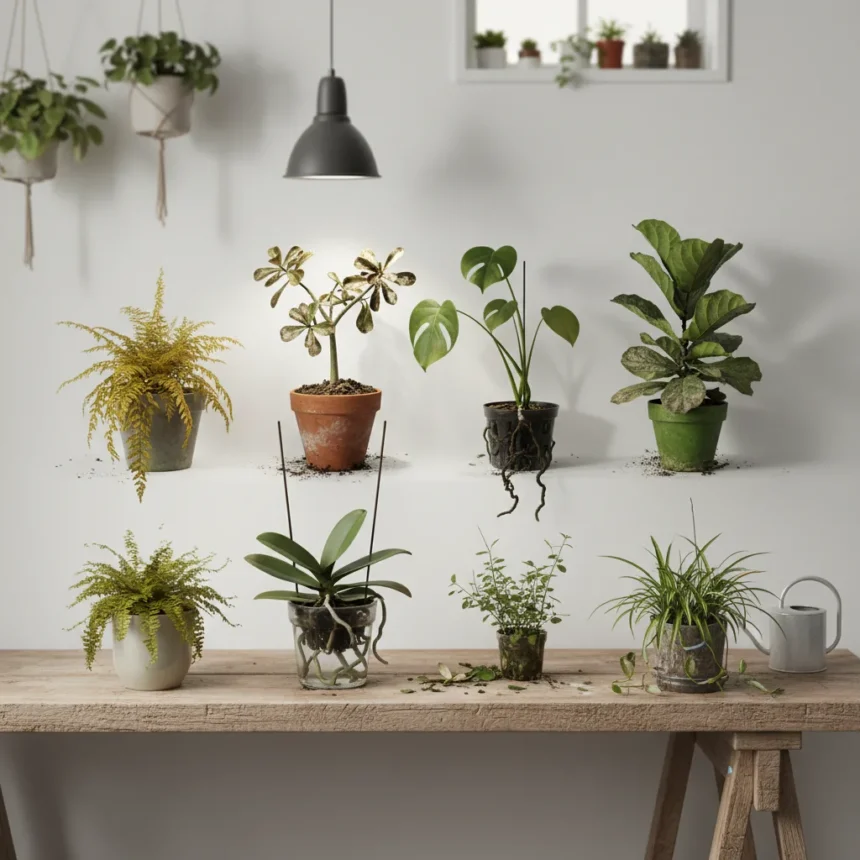
Most plant owners kill their houseplants with kindness. The 9 houseplant care habits that are actually killing your plants often feel like the right thing to do—watering on a schedule, fertilizing regularly, moving plants around to find the perfect light. But good intentions pave the road to brown leaves and drooping stems. Understanding which habits harm rather than help is the first step toward keeping indoor plants alive.
Key Takeaways
- Overwatering is the leading cause of houseplant death, not underwatering as many believe.
- Dust buildup on leaves blocks photosynthesis and slows plant growth.
- Moving plants frequently disrupts their adjustment to light conditions.
- Fertilizing too often can burn roots and damage soil chemistry.
- Ignoring pest infestations like spider mites allows them to spread rapidly.
Overwatering Tops the List of Houseplant Care Habits
Watering your houseplant on a fixed schedule is one of the most destructive houseplant care habits. Most plant owners water every few days or every week, regardless of whether the soil is actually dry. Roots sit in wet soil, suffocate, and rot. The plant then collapses from root rot rather than thirst.
The fix is simple: check the soil before watering. Stick your finger an inch into the soil. If it feels moist, skip watering. Most tropical houseplants prefer to dry out slightly between waterings. Underwatering, by contrast, shows up as dry crispy leaves, slow growth, and drooping stems. These signs appear only after days or weeks without water—overwatering kills plants in days.
Spring is the ideal time to reset watering habits. As light levels increase and plants enter their growing season, they need water more frequently, but still only when soil dries out. Adjust your routine based on season and humidity, not a calendar.


Dust Buildup Blocks Photosynthesis and Stunts Growth
Leaves covered in dust cannot absorb light efficiently. Dust particles sit on the leaf surface and block the light that drives photosynthesis. Over weeks, this reduces the plant’s ability to produce energy, and growth slows noticeably. Yet many plant owners never wipe leaves or rinse them.
Spring cleaning is the ideal time to address this houseplant care habit. Gently wipe each leaf with a soft, damp cloth or mist the plant with lukewarm water. This removes dust, improves light absorption, and also allows you to inspect for pests and disease. A plant that has been dusted will show noticeably faster growth within weeks.


This is especially important for plants in low-light rooms, where every bit of available light matters. Dust removal is one of the easiest and most overlooked houseplant care habits to fix.
Frequent Repotting and Moving Disrupts Plant Adjustment
Repotting a healthy plant every year, or moving it constantly to find the perfect spot, stresses the plant and interrupts its adjustment to light conditions. Each time you move a plant, it must re-acclimate to new light intensity and duration. Each repotting disturbs the root system and delays growth for weeks.
Only repot when the plant is genuinely root-bound (roots circling the pot’s edge) or when soil has broken down and no longer drains well. Most houseplants are happiest when left in the same pot and location for a year or more. If you do repot, do it in spring when the plant is actively growing.
Similarly, avoid shuffling plants between rooms or windows every few weeks. Pick a location suited to the plant’s light needs and let it stay there. Spider plants, for example, thrive in bright, indirect light and will show their best growth when kept in a consistent spot. Stability matters more than constant optimization.



Over-Fertilizing Burns Roots and Damages Soil
Fertilizer is not plant food—it is a nutrient supplement for soil that has been depleted. Many plant owners fertilize every week or every two weeks, believing more nutrients mean faster growth. The opposite happens. Excess fertilizer salts accumulate in the soil, burn the roots, and damage the soil structure.
Most houseplants need fertilizer only during the growing season (spring and summer), and even then only once a month or every six weeks. In fall and winter, when growth slows, skip fertilizer entirely. Using a balanced, diluted fertilizer at half strength is safer than full strength. If you are unsure whether your plant needs fertilizing, it probably does not.
This houseplant care habit is especially damaging to succulents and other slow-growing plants that naturally thrive in nutrient-poor soil. Over-fertilizing these plants is almost guaranteed to kill them within months.
Ignoring Spider Mites and Other Pest Infestations
Spider mites are tiny pests that suck plant juices and weaken leaves. Many plant owners do not notice them until damage is severe. By then, the infestation has spread to nearby plants. Catching pests early is critical.
Inspect the undersides of leaves regularly, especially in spring and summer when pests are most active. If you spot spider mites, isolate the plant immediately and treat it with insecticidal soap or neem oil. Do not wait. Pests spread fast and are much harder to eliminate once they have colonized multiple plants.
Prevention is also part of smart houseplant care habits. Dust leaves regularly, maintain proper humidity, and avoid overcrowding plants—these conditions discourage pest infestations. A plant that is healthy and well-cared-for is also more resistant to pests.
Choosing the Wrong Light Conditions for Your Plant
Placing a low-light plant in direct sun, or a sun-loving plant in a dark corner, is a houseplant care habit that slowly kills the plant. Some plants need bright, indirect light; others tolerate shade. Matching the plant to its light requirements is non-negotiable.
Research your plant’s light needs before bringing it home. If your home does not have the right light, choose a different plant or consider supplemental grow lights. Moving a plant constantly to find light is stressful; finding the right spot from the start avoids this problem entirely.
Using Tap Water Without Letting It Sit
Tap water contains chlorine and fluoride that can accumulate in soil over time and damage roots. Letting tap water sit for 24 hours allows chlorine to evaporate. For plants sensitive to fluoride, distilled water is safer.
This is a simple houseplant care habit to fix. Fill a watering can and let it sit overnight before watering. Your plants will respond with healthier growth, especially those prone to brown leaf tips caused by fluoride sensitivity.
Placing Plants in Drafts and Temperature Extremes
Cold drafts from windows, heating vents, and air conditioners stress houseplants. Sudden temperature swings cause leaves to drop and growth to stall. Most tropical houseplants prefer consistent temperatures between 65 and 75 degrees Fahrenheit.
Avoid placing plants directly in front of vents, near exterior doors in winter, or in rooms that fluctuate wildly in temperature. A stable, warm location with moderate humidity is ideal. This houseplant care habit is easy to overlook but makes a big difference in plant longevity.
Using Soil That Does Not Drain Well
Heavy, compacted soil that does not drain well is a setup for root rot. Standard potting soil is often too dense for houseplants, especially succulents and cacti. These plants need gritty, fast-draining mixes that allow excess water to escape quickly.
When repotting, use a soil mix suited to your plant type. Succulents need cactus mix or a blend with perlite and sand. Tropical plants benefit from a mix with orchid bark or perlite mixed in. Good drainage is non-negotiable for plant survival.
Ignoring Early Signs of Disease and Decline
Brown spots, yellowing leaves, and soft stems are early warning signs that something is wrong. Many plant owners ignore these signs until the plant is beyond recovery. Catching problems early—whether pest infestations, root rot, or disease—makes treatment far more likely to succeed.
Check your plants weekly. Look for changes in leaf color, texture, and growth rate. If you spot something unusual, investigate the soil moisture, light conditions, and presence of pests. Early intervention saves plants; waiting until the plant is visibly dying rarely works.
Frequently Asked Questions
What are the most common houseplant care habits that kill plants?
Overwatering is the leading cause of houseplant death. Dust buildup, poor drainage, over-fertilizing, and ignoring pests also rank high. These houseplant care habits feel helpful but actually harm plants when done excessively or without attention to the plant’s actual needs.
How can I tell if I am underwatering versus overwatering my plant?
Underwatering causes dry crispy leaves, slow growth, and drooping stems that appear gradually over weeks. Overwatering causes sudden wilting, soft stems, and a musty soil smell that appears within days. Check soil moisture before watering to avoid both extremes.
Should I fertilize my houseplants every month?
No. Most houseplants need fertilizer only during the growing season (spring and summer), and even then only once a month or every six weeks. In fall and winter, skip fertilizer entirely. Over-fertilizing is far more common and more damaging than under-fertilizing.
Breaking these destructive houseplant care habits takes awareness and patience. The good news is that once you stop over-caring and start matching care to your plant’s actual needs, most plants recover quickly. Spring is the perfect time to reset your routine, dust your leaves, adjust your watering schedule, and commit to inspecting plants weekly for early signs of trouble. Your plants will reward you with years of healthy, vibrant growth.
Edited by the All Things Geek team.
Source: Tom's Guide