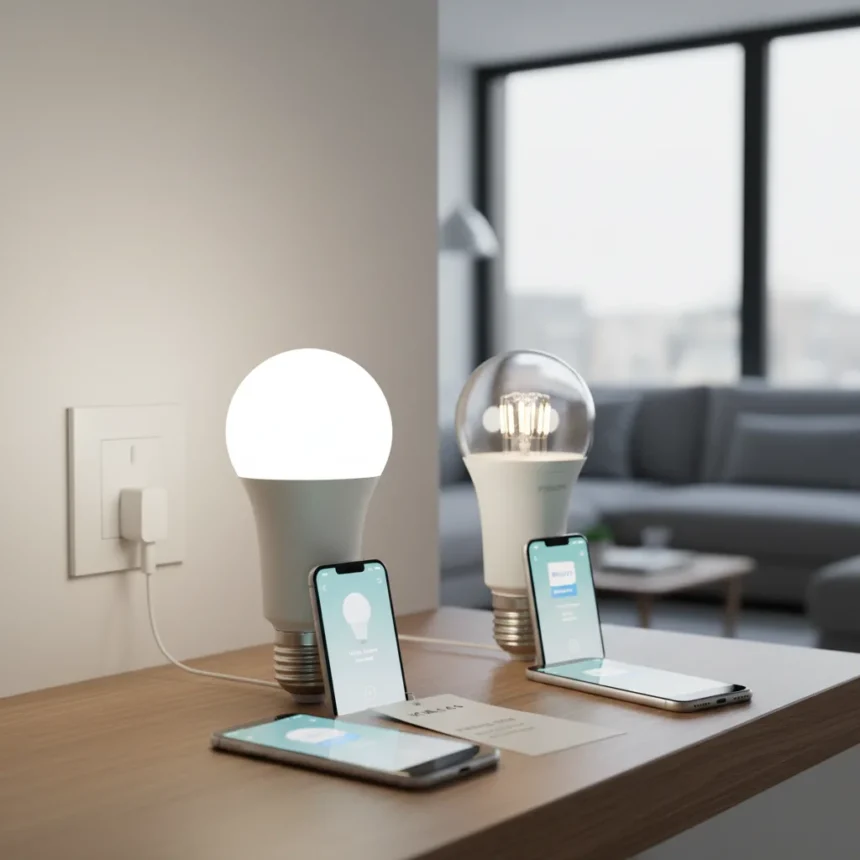
IKEA’s smart light is a dimmable bulb with dynamic lighting modes that matches Philips Hue’s core functionality but costs just £4, making high-end smart lighting accessible to budget-conscious buyers worldwide. The bulb is part of IKEA’s Trådfri ecosystem, which includes a wireless bridge (Dirigera hub) required for app control on iOS and Android devices. What makes this launch significant is not just the price—it’s that IKEA has cracked the formula for delivering feature parity without the premium markup that has historically locked smart home adoption behind expensive gatekeepers.
Key Takeaways
- IKEA’s smart light costs £4, undercutting Philips Hue white bulbs by 75 percent.
- Brightness reaches 980 lumens, outperforming Hue’s 800-lumen ceiling.
- Requires Dirigera hub for app control; supports up to 10 lights per remote.
- Simpler app interface suits beginners but lacks advanced automations available in Hue.
- Available in-store globally with hassle-free returns, no online-only constraints.
IKEA Smart Light Specs and Setup
The IKEA smart light delivers dimmability and warm-to-cool white spectrum adjustments—the features most users actually want. Available in E27 screw-in, GU10, and E14 fittings, the bulb integrates into Trådfri’s ecosystem with minimal friction. A starter kit runs around £50 and includes the bulb, Dirigera wireless bridge, and a remote control. Single white spectrum bulbs cost £15, while the headline-grabbing £4 price applies to basic white bulbs. The app allows grouping lights, adjusting brightness from 1 to 100 percent, and scheduling basic automations—nothing fancy, but everything a typical household needs.
Where IKEA pulls ahead is brightness. The Trådfri bulb produces 980 lumens compared to Philips Hue’s 800 lumens, delivering noticeably brighter illumination in the same physical form factor. For anyone lighting a kitchen or living room, that extra output matters more than RGB color modes most people never use. Setup is straightforward: plug in the Dirigera hub, pair the bulb via the app, and you’re done. No audible clicks, no firmware wrestling, no ecosystem sprawl.
How IKEA Smart Light Stacks Against Philips Hue
Philips Hue dominates the premium smart lighting market with 16 million colors, lightstrips, advanced automations, and Matter over Thread support. A Hue white bulb costs £15 to £25; a color starter kit runs £150 or higher. Hue bridges support 50 devices, offer entertainment sync, and integrate deeper with smart home platforms. For power users building elaborate lighting scenes, Hue’s ecosystem is unmatched.


But here’s what matters for most households: IKEA’s smart light does 95 percent of what Hue does at one-tenth the entry cost. You lose RGB colors and advanced scene creation, but gain brighter output and a simpler interface that doesn’t overwhelm beginners. A complete 18-bulb IKEA setup costs under £250; equivalent Hue coverage would exceed £400. The dimming experience differs—Trådfri bottoms out at 1 percent brightness while Hue reaches 30 percent, though perception varies by room and user preference. For renters, budget-conscious buyers, and anyone skeptical of smart home complexity, IKEA wins decisively.
Why Price Alone Doesn’t Tell the Story
The £4 price is the headline, but the real advantage is availability and friction-free returns. IKEA’s global in-store presence means you can buy, test, and return a bulb the same day if it doesn’t fit your fixture or satisfy your expectations. Online-only retailers and Hue’s fragmented stock create friction that invisible until you need a replacement on a Sunday night. IKEA removes that barrier.


The Trådfri app is simpler than Hue’s, which some call limiting and others call refreshingly straightforward. You won’t build complex automations or sync lighting to music, but you will adjust brightness without menu diving. The ecosystem supports up to 10 lights per remote and unlimited devices via the app—enough for most homes, though Hue’s 50-device bridge offers more headroom for sprawling installations.
Is IKEA’s Smart Light Worth Buying Over Philips Hue?
Yes, if you want dimmable smart lighting without the premium price tag or complexity. The IKEA smart light is ideal for first-time smart home buyers, renters, and anyone building a small-to-medium setup. The brighter output and lower cost make it the rational choice for most households. Buy Hue only if you need RGB colors, advanced automations, or seamless integration with high-end smart home platforms. For everyone else, IKEA’s smart light eliminates the excuse that smart lighting is expensive.
What bulb types does IKEA’s smart light come in?
IKEA offers the smart light in E27 screw-in, GU10, and E14 fittings, covering most standard light fixtures worldwide. This range matches Hue’s socket diversity, removing compatibility concerns for most users.
Do I need a hub for IKEA’s smart light to work?
Yes. The Dirigera wireless bridge is required for app control and scheduling. Without it, you can only use the included remote, which limits control to 10 lights. The hub costs around £40 as part of a starter kit or separately.


How much brighter is IKEA’s smart light compared to Philips Hue?
IKEA’s Trådfri bulb reaches 980 lumens while Hue white bulbs max out at 800 lumens, making IKEA roughly 22 percent brighter. This difference is visible in real-world use, especially in larger rooms or kitchens where brightness matters more than color variety.
IKEA’s smart light doesn’t reinvent the wheel—it does what smart bulbs have always done, just cheaper and brighter. For a market saturated with premium options, that’s exactly what most households need. The real story isn’t that IKEA matched Philips Hue; it’s that Hue’s pricing was never justified by feature superiority in the first place. IKEA just proved it.
Where to Buy
Edited by the All Things Geek team.
Source: T3