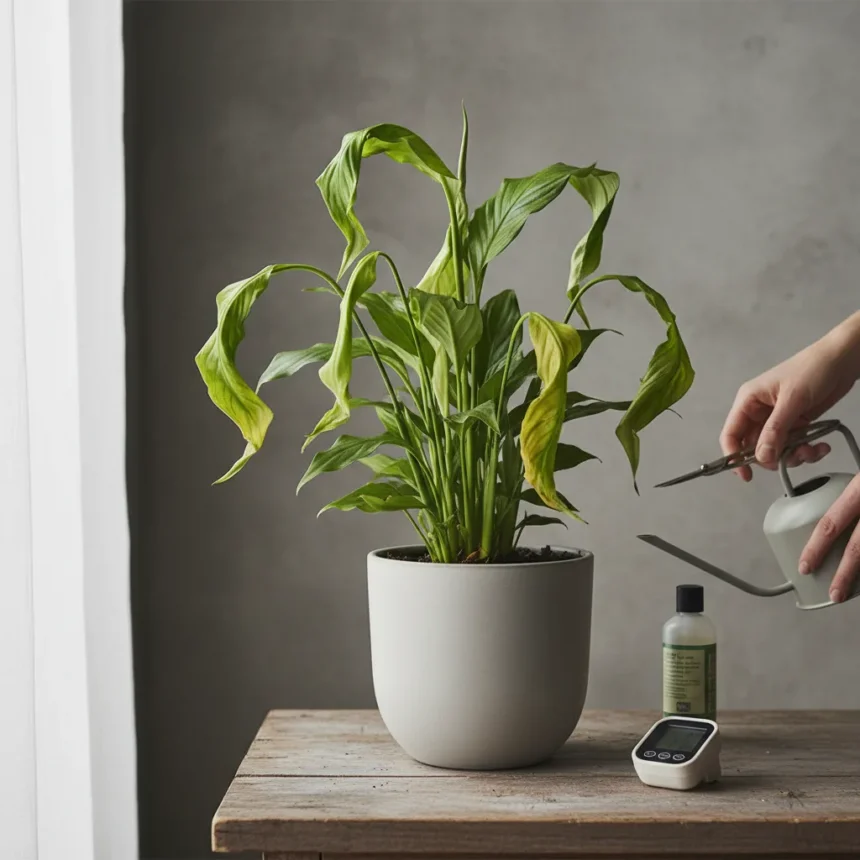
Peace lily leaf curling is a common signal that your plant is struggling. Unlike some houseplant problems that develop slowly, curled leaves often indicate immediate stress—usually from watering mistakes, low humidity, or light conditions that do not match the plant’s needs. The good news: peace lily leaf curling is reversible if you act quickly and adjust your care routine.
Key Takeaways
- Peace lily leaf curling typically signals overwatering, underwatering, or humidity issues.
- The plant thrives in indirect light and prefers consistently moist (not soggy) soil.
- Low humidity is a common culprit in indoor environments, especially during winter.
- Curled leaves can recover within days if you identify and fix the underlying cause.
- A simple 3-step adjustment routine addresses watering, humidity, and light simultaneously.
What Causes Peace Lily Leaf Curling?
Peace lily leaf curling stems from three primary stressors: water imbalance, insufficient humidity, or incorrect light exposure. The plant communicates distress through leaf texture before it shows visible damage like browning or wilting. Understanding which stressor is at play determines your fix.
Overwatering is the most common mistake. Peace lilies prefer soil that is consistently moist but never waterlogged. When roots sit in standing water, they cannot absorb oxygen, causing the plant to shut down and curl its leaves as a defense mechanism. Conversely, underwatering—letting soil dry out completely—forces the plant to conserve moisture by curling leaves inward, reducing surface area exposed to evaporation.
Humidity is equally critical. Peace lilies are tropical plants accustomed to warm, humid environments. Indoor air, especially in heated homes during winter, can drop to 30-40% humidity. The plant responds by curling leaves to minimize water loss through transpiration. This is why peace lily leaf curling often worsens in dry climates or near heating vents.


The 3-Step Routine to Reverse Peace Lily Leaf Curling
Fixing peace lily leaf curling requires a coordinated approach targeting all three stress factors. Do not adjust only one variable—the plant needs comprehensive care realignment to recover.
Step 1: Correct Your Watering Schedule Check the soil moisture by inserting your finger one inch deep. If it feels soggy, reduce watering frequency immediately and ensure your pot has drainage holes. If soil is bone-dry, water thoroughly until water drains from the bottom, then maintain a schedule where soil stays moist but not saturated. Most peace lilies need water every 7-10 days depending on temperature and season. Use room-temperature water—cold water can shock the roots and worsen curling.



Step 2: Boost Humidity Around the Plant Mist the leaves with a spray bottle every 2-3 days, focusing on the undersides where stomata absorb moisture most efficiently. Alternatively, place the pot on a pebble tray filled with water—the evaporating water creates a humid microclimate around the plant without waterlogging the soil. Grouping peace lilies with other houseplants also raises ambient humidity through collective transpiration.
Step 3: Verify Light Conditions Peace lilies tolerate low light better than most houseplants, but they still need indirect bright light to thrive. If your plant sits in a dark corner, move it to a spot near an east or north-facing window where it receives dappled, indirect sunlight. Avoid direct afternoon sun, which can scorch leaves and increase water stress. A location 3-5 feet from a window usually provides optimal light without burning foliage.
How Long Until Peace Lily Leaf Curling Improves?
Once you implement all three adjustments, curled leaves should begin uncurling within 3-5 days. New growth will emerge flat and healthy within 1-2 weeks. Existing severely damaged leaves may not fully recover—they may remain slightly textured or discolored—but the plant will prioritize producing new, healthy foliage. Do not remove curled leaves immediately; let the plant reabsorb nutrients from them before they naturally drop.
Patience is essential during recovery. Avoid the temptation to overcompensate by watering more frequently or increasing humidity beyond 50-60%, as this invites fungal infections and root rot. Consistency matters more than intensity—steady, moderate care beats dramatic interventions.



Preventing Peace Lily Leaf Curling in the Future
Prevention is simpler than recovery. Establish a baseline watering routine tied to soil moisture, not a fixed calendar schedule, since water needs vary by season and location. Check soil weekly and water when the top inch feels dry. Position your plant in stable indirect light away from heating vents and air conditioning units, which create dry microclimates. Mist leaves weekly as routine maintenance, not just when problems appear.
Monitor your plant during seasonal transitions. Winter heating and summer air conditioning both reduce humidity and increase water stress, making peace lily leaf curling more likely during these periods. Adjust your care proactively—increase misting frequency and reduce watering slightly in winter when the plant’s growth naturally slows.
Is peace lily leaf curling a sign of permanent damage?
No. Peace lily leaf curling is almost always reversible if addressed within days. The plant is signaling stress, not dying. Once you correct watering, humidity, and light, the plant recovers rapidly and produces healthy new leaves. Only severe cases where roots have rotted completely become irreversible.
Can I fix peace lily leaf curling with fertilizer?
Fertilizer alone will not reverse curling. The problem is environmental stress, not nutrient deficiency. Adding fertilizer to an already-stressed plant can actually worsen damage by increasing salt concentration in the soil. Focus on water, humidity, and light first. Once the plant recovers and enters active growth, you can resume a light fertilizing schedule—typically once monthly during spring and summer.
Should I remove curled leaves from my peace lily?
Leave curled leaves on the plant initially. The plant is still reabsorbing nutrients from them as it recovers. Once new healthy growth emerges and the plant stabilizes, you can gently remove the oldest curled leaves at the base of their stems. This redirects the plant’s energy toward new foliage rather than maintaining damaged tissue.
Peace lily leaf curling is your plant’s way of asking for attention. The fix is straightforward: adjust watering to keep soil consistently moist, boost humidity through misting or pebble trays, and position the plant in indirect bright light. Within days, your peace lily will unfurl new healthy leaves and reward your attention with lush, vibrant growth. The key is acting fast and addressing all three factors together—half measures leave the plant stressed and vulnerable to future problems.
Edited by the All Things Geek team.
Source: Tom's Guide