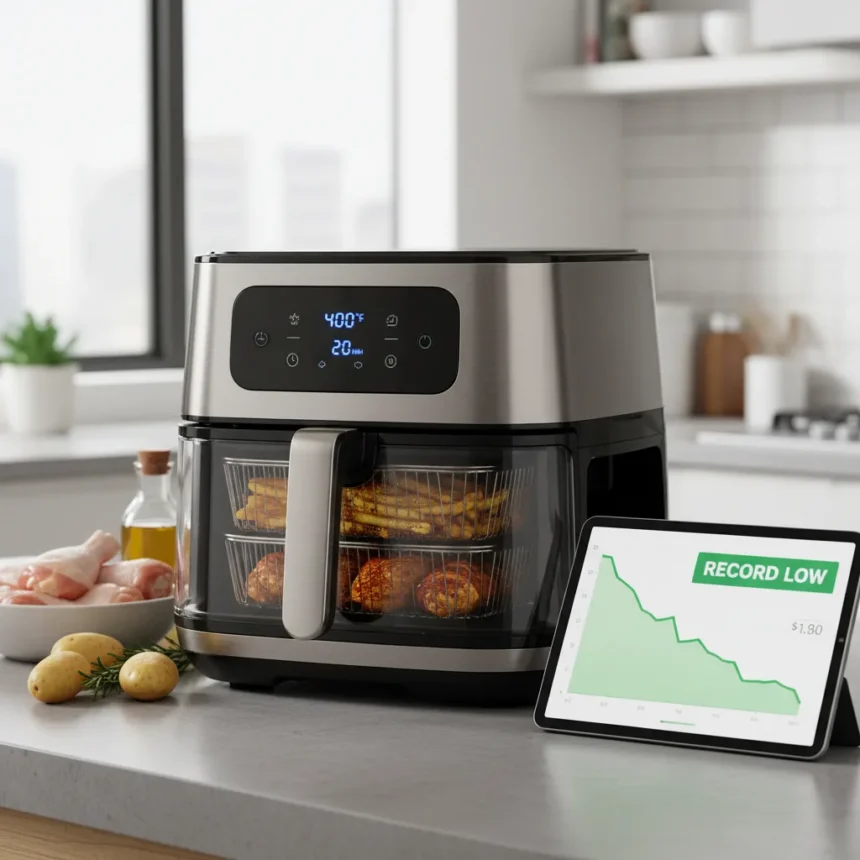
The Philips 4000 Series Air Fryer with dual stacked baskets and viewing windows is now at its cheapest ever, with a 44% discount bringing the price down from £269.99 to £169.99 in the UK. This is Philips’ first-ever stacked dual basket air fryer, launched in 2025, and the current deal makes premium stacked cooking technology accessible for smaller kitchens without the premium price tag.
Key Takeaways
- Philips 4000 Series features dual 5-litre stacked baskets with Vertical RapidAir Technology for even cooking.
- Now available at record-low pricing: £169.99 in the UK, down from £269.99 (44% discount).
- Includes built-in light, intuitive controls, viewing windows, six presets, and 13 cooking functions.
- Space-saving design ideal for kitchens with limited counter space.
- Available at Amazon, Currys, and John Lewis across UK and Europe; not available in the US.
Philips 4000 Series Air Fryer design and features
The Philips 4000 Series Air Fryer stands out in a crowded market because of its stacked basket architecture, a first for Philips. The dual 5-litre baskets sit vertically, using Vertical RapidAir Technology to push hot air through both chambers simultaneously, ensuring even cooking without rotating food between baskets. The viewing windows on each basket let you monitor progress without opening the drawer, which helps maintain temperature consistency during cooking.
The control panel is straightforward with six presets and 13 versatile cooking functions covering everything from chips and chicken to vegetables and reheating. A built-in light illuminates the baskets, giving you clear visibility of what’s cooking. For kitchens struggling with counter space, the stacked design delivers 10-litre capacity in a footprint smaller than traditional side-by-side dual basket models.
Cooking performance and practicality
The Philips 4000 Series delivers consistent results once you’ve mastered the timing for your preferred recipes. The stacked design means you’re cooking in two separate chambers, so results depend on understanding how Vertical RapidAir Technology distributes heat. The basket design does have a limitation: it doesn’t accommodate soaking, so you’ll need to plan ahead if you’re preparing food that benefits from marinating or pre-soaking.


Real-world use reveals the appliance handles versatility well—you can cook two different foods simultaneously in each basket, or double your batch of the same item. The 13 cooking functions provide flexibility, though you’ll invest time experimenting with temperatures and durations to dial in perfect results for your preferred foods.
Pricing and where to buy the Philips 4000 Series Air Fryer
At £169.99, the Philips 4000 Series Air Fryer is now at its lowest price ever in the UK. This represents a £100 discount from the recommended retail price of £269.99. The deal is available across major retailers including Amazon, Currys, and John Lewis. In Australia, the model is discounted to AU$349–AU$399 from its original range, with some sales pushing it down to AU$197.



The appliance is available across the UK and Europe but is not sold in the US market. If you’re in Australia or Europe, check your local retailers for regional pricing, as deals vary by region and retailer.
How does the Philips 4000 Series compare to other air fryers?
Compared to Philips’ earlier dual basket designs, the 4000 Series is cheaper and more space-efficient thanks to its stacked architecture. The Philips 5000 Series Air Fryer and Steamer, by contrast, adds steam and reheat functions but at a higher price point and with a larger footprint. For buyers prioritizing compact kitchens and budget, the 4000 Series is the stronger choice.
Against premium competitors like Ninja and Tefal models, the Philips 4000 Series justifies its position through stacked innovation and versatility, though it sits in the costlier segment of the air fryer market. However, at its current 44% discount, it undercuts many competing stacked models, making it an exceptional value for the technology you’re getting.
Is the Philips 4000 Series Air Fryer worth buying at this price?
Yes, if you have limited kitchen space and want dual basket capacity without a sprawling footprint. The 44% discount brings a premium product into mid-range pricing territory. The stacked design is genuinely innovative for a first-generation Philips offering, and the viewing windows eliminate the guesswork of traditional opaque baskets. Expect a learning curve with cooking times, but once you dial in your preferences, the appliance delivers consistent results.



Can you cook different foods in each basket simultaneously?
Yes. The dual 5-litre baskets operate independently, so you can cook chicken in one basket and vegetables in the other at different temperatures and times. This flexibility is one of the main selling points of the stacked design, allowing you to prepare complete meals without waiting for batches to finish.
Does the Philips 4000 Series require soaking for frozen foods?
The basket design doesn’t accommodate soaking, so frozen foods like chips should go straight into the basket. Pre-soaked or marinated foods require planning ahead, as you’ll need to prepare them before cooking rather than soaking them in the basket during operation.
The Philips 4000 Series Air Fryer at £169.99 represents a genuine breakthrough in accessible stacked cooking technology. If you’re shopping for an air fryer that saves counter space without sacrificing capacity or cooking versatility, this deal is worth acting on—it’s the cheapest this model has ever been, and stock at this price won’t last long.
Where to Buy
Shop the Philips 4000 Series Air Fryer deal | Philips 4000 Series Stacked Dual Basket Air Fryer: | £202
Edited by the All Things Geek team.
Source: T3