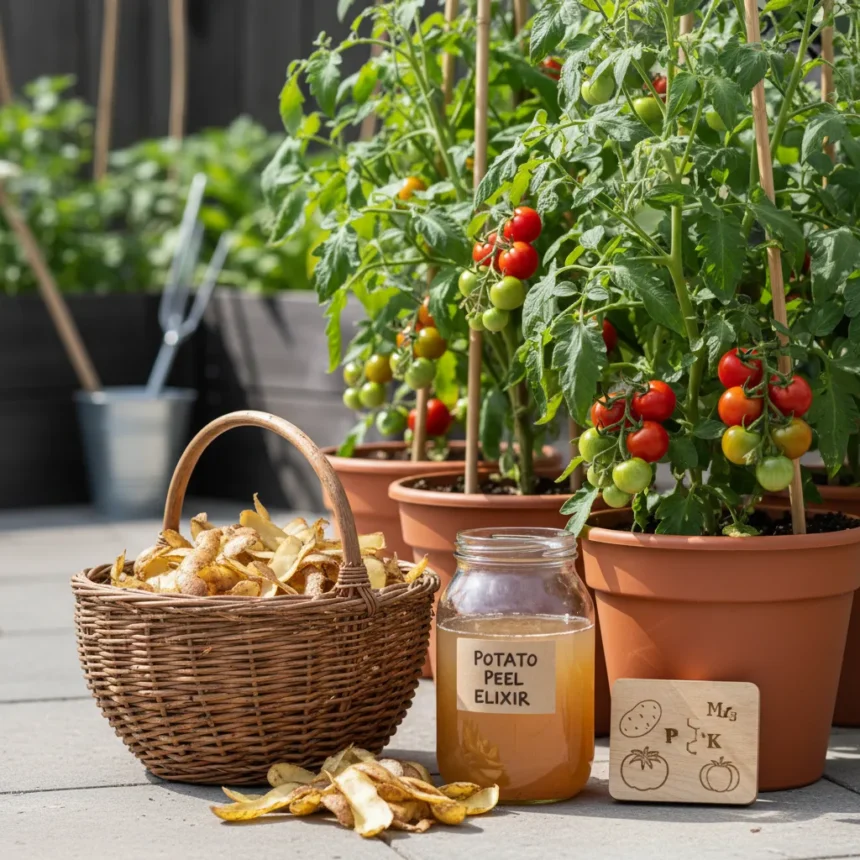
Potato peel fertilizer is a lesser-known gardening hack that transforms kitchen waste into a nutrient-rich plant booster. Instead of discarding potato peels when cooking, gardeners can steep them in water to create a liquid fertilizer packed with phosphorus, potassium, and magnesium—three elements crucial for healthy tomato growth. This method costs nothing beyond what you already have at home and requires minimal effort to prepare.
Key Takeaways
- Potato peel fertilizer uses kitchen scraps to create a nutrient-rich liquid for tomato plants
- The process takes one week in the fridge and requires only potato peels, water, and foil
- The resulting liquid contains phosphorus, potassium, and magnesium essential for plant development
- Apply the fertilizer every two weeks for consistent results
- This method eliminates the need for store-bought plant food while reducing kitchen waste
How to Make Potato Peel Fertilizer at Home
Making potato peel fertilizer is straightforward and requires ingredients most households already possess. Place potato peels into a cup, then fill it with water until the peels are fully submerged. Cover the cup with foil and place it in the refrigerator for one week. After seven days, strain the liquid through a fine mesh to remove solid peel fragments. The resulting liquid is ready to pour directly onto your tomato plants in the garden.
An expert quoted in the original research noted that what emerges from this process is a super nutrient-rich mixture packed with phosphorus, potassium, and magnesium. These three nutrients play crucial roles in plant development—phosphorus supports root strength and flowering, potassium improves overall plant vigor and disease resistance, and magnesium is essential for chlorophyll production and photosynthesis. By using potato peels, gardeners tap into nutrients already present in a food waste product normally destined for the compost bin or trash.
Why Potato Peel Fertilizer Beats Store-Bought Alternatives
Commercial fertilizers often come with a price tag and synthetic chemicals that some gardeners prefer to avoid. Potato peel fertilizer costs nothing—you are recycling scraps you already have. The method is also transparent: you know exactly what ingredients go into your plant food because you control every step. There is no mystery about additives, fillers, or chemical preservatives.


The comparison between throwing away potato peels and using them as fertilizer is stark. Most home cooks discard peels without considering their nutritional value for gardens. By shifting this waste stream into a gardening input, you reduce household waste while simultaneously feeding your plants. This closed-loop approach aligns with sustainable gardening practices and costs absolutely nothing to implement.
Application Schedule for Maximum Results
Consistency matters when using potato peel fertilizer. Apply the liquid to your tomato plants every two weeks throughout the growing season. Pour the strained liquid directly onto the soil around the base of each plant, avoiding the foliage to prevent fungal issues. A standard cup of potato peel water is sufficient for multiple plants depending on their size—distribute it evenly across your tomato bed or container garden.



The two-week cycle allows nutrients to be absorbed and utilized by the plant before the next application. Starting this regimen early in the growing season, once seedlings are established, ensures consistent nutrient availability as the plants flower and fruit. Gardeners who maintain this schedule report healthier foliage and more robust fruit development, though results depend on overall growing conditions, sunlight, soil quality, and watering practices.
FAQ: Potato Peel Fertilizer Questions
Can I use potato peel fertilizer on other plants besides tomatoes?
Yes. The nutrients in potato peel fertilizer benefit most garden plants, including peppers, squash, beans, and leafy greens. Any plant that benefits from phosphorus and potassium can use this liquid fertilizer. Adjust application frequency based on plant type and growth stage.
What if I do not have a fridge to store the mixture?
The refrigerator slows decomposition and prevents the mixture from spoiling too quickly. If you lack fridge space, store the cup in a cool, dark place like a basement or garage. The infusion may take longer than a week, but the nutrient extraction will still occur. Avoid leaving it in direct sunlight.
Will potato peel fertilizer attract pests to my garden?
Applied correctly—poured onto soil rather than left on foliage—potato peel fertilizer is unlikely to attract pests. The liquid form breaks down quickly in soil and does not leave visible organic matter that insects target. Burying the liquid beneath soil or mulch further reduces any pest risk.



Potato peel fertilizer represents a practical intersection of waste reduction and plant care. By recycling kitchen scraps into a nutrient delivery system, gardeners save money, reduce waste, and give tomato plants a natural boost without commercial inputs. The method is simple enough for beginners yet effective enough to become a regular part of any gardener’s routine. If you have potatoes in your kitchen, you have the foundation for healthier tomatoes in your garden.
Where to Buy
Solution4Patio 4-Tier Garden Mini Greenhouse:
Edited by the All Things Geek team.
Source: Tom's Guide