





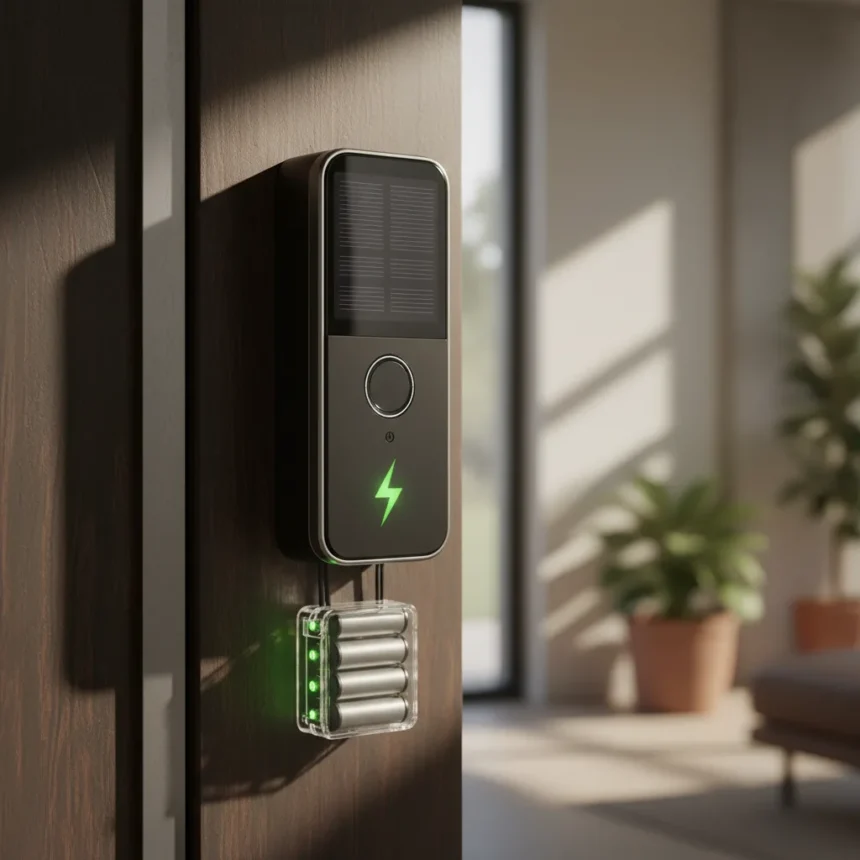
A solar smart lock represents a fundamental shift in how connected door locks solve their most persistent problem: battery depletion. Traditional smart locks require constant battery replacements or charging, frustrating homeowners who buy them expecting convenience and get a maintenance chore instead. This new category of lock eliminates that complaint entirely by harvesting energy from sunlight.
Key Takeaways
- Solar smart locks eliminate battery replacement cycles by charging from daylight exposure.
- The technology addresses the single biggest complaint about traditional smart locks.
- Solar charging reduces maintenance burden compared to battery-dependent alternatives.
- These locks work on exterior doors where sunlight naturally reaches them.
- The solar approach combines smart lock convenience with renewable energy efficiency.
Why Battery Drain Became the Smart Lock Problem Nobody Solved
Smart lock owners consistently cite dead batteries as their top frustration. Traditional connected locks drain batteries within months, forcing users to remember to replace cells regularly or face being locked out. The irony is sharp: a device designed to make home entry frictionless creates its own friction through constant maintenance demands. A solar smart lock sidesteps this entire cycle by converting ambient light into charging power.
The design philosophy behind solar smart locks acknowledges a simple reality: most exterior doors receive regular sunlight exposure. Rather than fighting against battery chemistry, solar locks work with the environment. This approach transforms the lock from a battery-powered device that happens to be smart into a genuinely low-maintenance home security component.
How Solar Smart Lock Technology Actually Works
Solar smart locks integrate photovoltaic cells into their housing, typically positioned on the exterior face where they receive maximum light exposure. These cells charge an internal battery or capacitor bank throughout the day, storing energy for lock and unlock operations. The stored power runs the electronic latch mechanism and wireless communication systems, eliminating the need for traditional disposable batteries.


The engineering trade-off is straightforward: the lock’s exterior design must accommodate solar cells, which affects aesthetics slightly. But the benefit—potentially years without manual battery replacement—makes this a practical compromise for homeowners tired of remembering maintenance schedules. Even on cloudy days, ambient light provides enough charge to sustain typical usage patterns.
Solar Smart Lock vs. Traditional Smart Locks: The Practical Difference
Conventional smart locks operate on alkaline or rechargeable batteries that deplete through regular use and wireless communication. A homeowner might replace batteries every 3-6 months depending on usage and weather. A solar smart lock eliminates this cycle, charging passively whenever the door receives daylight. Over a five-year period, the maintenance savings are substantial—no emergency battery runs, no risk of lockout due to dead cells, no calendar reminders for replacement.


Traditional smart locks remain cheaper upfront and work on interior doors or shaded entrances where solar charging is impractical. But for primary exterior doors—the ones that get used most and receive sunlight—a solar smart lock justifies its premium by eliminating the most common reason users abandon smart locks altogether. The comparison isn’t about which is universally better, but which solves the actual problem homeowners face.
Is a Solar Smart Lock Worth the Investment?
A solar smart lock makes sense if your front or back door receives regular direct or indirect sunlight. If your entrance is perpetually shaded by trees or structures, traditional smart locks remain the better choice. The solar approach shines—literally—for homeowners who value low-maintenance smart home devices and are willing to pay a premium to never think about battery replacement again.
The real value proposition is psychological as much as practical. Smart home adoption stalls when devices create their own maintenance burden. A solar smart lock removes that friction, making it genuinely set-and-forget. For security-conscious homeowners tired of battery anxiety, that peace of mind is worth the extra cost.
Can a solar smart lock charge on cloudy days?
Yes. Solar cells charge from ambient light, not just direct sunlight. Cloudy days, overcast conditions, and indirect light still provide enough energy to sustain the lock’s charging cycle. The internal battery stores power across multiple days, so even extended periods without strong sunlight do not typically drain the lock completely.



How long does a solar smart lock’s internal battery last?
The internal battery in a solar smart lock is designed for years of service, similar to rechargeable batteries in other smart home devices. Because the solar cells continuously top up the charge, the battery experiences less total stress than a traditional smart lock battery that drains to zero regularly. Most manufacturers rate these batteries for 5-10 years of typical operation.
Does a solar smart lock work at night?
Yes. The lock charges during daylight hours and stores energy in its internal battery, which powers night-time unlock operations. The stored charge handles typical evening and night usage without issue. Heavy usage patterns might eventually deplete the stored energy, but normal residential door access patterns do not create this problem.
A solar smart lock represents genuine progress on a problem that has plagued connected locks since their introduction. By eliminating the battery replacement cycle, these locks finally deliver on the promise of smart home convenience without the hidden maintenance cost. For homeowners ready to move beyond battery anxiety, a solar smart lock is the logical next step.
Where to Buy
Edited by the All Things Geek team.
Source: T3




