




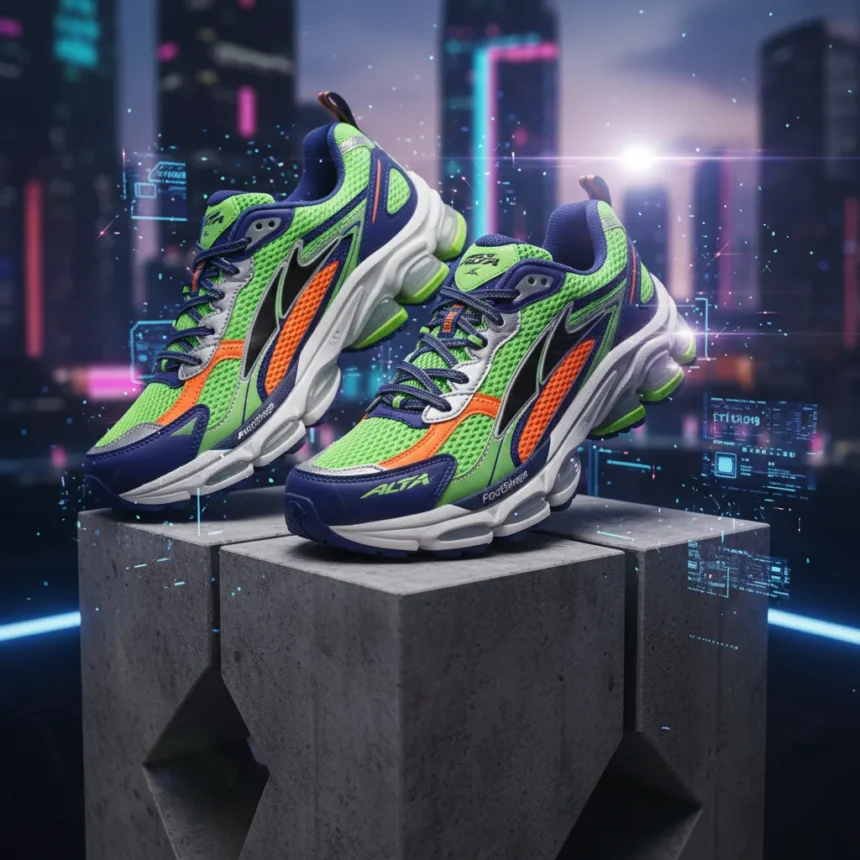
The Altra x PLEASURES Satellite is a retro running shoes collaboration that actually runs. While Nike and Salomon spent the last few years proving that chunky 1990s silhouettes sell lifestyle, Altra and the streetwear label PLEASURES launched something different on April 26: a shoe that looks like it walked off a rave floor but is engineered for serious road miles.
Key Takeaways
- Satellite combines PLEASURES’ 1990s streetwear DNA with Altra’s zero-drop running tech and FootShape™ wide toebox design.
- Retro running shoes trend was revived by Nike (Vomero 17, Pegasus Premium) and Salomon (XT-6, ACS+ OG), but Satellite prioritizes performance over pure lifestyle appeal.
- Zero-drop platform (0mm heel-to-toe drop) promotes natural foot position and reduces injury risk compared to traditional running shoes.
- Priced at $170 USD with limited global availability; sold out in many sizes shortly after launch.
- Weighs 8.9 oz (men’s US size 9) with EGO™ PRO foam midsole and FootPod™ outsole for road-to-trail traction.
How the Satellite Stands Apart from Nike and Salomon’s Retro Runners
Nike’s Vomero 17 and Pegasus Premium, along with Salomon’s XT-6 and ACS+ OG, sparked the current retro running shoes craze by marrying nostalgic aesthetics to modern cushioning. But there is a critical difference: those shoes treat retro design as the destination. The Satellite treats it as decoration for a functional runner. The shoe’s metallic silver upper, neon green accents, and satellite dish-inspired heel counter read like 1990s futurism, yet every component beneath serves running performance, not streetwear cred. Nike’s Vomero 17 ($160) prioritizes plush ZoomX foam and a traditional higher-drop platform. Salomon’s XT-6 ($180) leans trail-road hybrid geometry. The Satellite commits fully to Altra’s zero-drop philosophy, meaning your foot sits in a completely natural position, which promotes better form and reduces injury risk compared to conventional retro runners with elevated heels.
The Technology Behind the Retro Running Shoes Design
Altra engineered the Satellite with three core systems. The Experience Flow 3 upper uses engineered mesh for breathability without sacrificing the chunky aesthetic. The midsole stacks 28mm of EGO™ PRO foam—Altra’s nitrogen-infused supercritical foam—delivering responsive cushioning that absorbs impact without the dead feel of heritage running shoes from the actual 1990s. Most critical is the FootShape™ fit, Altra’s signature wide toebox that lets toes splay naturally. This contrasts sharply with Nike and Salomon’s narrower toe boxes, which prioritize that classic running silhouette over biomechanical freedom. The FootPod™ outsole pattern optimizes traction across road-to-trail terrain, making the Satellite genuinely versatile rather than purely visual.
The shoe weighs 8.9 ounces in men’s US size 9, a respectable weight for a retro runner that does not skimp on cushioning. Available in men’s US 7-15 and women’s US 8.5-11.5, the Satellite launched at $170 USD. The collaboration between Altra, founded on zero-drop innovation, and PLEASURES, the streetwear label built on 1990s skate culture nostalgia, creates a genuine product philosophy rather than a marketing mashup. It is the kind of shoe that looks like it could have been worn by a 90s raver on a night out, but is actually built for proper running.


Where the Satellite Wins Against Competitors
Hoka’s Clifton 9 and New Balance’s 9060 are solid retro running shoes alternatives, but they prioritize max cushioning or lifestyle aesthetics respectively. The Satellite splits the difference: it cushions adequately without burying your foot in foam, and it looks genuinely distinctive without sacrificing wearability for runs. The zero-drop platform is the killer advantage. Most retro runners, whether from Nike or Salomon, maintain traditional 8-12mm heel-to-toe drops inherited from 1980s running shoe design. The Satellite’s 0mm drop forces your body to engage stabilizer muscles differently, rewarding good form and punishing sloppy stride patterns. For runners transitioning from traditional shoes, this is both a feature and a hurdle—but it is a performance feature, not a gimmick.
Availability and the Reality of a Limited Release
The Satellite launched as a limited collaboration, available through Altra.com, PLEASURES’ official site, and select retailers like Doomloop and Overkill. Many sizes sold out within days. Global shipping from US and EU stockists was available, though inventory constraints meant regional availability varied. At $170, the Satellite undercuts Nike’s Pegasus Premium ($180) and matches Salomon’s XT-6 ($180) on price, making it competitive despite the hype-driven scarcity. The streetwear collaboration angle drives demand beyond typical running shoe buyers, which explains the quick sellouts, but it also means the Satellite is not a shoe you can casually grab whenever you decide to try zero-drop running.



Should You Buy the Satellite If You Love Retro Running Shoes?
If you want a retro running shoes that actually performs, yes. If you want a lifestyle sneaker that happens to be runnable, the Nike Vomero 17 or Salomon XT-6 are safer bets. The Satellite demands you commit to Altra’s zero-drop philosophy and the footwork adjustment that comes with it. Runners accustomed to traditional heel-drop shoes will feel the difference immediately. Your calves will work harder. Your foot strike will be higher. Over time, this builds stronger stabilizers and can reduce injury, but the transition period is real. The shoe’s weight and responsive foam are genuinely good, not just adequate. The FootShape™ toebox is noticeably wider than Nike or Salomon equivalents, which either feels liberating or unnecessary depending on your foot shape. The aesthetics are undeniably strong—that metallic silver and neon combination is not subtle, and it will draw attention on the road.
Is the Satellite actually a serious running shoe or just hype?
It is both. The zero-drop platform, EGO™ PRO foam, and FootShape™ fit are legitimate running technologies that Altra has refined across years of zero-drop design. The PLEASURES collaboration elevates the visual appeal, but the engineering underneath is not cosmetic. You can run serious miles in the Satellite without feeling like you are compromising on performance for aesthetics.
How does the Satellite compare to the Hoka Clifton 9 for everyday running?
The Clifton 9 offers more cushioning and a traditional heel-drop geometry, making it more forgiving for runners transitioning from conventional shoes. The Satellite is lighter, more responsive, and zero-drop, requiring better running form but rewarding it with natural foot position and stronger stabilizer engagement. Choose the Clifton 9 for comfort-first runs; choose the Satellite if you want to improve your form.
The retro running shoes trend is not slowing down, but Altra’s entry with PLEASURES proves that nostalgia without substance is a dead end. Nike and Salomon made retro cool; Altra made it functional. The Satellite is expensive, hard to find, and demands adjustment from traditional running shoe users. But for runners willing to commit to zero-drop geometry and genuinely care about how their shoes perform, the Satellite delivers something the lifestyle retro runners cannot: actual progress.



This article was written with AI assistance and editorially reviewed.
Source: T3