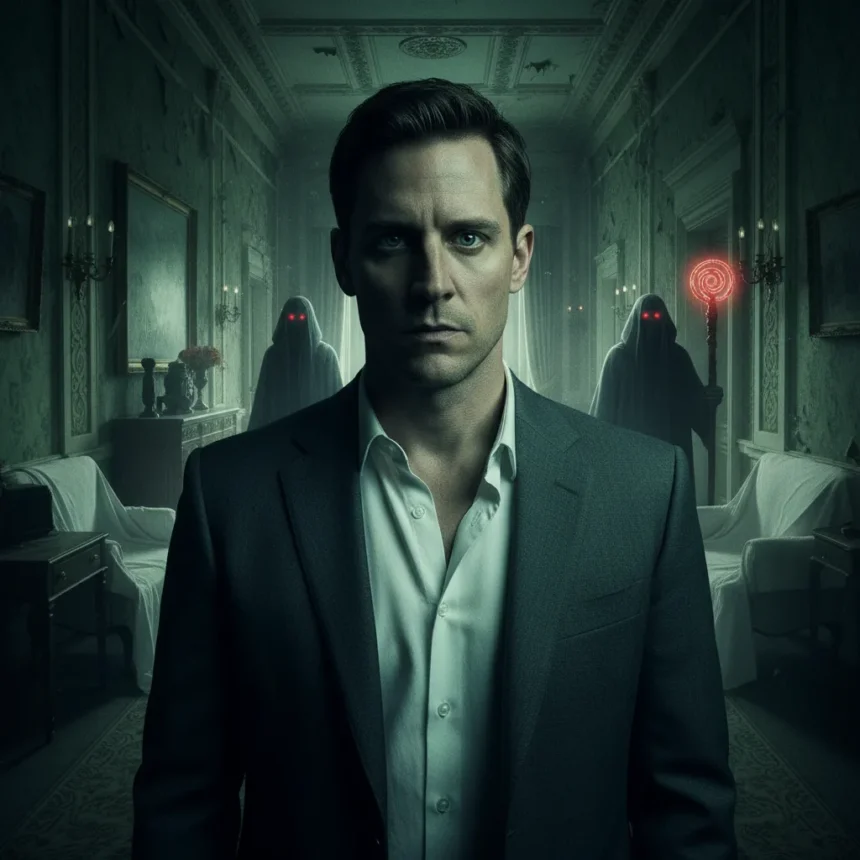
Hokum is a horror film released in 2026 starring Adam Scott as Ohm Bauman, a horror novelist who travels to a remote Irish hotel to scatter his parents’ ashes and confront the supernatural forces—and his own trauma—lurking within its walls. Director and writer Damian McCarthy has crafted one of the year’s most assured genre entries, a Hokum horror film that sidesteps the self-serious melodrama plaguing most contemporary haunted-house narratives centered on parental guilt and childhood wounds.
Key Takeaways
- Hokum stars Adam Scott as a horror author investigating a haunted Irish hotel tied to his family’s past.
- Director Damian McCarthy blends Celtic folklore with Stephen King-adjacent atmosphere and emotional character work.
- The 107-minute film avoids the overwrought trauma-drama trappings that undermine similar horror films.
- Hokum draws influence from Stanley Kubrick’s The Shining and Mike Flanagan’s Doctor Sleep but forges its own path.
- The film balances jumpscares and mood with genuine empathy, prioritizing heart over pure fright.
What distinguishes Hokum horror film from the crowded field of guilt-haunted-house narratives is McCarthy’s refusal to wallow. The story—American author Ohm Bauman returning to his parents’ honeymoon suite, now a haunted inn in rural Ireland—could easily collapse into overwrought psychological melodrama. Instead, McCarthy treats the material with restraint. Strange disappearances accumulate. Locals whisper of a witch. Visions disturb Ohm’s sense of reality. Yet the film never loses sight of the man at its center, a character who deserves our investment before the supernatural machinery kicks into high gear.
How Hokum Horror Film Compares to Modern Haunted House Stories
The Hokum horror film owes a clear debt to Stanley Kubrick’s The Shining and Mike Flanagan’s Doctor Sleep—both stories that weaponize haunted architecture to excavate family trauma. But where those films sometimes suffocate under the weight of their own emotional baggage, Hokum breathes. McCarthy constructs the narrative off-kilter, layering atmosphere and folk-horror texture without losing the thrill. The result feels less like a solemn reckoning and more like stepping into a Celtic-horror-themed haunted house—unsettling, eerie, entertaining.
Scott delivers a performance that grounds the absurdity. He plays Ohm as a man caught between skepticism and dread, between the author’s detached observation and the son’s raw vulnerability. When jumpscares arrive, they land because we care what happens to him. When quieter moments unfold—a conversation with a stranger, a fragment of memory—the film tugs at something genuine rather than manufactured.

Why Hokum Horror Film Works When Others Falter
Too many recent horror films about childhood trauma and parental guilt mistake miserablism for depth. They assume that if a character suffers enough, the audience will feel something. Hokum horror film rejects that formula. McCarthy builds mood through sound design, through the cramped geometry of the hotel, through the slow accumulation of inexplicable events. The scares serve the story rather than the reverse. Jumpscares puncture the tension without defining it.
The film’s setting—a remote inn in the Irish countryside, isolated and weathered—becomes a character itself. McCarthy uses the landscape to amplify Ohm’s psychological unraveling. Is the witch real? Are the disappearances supernatural or psychological? The ambiguity refuses easy resolution, which some viewers may find frustrating. Others will recognize it as the hallmark of a filmmaker confident enough to trust the audience.



Should You Watch Hokum Horror Film?
Hokum horror film is rated R and currently playing in theaters. If you gravitate toward haunted-house stories that prioritize atmosphere and character over relentless scares, this is essential viewing. If you prefer straightforward, high-octane horror without the emotional undercurrent, you may find the film’s deliberate pacing underwhelming. But for viewers fatigued by trauma-drama horror that mistakes misery for meaning, Hokum offers something refreshing: a well-rounded character piece with genuine scares and genuine heart.
Is Hokum horror film worth watching if I haven’t seen The Shining?
Yes. While Hokum horror film shares thematic DNA with Kubrick’s classic—both explore how haunted spaces amplify family dysfunction—McCarthy’s film stands entirely on its own. You need no prior knowledge to follow Ohm’s descent or to feel the dread accumulating around him. The film functions as a complete experience.
What makes Damian McCarthy’s direction stand out in Hokum?
McCarthy demonstrates an ever-improving directorial style, constructing mood through negative space and sound rather than relying on overt visual spectacle. He trusts silence. He trusts his actors. He trusts that the audience will lean into unease without constant reassurance. In Hokum horror film, that restraint becomes the film’s greatest asset.
Does Hokum horror film have a lot of jump scares?
Hokum horror film includes jumpscares, but they serve the narrative rather than dominating it. The film prioritizes sustained dread and emotional resonance over shock-value frights. If you prefer horror that builds tension methodically and uses scares sparingly, you’ll appreciate McCarthy’s approach.



Hokum horror film arrives at a moment when the genre needs films like this—stories that refuse the easy catharsis of trauma-drama, that trust their audiences to sit with ambiguity, and that remember that the best horror works when we care about the person at the center. Adam Scott’s performance anchors the film’s emotional core. McCarthy’s direction sustains its eerie spell. The result is one of 2026’s most assured horror films, a film that knows exactly what it is and executes without apology.
Where to Buy
Roku Streaming Stick 4K (2021) | Google Chromecast with Google TV | Roku Express 4K+ (2021) | Amazon Fire TV Stick 4K Max 2023
Edited by the All Things Geek team.
Source: Tom's Guide