





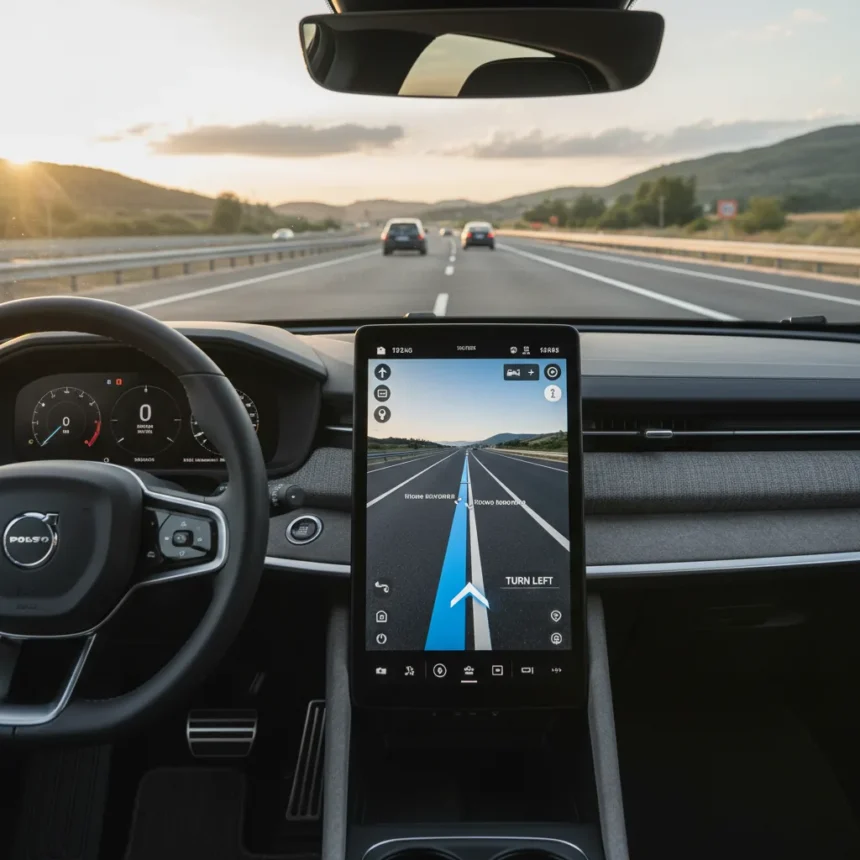
Android Automotive lane guidance is a new real-time navigation feature that analyzes lane markings and road signs via a car’s front-facing camera to guide drivers into the correct lane at junctions and motorways. Google has introduced this capability to Google Maps for the first time, leveraging AI processing directly within the vehicle rather than relying on smartphone-based systems like Apple CarPlay or Android Auto. The feature launches exclusively on Polestar 4 in the US and Sweden over the coming months, marking a significant step toward deeper integration of AI-powered driving assistance in native automotive operating systems.
Key Takeaways
- Android Automotive lane guidance uses vehicle cameras and AI to predict correct lanes at complex junctions and motorways.
- Feature is exclusive to Polestar 4 at launch; not available on Polestar 3 or other vehicles.
- Rolling out first in the US and Sweden, with gradual expansion to more road types and vehicles planned.
- Requires forward-facing camera and sign recognition hardware; only works on native Android Automotive systems, not smartphone-based navigation.
- Google will expand the feature to additional automakers and road types through partnerships.
How Android Automotive Lane Guidance Works
Google’s approach to Android Automotive lane guidance differs fundamentally from smartphone-based navigation. The system processes real-time road information directly inside the vehicle using on-device AI, analyzing lane markings and road signs captured by the car’s front-facing camera. According to Google, this integration means the AI in the vehicle analyzes lane markings and road signs as they’re captured by the car’s front-facing camera, and this real-time road information is instantly integrated with Google Maps’ powerful capabilities. The result is guidance that appears on the car’s native display without the latency or limitations of routing data through a smartphone.
This architecture matters because it enables faster decision-making and reduces dependency on cellular connectivity for critical driving information. The feature targets high-complexity driving scenarios—motorway merges, multi-lane junctions, and exit ramps—where drivers most frequently choose the wrong lane or miss turns. By providing proactive lane suggestions rather than reactive corrections, the system aims to reduce driver error and improve navigation confidence.
Polestar 4 Exclusivity and Hardware Requirements
Polestar 4 becomes the first vehicle to receive Android Automotive lane guidance, despite Polestar offering a more expensive flagship model in the Polestar 3, which does not support the feature at launch. This exclusivity stems from hardware requirements: the system demands a forward-facing camera and sign recognition capability integrated with Android Automotive OS. Not every vehicle equipped with Android Automotive meets these specifications, which explains why rollout is gradual and vehicle-specific rather than platform-wide.


The distinction between Polestar 3 and Polestar 4 underscores a broader reality in automotive tech adoption: newer models with purpose-built camera systems and processing hardware gain access to advanced features first. Polestar 4 owners in the US and Sweden will see the feature arrive over the coming months, but no specific launch date has been announced. Other automakers have not yet been confirmed as launch partners, though Google has stated it will expand to more road types and cars in partnership with key automakers.
Why This Matters for Android Automotive’s Future
Android Automotive lane guidance represents a shift in how navigation works inside vehicles. Smartphone-based systems like Apple CarPlay and Android Auto mirror apps from your phone to the car’s screen, but they lack direct access to vehicle sensors and cameras. Native Android Automotive systems, by contrast, integrate deeply with the car’s hardware, enabling features that smartphone systems simply cannot replicate. This architectural advantage positions Android Automotive as a platform for increasingly sophisticated driver-assistance features that require real-time sensor fusion and low-latency processing.



The feature also signals Google’s confidence in Android Automotive as a long-term competitive platform against proprietary automotive operating systems. As more automakers integrate Android Automotive into their lineups, Google can layer intelligence—lane guidance, predictive traffic analysis, vehicle diagnostics—that creates stickiness and differentiation. Polestar’s early adoption, despite being a smaller player than Tesla or traditional luxury brands, suggests that Google is actively recruiting partners to build the ecosystem.
Current Limitations and Rollout Timeline
Android Automotive lane guidance launches in the US and Sweden first, with no confirmed timeline for other regions or additional road types. Google has committed to expanding the feature, but specifics remain vague: which automakers will be next, when they will receive it, and which road types will be supported beyond motorways and major junctions are all open questions. The initial rollout will focus on highways and complex urban intersections where lane selection is most critical.
The feature’s reliance on forward-facing cameras and sign recognition also means it may perform differently depending on road infrastructure quality. Countries with clear, well-maintained lane markings and standardized road signage will likely see better performance than regions with inconsistent road conditions or non-standard signage. This geographic variation is rarely discussed in marketing materials but will influence real-world utility.
How Android Automotive Lane Guidance Compares to Smartphone Navigation
Smartphone-based Google Maps used in Apple CarPlay or Android Auto provides turn-by-turn navigation and traffic updates, but it cannot access the car’s front-facing camera or sign recognition systems. Android Automotive lane guidance, by contrast, adds a layer of real-time visual processing that smartphone apps cannot match. A driver using Apple CarPlay might miss a lane change instruction on a busy six-lane motorway; the same driver in a Polestar 4 with Android Automotive lane guidance would receive a proactive prompt based on actual lane markings detected by the vehicle’s camera.



This advantage comes with a trade-off: Android Automotive systems are less portable than smartphone-based navigation. You cannot use Android Automotive lane guidance in a rental car or a friend’s vehicle unless it has the required hardware and software. Smartphone navigation, despite its limitations, remains the most flexible option for drivers who frequently change vehicles.
What Drivers Should Expect
Early adopters of Polestar 4 in the US and Sweden will see lane guidance recommendations appear on the car’s display as they approach complex driving scenarios. The feature is designed to complement, not replace, driver attention—it remains the driver’s responsibility to verify lane selection and follow traffic rules. Google has not released detailed information about how aggressively the system will prompt or whether drivers can customize alert intensity, so the user experience remains somewhat unclear until the feature ships.
Frequently Asked Questions
Is Android Automotive lane guidance available on all Android Automotive cars?
No. The feature is exclusive to Polestar 4 at launch, rolling out in the US and Sweden over the coming months. Google plans to expand to other vehicles through partnerships with automakers, but no additional confirmed partners or timeline have been announced.
Can I get this feature in Apple CarPlay or Android Auto?
No. Android Automotive lane guidance is exclusive to native Android Automotive systems and requires direct access to the vehicle’s front-facing camera and sign recognition hardware. Smartphone-based navigation systems like Apple CarPlay and Android Auto cannot access these vehicle sensors.
Will this feature reduce accidents or improve navigation accuracy?
Android Automotive lane guidance is designed to reduce driver error at complex junctions and motorways by providing proactive lane suggestions. However, Google has not released independent testing data or accident reduction statistics. The feature complements driver attention but does not replace it—drivers remain responsible for safe lane changes and traffic compliance.
Android Automotive lane guidance marks a meaningful step forward for vehicle-integrated AI, but its impact will depend on how broadly Google can expand it beyond Polestar 4. For now, the feature remains a tantalizing glimpse of what native automotive operating systems can achieve when they leverage vehicle hardware directly. Whether other automakers will embrace Android Automotive deeply enough to support similar features remains the real question.
Where to Buy
Edited by the All Things Geek team.
Source: T3




