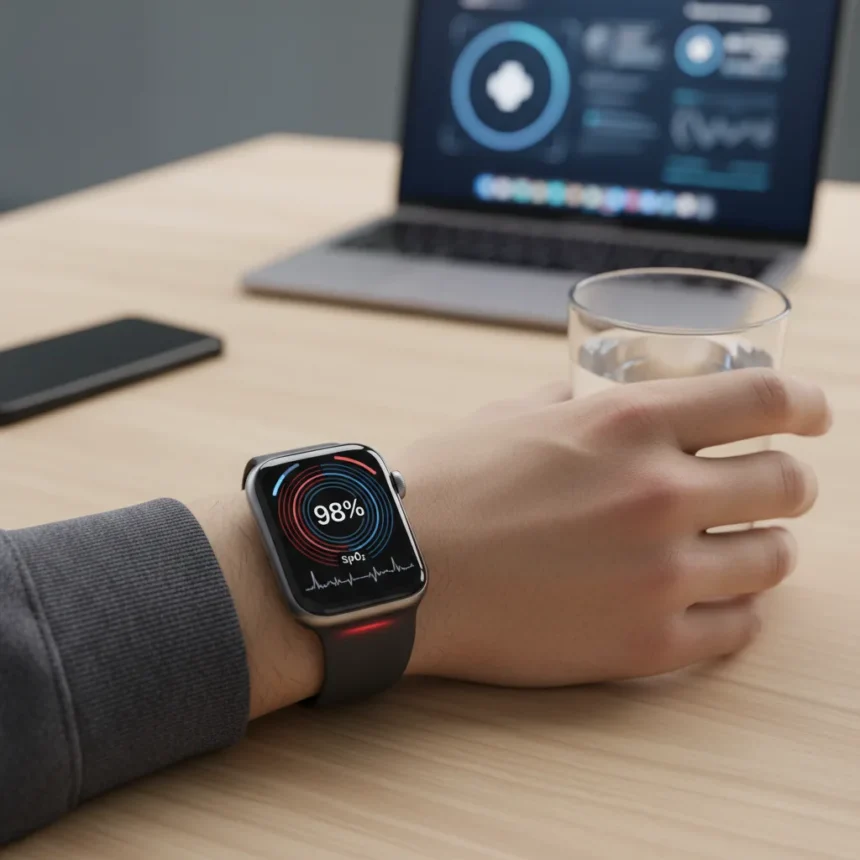
The Apple Watch blood oxygen ban is officially over, restoring a core health feature to millions of U.S. wearers after a year-long legal standoff with pulse oximetry patent holder Masimo. The U.S. International Trade Commission imposed the ban in late 2023, blocking sales of the Series 9 and Ultra 2 with SpO2 monitoring enabled due to Masimo’s patent claims on the technology. Now, Apple has redesigned its approach, and blood oxygen functionality is returning via software update without any hardware changes required.
Key Takeaways
- Apple Watch Series 9 and Ultra 2 regain blood oxygen monitoring in the U.S. through a software update
- The ban lasted over a year after the ITC ruling in late 2023 blocked sales of affected models
- Blood oxygen was introduced in the Apple Watch Series 6 in 2020 and uses LED lights to measure SpO2 levels
- Sleep apnea notifications automatically enable after 10 nights of data collection on Series 9 and newer
- Masimo’s Freedom smartwatch promises superior accuracy for motion and skin tone variations
How the Ban Affected Apple Watch Users
When the ITC ban took effect, Apple faced an impossible choice: stop selling two of its most popular watch models in the U.S., or disable blood oxygen monitoring entirely. The company chose the latter, removing SpO2 functionality via software while the legal battle continued. A pause by the U.S. Court of Appeals for the Federal Circuit in December 2023 allowed sales to resume with the feature disabled, but millions of Series 9 and Ultra 2 owners in the U.S. lost access to a health metric many relied on for sleep tracking and general wellness monitoring.
The technology itself—introduced in the Apple Watch Series 6 back in 2020—uses LED lights to measure oxygen saturation levels in the blood. This data becomes particularly valuable when combined with sleep tracking, as it can help detect conditions like sleep apnea. For over a year, American users watched as international markets retained full functionality, creating a frustrating divide in the Apple Watch ecosystem.
What the Apple Watch Blood Oxygen Ban Lift Means Right Now
The restoration of blood oxygen monitoring removes a major limitation that made the U.S. Series 9 and Ultra 2 feel like compromised versions of their global counterparts. Users will receive a software update that re-enables the feature without requiring any hardware modifications. This is significant because it means existing owners do not need to purchase new watches—the devices they already own will suddenly gain back a capability that was artificially stripped away.


Sleep apnea notifications, one of the most practical uses for SpO2 data, will automatically enable after users accumulate 10 nights of readings over a 30-day period. This is particularly valuable for detecting undiagnosed sleep apnea, which affects millions of people globally but often goes unnoticed. The feature works by analyzing drops in blood oxygen levels during sleep and alerting users if patterns suggest possible apnea, though Apple emphasizes this is not a diagnostic tool and requires confirmation from a doctor.
How Masimo’s Freedom Smartwatch Challenges Apple
While Apple recovers its blood oxygen capability, Masimo—the company that won the patent case—is preparing its own smartwatch entry, the Freedom, which promises more advanced SpO2 monitoring. According to Masimo President of Consumer Health Eugene Goldberg, the Freedom’s blood oxygen technology accounts for motion, low perfusion, skin pigmentation, and poor blood flow, factors that can reduce accuracy in competing devices. The watch monitors vital signs every second rather than periodically, a fundamental difference in approach.



Masimo positions the Freedom as a health-focused device aimed at older adults and health professionals who need continuous, reliable vital sign tracking. The smartwatch also includes hydration index, respiration rate, and pulse rate variability monitoring alongside standard features like step counting and fall detection. This represents a direct competitive challenge to Apple’s health-centric marketing, though the Freedom’s exact pricing and availability remain unconfirmed.
Apple’s Broader Health Feature Expansion
Beyond blood oxygen, Apple is expanding its health monitoring capabilities with features like hypertension alerts, which began rolling out on the Series 9, Series 10, Series 11, and Ultra 2 and Ultra 3 watches in over 150 countries. Unlike a full blood pressure monitor, hypertension alerts work by analyzing patterns in your pulse and waveform data, then comparing them against a personalized baseline. Users can log manual cuff readings, which Apple exports as a PDF for sharing with doctors, bridging the gap between smartwatch data and clinical assessment.
These additions reflect Apple’s strategy of layering health features that work together rather than replacing traditional medical devices. Blood oxygen monitoring, sleep tracking, heart rate variability, and hypertension alerts combine to paint a more complete picture of cardiovascular and respiratory health than any single metric alone. The company is careful to position these tools as wellness aids, not diagnostic instruments, a legal and ethical distinction that matters as smartwatch health features become more sophisticated.
Why This Ban Mattered More Than You Might Think
The Apple Watch blood oxygen ban was not just about one missing feature—it highlighted how patent disputes can fragment the global tech market and disadvantage consumers in specific regions. For a year, Americans paid the same price as international buyers but received a less capable product. This created an unusual situation where the best version of the Series 9 was the one sold outside the U.S., undermining Apple’s usual global consistency.



The resolution also signals how companies will navigate health tech patents going forward. Rather than fight indefinitely, Apple found a path to redesign its approach while Masimo gets to showcase its own health monitoring expertise through the Freedom smartwatch. For consumers, this means the patent system, however imperfect, eventually allows innovation to move forward—but not without friction and delay.
Can the Apple Watch blood oxygen feature be trusted for health decisions?
Blood oxygen monitoring on the Apple Watch is useful for spotting trends and potential issues like sleep apnea, but Apple emphasizes the feature is not diagnostic. Any significant findings should be confirmed by a healthcare professional using clinical-grade equipment. The watch works best as an early warning system that prompts you to seek proper medical evaluation, not as a replacement for it.
Will older Apple Watch models get blood oxygen monitoring back?
The update applies specifically to the Series 9 and Ultra 2 in the U.S., the models affected by the ban. Older models like the Series 8 or Series 7 were not part of the legal restriction and already had the feature enabled globally. Apple has not announced plans to retrofit blood oxygen monitoring to earlier watch generations.
How does the Apple Watch blood oxygen ban affect international users?
International users were largely unaffected by the U.S. ban, as it applied only to American sales and imports. The Series 9 and Ultra 2 retained full blood oxygen functionality in all other markets throughout the dispute. This created a regional divide that is now resolved for U.S. customers, bringing them back in line with the global product experience.
The lifting of the Apple Watch blood oxygen ban closes a frustrating chapter for American users and demonstrates that even major tech companies must eventually answer to patent law. With SpO2 monitoring restored and new health features like hypertension alerts rolling out, the Apple Watch ecosystem is more capable than it has been in years. The real winner is anyone who relies on continuous health monitoring to catch problems early—which, increasingly, is most of us.
Edited by the All Things Geek team.
Source: Tom's Guide