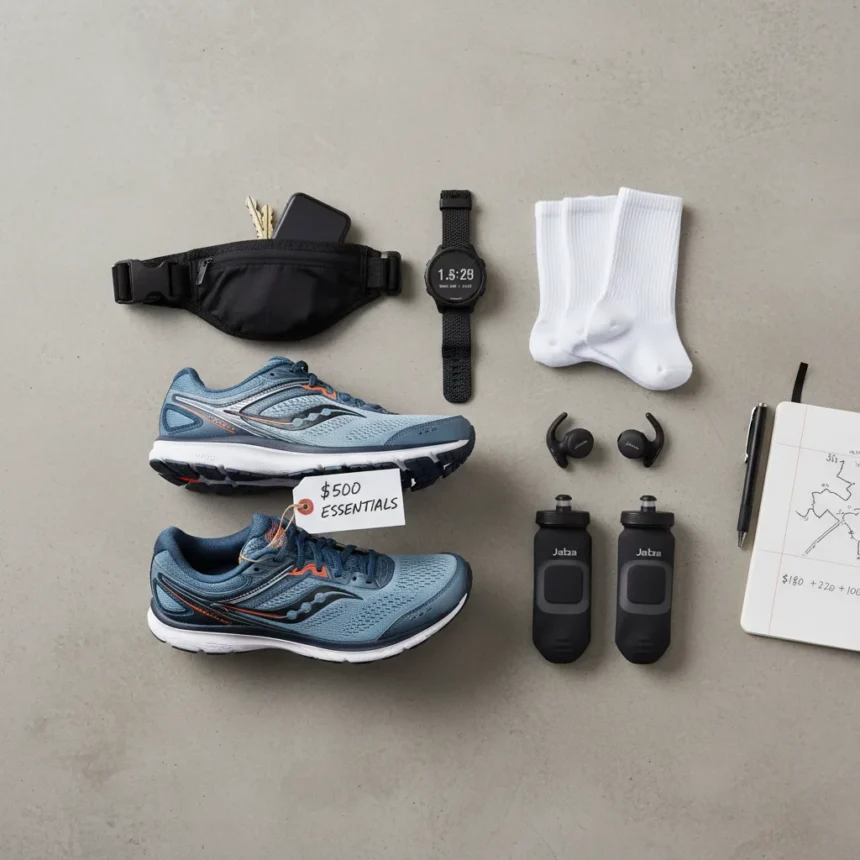
Beginner running gear doesn’t need to drain your wallet. A running tech expert recommends spending around $500 on three core purchases that will carry you through up to 500 miles of training without compromise. These aren’t luxury items—they’re the foundation that separates comfortable, injury-resistant training from painful, frustrating false starts.
Key Takeaways
- Three specific gear categories solve 90 percent of beginner running problems when purchased strategically.
- A $500 budget covers entry-level versions of each category that perform reliably for hundreds of miles.
- Proper running shoes are the single most important purchase for injury prevention and comfort.
- A basic fitness tracker or running watch monitors effort and prevents overtraining in early weeks.
- Quality headphones or earbuds make long solo runs mentally sustainable and safer.
Why Beginner Running Gear Matters More Than You Think
Most new runners either buy nothing and suffer, or buy everything and waste money on gadgets they never use. The middle path—investing strategically in three categories—prevents both mistakes. Proper beginner running gear reduces injury risk, builds confidence, and makes training feel sustainable rather than punishing. Without it, runners quit within weeks.
The $500 threshold matters because it’s the point where you’ve covered the essentials without premium pricing. Below that, you’re missing critical items. Above it, you’re paying for features that don’t matter yet. This budget represents the expert consensus on what actually works for someone running their first 500 miles.
Category 1: Running Shoes (The Non-Negotiable Foundation)
Running shoes are where your $500 budget should anchor itself. A proper pair of beginner running shoes costs between $120 and $180, and this is not an area to compromise. The wrong shoes cause shin splints, plantar fasciitis, and knee pain—injuries that sideline runners for months. The right shoes feel like an investment in injury prevention, not a luxury expense.

Look for shoes designed specifically for beginners, not trail shoes, racing flats, or minimalist designs. Beginner running shoes offer cushioning, arch support, and stability features that protect your joints while your body adapts to impact. Brands like ASICS, Brooks, New Balance, and Saucony all make solid entry-level options in this price range. Visit a specialty running store if possible—staff can watch your gait and recommend shoes matched to your foot strike and arch type, not just your shoe size.
Replace your running shoes every 300-500 miles. That’s the industry standard for when cushioning breaks down and injury risk climbs. Your first pair will carry you through most of your initial training block, making this a one-time purchase for the purposes of this budget.



Category 2: Running Watch or Fitness Tracker
A basic running watch or fitness tracker costs $150-$250 and solves a critical beginner problem: knowing when to stop. New runners tend to run too hard, too often, and too far. A fitness tracker monitors your heart rate and effort, letting you train at the right intensity. This prevents burnout, reduces injury risk, and makes training feel scientific rather than guesswork.
You don’t need a fancy multisport watch with GPS, maps, and 20 sport modes. A simple fitness tracker that monitors heart rate, logs distance, and tracks weekly activity is enough. It syncs to your phone, shows you your progress, and gives you permission to rest—something beginners rarely do without external validation. The psychological impact of seeing your fitness improve week to week is worth the cost alone.
Category 3: Running Headphones or Earbuds
Quality audio costs $100-$150 and transforms solo runs from mentally grueling to enjoyable. Running headphones need to stay in place, handle sweat, and deliver sound without making your ears sore during 45-minute efforts. Cheap earbuds fall out, sweat corrodes them, and poor fit causes ear canal irritation. Good running headphones do none of those things.
Look for models with secure ear hooks, IPX-rated water resistance (IPX4 or higher), and reasonable battery life. Wireless is essential—wired headphones get tangled and pull at your ears. Audio quality matters less for running than durability and fit; you’re listening to podcasts or music, not mixing a record. This category is where many beginners overspend, buying premium sports headphones when mid-range options work just as well.



How to Allocate Your $500 Wisely
A realistic breakdown: $150 for shoes, $200 for a fitness tracker, $125 for headphones, and $25 left for miscellaneous items like a running belt, moisture-wicking socks, or a hydration bottle. This assumes you already own basic athletic clothing. If you need running shorts and shirts, budget an extra $50-$75 and adjust the watch or headphones downward.
Avoid the temptation to buy a premium smartwatch with cellular connectivity, advanced training metrics, or a large color screen. These features add cost and complexity without improving your training as a beginner. A simple device that tracks heart rate, distance, and pace is sufficient. Save premium features for later, after you’ve built a consistent habit and understand what data actually matters to you.
Beginner Running Gear vs. Skipping Equipment Entirely
Some runners believe you need nothing but shoes and determination. That’s technically true—humans have run for millennia without fitness trackers or headphones. But modern beginners have advantages previous generations didn’t. A fitness tracker prevents the overtraining that kills motivation. Proper headphones make long runs mentally sustainable. Together, these three categories create an environment where beginners actually stick with running instead of quitting after a painful month.
The alternative—buying premium gear from the start—wastes money on features you won’t use. A $600 multisport watch is overkill for someone still deciding if they like running. A $300 pair of racing shoes is pointless for someone running 5K. The $500 budget targets the sweet spot: good enough to work, cheap enough to feel reasonable, and focused enough to avoid waste.
What Beginner Runners Actually Forget to Budget For
Beyond the three core categories, new runners underestimate the cost of replacement. Shoes wear out. Batteries die. Headphones break. Budget $20-$30 per month for consumables and repairs in your first year. This covers replacement ear tips, a charging cable, socks, and eventually a second pair of shoes if you increase mileage quickly. These aren’t luxuries—they’re maintenance costs that keep your gear functional.
Frequently Asked Questions
Should I buy a GPS running watch or a basic fitness tracker?
A basic fitness tracker with heart rate monitoring is sufficient for your first 500 miles. GPS adds $100-$150 to the cost and features you won’t use yet. A simple tracker synced to a free app like Strava gives you all the data you need without premium pricing. Upgrade to a GPS watch later, once you’re running 30+ miles per week and training for specific races.
Can I use my smartphone instead of a fitness tracker for beginner running gear?
Your phone can track distance and pace using free apps, but it drains battery quickly and forces you to carry extra weight. A dedicated fitness tracker is lighter, lasts longer on a single charge, and lets you run without your phone. For the $150-$200 cost difference, the convenience and safety benefit of leaving your phone at home is worth it.
How often do I need to replace beginner running shoes?
Replace running shoes every 300-500 miles, or roughly every 6-9 months for someone training consistently. Your first pair should carry you through your initial training block. Track mileage on your fitness watch so you know when replacement time approaches. Worn-out shoes lose cushioning and increase injury risk dramatically, so this is not an area to stretch the timeline.
The $500 beginner running gear setup is not glamorous, but it works. Three focused purchases—shoes, a watch, and headphones—create the foundation for consistent, injury-resistant training. Skip any of these three and you’re either running blind, risking injury, or mentally suffering through long solo efforts. Spend more than $500 and you’re paying for features that don’t matter yet. This budget represents the expert consensus on what actually matters when you’re starting out.
Where to Buy
Saucony Ride 18 (men's), which are currently reduced from $145 down to $89.94 at Amazon | reduced from $145 to $90.65 at Amazon | Saucony Ride 18 Ride 18 running shoe (women's): | The men's shoe is available for $89.95. | Garmin Forerunner 165 is reduced from $249.99 to $199.99 at Amazon
Edited by the All Things Geek team.
Source: TechRadar