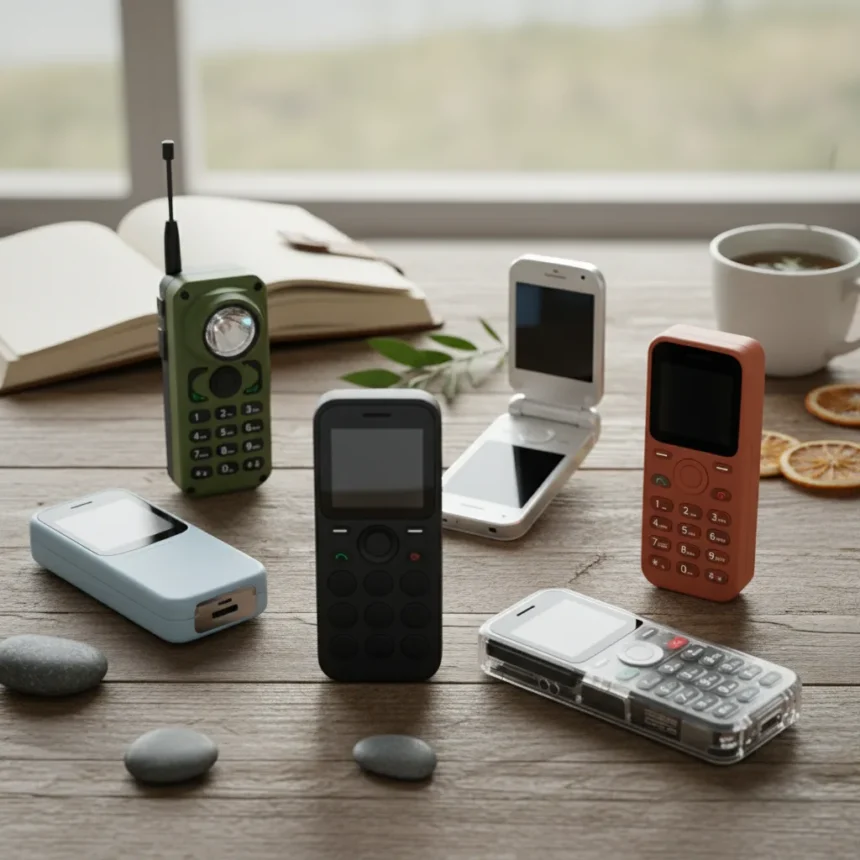
Dumbphones for digital detoxing are experiencing a quiet renaissance as smartphone fatigue drives people back to basics. The appeal is straightforward: a device that handles calls, texts, and maybe a little music without the constant notifications, infinite scrolling, and psychological manipulation baked into modern smartphones. The phones worth considering share two critical traits—they are genuinely simple to set up, and they deliver battery life measured in days or weeks rather than hours.
Key Takeaways
- Dumbphones for digital detoxing prioritize battery longevity and minimal feature sets over app ecosystems.
- Setup simplicity is essential—complex activation processes defeat the purpose of a digital detox.
- Battery life measured in days or weeks removes the daily charging ritual that tethers users to power outlets.
- These devices handle calls, texts, and basic media without algorithmic feeds or notification fatigue.
- Digital detoxing works best when the phone itself becomes forgettable rather than a constant companion.
Why dumbphones for digital detoxing matter right now
The smartphone industry has spent fifteen years optimizing for engagement—every notification, every color gradient, every algorithmic feed designed to keep you looking. Dumbphones for digital detoxing flip that equation. They are built to be used and put away, not endlessly checked. This is not nostalgia; it is a practical response to documented problems with constant connectivity: sleep disruption, anxiety, fractured attention spans. A phone that cannot run Instagram or TikTok is a phone that forces you to be bored, and boredom, it turns out, is where creativity and mental clarity live.
The barrier to entry used to be high. Early dumbphone revivals felt clunky, with interfaces designed in 2005 and never updated. Modern dumbphones have solved this. They use contemporary operating systems (usually KaiOS or custom Linux builds), support 4G networks, and include music playback, messaging apps, and even maps. They just refuse to add the thousand other things that turn a tool into an addiction vector. Setup is straightforward—insert a SIM, charge, go. No multi-day account creation rituals, no forced Google or Apple logins, no algorithm tutorials.
What separates dumbphones from smartphones
The distinction is architectural, not just philosophical. A smartphone runs a general-purpose operating system designed to host unlimited applications. A dumbphone runs a closed system with a fixed feature set. This means no app store, no background processes draining battery, no notifications from services you forgot you installed. A dumbphone cannot receive a push notification at 2 a.m. from a social media app because that app does not exist on the device. The battery lasts days instead of hours because the system is not constantly syncing, indexing, and updating.


Compare this to a smartphone, where even in airplane mode, background services run invisibly. A modern smartphone with aggressive optimization might reach two days of battery life. A dumbphone reaches ten days or more, and sometimes significantly longer depending on usage. That difference is not marginal—it is transformative. A device you charge once a week changes your relationship to it entirely.
How to evaluate dumbphones for digital detoxing
Three criteria separate good dumbphone choices from disappointing ones. First is battery endurance—if you are buying a dumbphone specifically for digital detoxing, a device that dies after three days defeats the purpose. Look for phones rated for at least five to seven days of mixed use, and understand that real-world battery life often exceeds manufacturer claims because the phone is doing so little. Second is network compatibility. A dumbphone that only works on 2G networks is increasingly obsolete; 4G support ensures you can still make calls and send messages reliably as carriers phase out older standards. Third is setup friction. If activating the phone requires a computer, a special cable, or navigating confusing menus, it undermines the simplicity you are seeking.



Feature set matters less than you might think. Most dumbphones support basic text messaging, email, maps, and music. Some include cameras, hotspot capability, or even WhatsApp through KaiOS. These are bonuses, not requirements. The core value proposition is the absence of features that demand your constant attention—no social feeds, no infinite content streams, no algorithms.
The practical reality of dumbphone digital detoxing
Switching to a dumbphone is not a complete escape from connectivity. You remain reachable by phone and text. Email still works. Maps still work. The point is that you cannot mindlessly refresh feeds or get pulled into notification chains. You will be bored sometimes, and that boredom is the feature, not a bug. Many people report that after a week on a dumbphone, the urge to check a device diminishes dramatically. Your brain stops expecting constant stimulation.
This is not a solution for people whose work requires constant app access or who depend on smartphone features like advanced photography or navigation. It is a solution for people who recognize that smartphones have become psychological anchors and want to reclaim some mental space. A dumbphone is a tool for that reclamation.
Is a dumbphone practical for everyday use?
Yes, with caveats. Calls and texts work perfectly. Maps work. Email works. Music works. The friction comes when someone sends you a link to a video, a document, or a service that requires a smartphone app to access. You will miss some conveniences. Most people who make the switch decide those trade-offs are worth the mental clarity they gain.



How long does a dumbphone battery actually last?
Real-world battery life for modern dumbphones typically ranges from five to fourteen days depending on usage patterns and the specific model. Phones with smaller screens and simpler processors consume far less power than smartphones. A dumbphone used primarily for calls and occasional texts can easily reach two weeks on a single charge.
Can you use apps on a dumbphone?
Most dumbphones running KaiOS support a limited app store with basic applications like messaging, maps, and music players. You cannot install Instagram, TikTok, or most mainstream apps. Some models support WhatsApp or Telegram. The app ecosystem is intentionally constrained to prevent the feature creep that turns dumbphones into smartphones.
Dumbphones for digital detoxing work because they make the hard choice for you. They cannot distract you with infinite content because they physically cannot run the apps that serve it. This is not deprivation—it is liberation from a system designed to exploit your attention. If you feel tethered to your smartphone, a dumbphone is worth testing. Worst case, you learn you actually need smartphone features. Best case, you discover that boredom is bearable and that you do not need constant connectivity to live a full life.
Where to Buy
£259 at Amazon | £54 at Amazon | US deal | $29.88 at Amazon US | UK deal
Edited by the All Things Geek team.
Source: Creativebloq