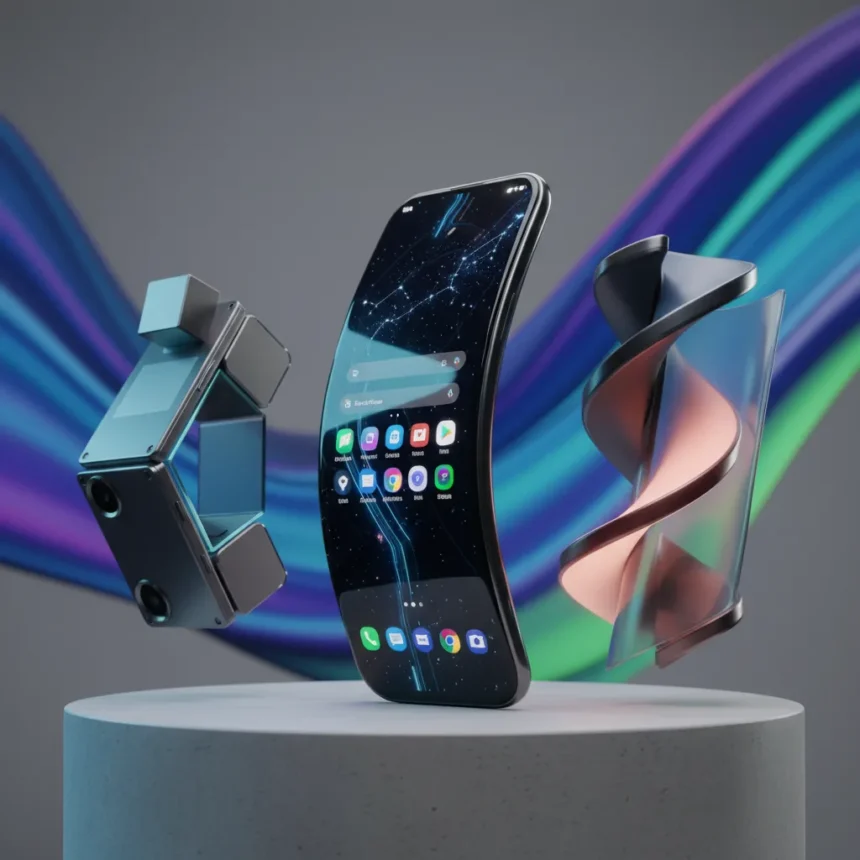
Dreame Aurora smartphones represent a bold departure from the smart-home brand’s core focus on robot vacuums and connected home devices, featuring visually radical designs that challenge everything we expect from modern phones. The Aurora phones, demonstrated at a recent event where Dreame also unveiled a rocket-powered electric car and other unconventional prototypes, stand out for their distinctive appearance and attachment systems. Yet the fundamental question remains: will these devices ever actually reach consumers, or do they exist purely as conceptual experiments?
Key Takeaways
- Dreame Aurora smartphones feature unprecedented designs unlike conventional smartphones on the market.
- The phones were demonstrated alongside other experimental concepts, including a rocket-powered electric car.
- Dreame is primarily known as a smart-home brand, making the smartphone entry unexpected.
- No official launch date or commercialization timeline has been confirmed.
- The Aurora phones include attachments that extend their functionality beyond standard mobile devices.
What Are the Dreame Aurora Smartphones?
The Dreame Aurora smartphones are a pair of new mobile devices developed by Dreame, a company best known for manufacturing smart-home products like robot vacuums and connected appliances. What sets these phones apart is their striking visual design, described as unlike anything previously seen in the smartphone market. The Aurora phones come with attachments that appear to be integral to their ecosystem, suggesting Dreame is attempting to redefine how users interact with mobile devices rather than simply copying existing flagship designs.
The decision by a smart-home specialist to enter smartphones is inherently unconventional. Most smartphone manufacturers build their reputation on mobile devices first, then expand into adjacent categories like wearables, tablets, and smart-home products. Dreame is attempting the reverse trajectory, leveraging its existing brand recognition in connected home devices to launch into a market dominated by Apple, Samsung, and other entrenched players. This positioning raises questions about whether Dreame views smartphones as a core business opportunity or as an experimental extension of its smart-home ecosystem.
The Uncertainty Surrounding Commercial Release
Despite the attention generated by the Aurora phones’ demonstration, Dreame has provided no confirmed launch date, pricing, or availability details. The phones were showcased at an event featuring multiple prototype concepts, which suggests they may exist in the same experimental category as the rocket-powered electric car also displayed. This context matters: companies often develop and publicly demonstrate concept devices to gauge market interest or test design directions without committing to actual production.


The lack of commercialization clarity is the central tension in this story. A visually distinctive smartphone with novel attachments could theoretically appeal to users tired of incremental design refinement from mainstream brands. However, moving from demonstration to retail requires resolving engineering challenges, securing supply chains, establishing distribution networks, and navigating regulatory approval in multiple markets. Dreame’s limited track record in consumer electronics outside smart-home products adds another layer of uncertainty about whether the company has the manufacturing expertise and distribution infrastructure to bring the Aurora phones to market.
How Dreame Aurora Smartphones Compare to Mainstream Flagships
Unlike Samsung’s Galaxy Z Fold series or Apple’s iPhone 16 lineup, which prioritize evolutionary refinement and proven form factors, the Dreame Aurora smartphones appear designed to challenge conventional smartphone architecture entirely. Mainstream flagships compete primarily on processor speed, camera quality, battery life, and software ecosystems. The Aurora phones, by contrast, seem to emphasize distinctive industrial design and modular attachments as their primary differentiators.



This design philosophy suggests Dreame is not trying to compete head-to-head with Samsung or Apple on their established terms. Instead, the company appears to be exploring whether a radical aesthetic and attachment-based functionality can carve out a niche among users who view smartphones as design objects first and computing devices second. Whether that market segment is large enough to justify commercial production remains unknown.
Why Dreame’s Entry Into Smartphones Matters
Dreame’s smartphone ambitions signal a broader trend in consumer technology: the blurring of category boundaries. A company can no longer succeed by building only vacuum cleaners or only phones. The Aurora smartphones represent an attempt to create a unified ecosystem where smart-home devices, mobile phones, and experimental concepts like electric vehicles coexist under one brand vision. If successful, this could reshape how consumers think about technology integration across their homes and daily lives.
The real test is not whether the Aurora phones look interesting—they clearly do. The question is whether Dreame can convince consumers that its vision for smartphone design and functionality justifies adopting a phone from a brand primarily known for robotic floor cleaning. That is a significant credibility gap to bridge, particularly in markets where smartphone choice is dominated by legacy brands with decades of mobile expertise.
Could the Aurora Phones Ever Launch?
Launching a smartphone requires far more than innovative design. It demands regulatory certifications across multiple regions, partnerships with mobile carriers or distribution channels, software development and security maintenance for years, and sufficient manufacturing capacity to meet demand. Dreame has demonstrated capability in smart-home hardware production, but smartphones operate under different supply chain dynamics and competitive pressures. The company would need to prove it can sustain product updates, security patches, and customer support at the level consumers expect from mobile devices.



What happens if Dreame never releases the Aurora phones?
If the Aurora phones remain concept devices, they still serve a valuable purpose: they generate brand awareness and position Dreame as a company willing to challenge industry conventions. Concept phones have become a marketing tool in their own right, generating press coverage and social media discussion that a conventional product announcement might not achieve. Whether intentional or not, Dreame has succeeded in making people talk about its smartphone ambitions.
Are the Aurora phones available for preorder or purchase?
No. As of now, Dreame has not announced pricing, availability, or a launch date for the Aurora smartphones. They remain demonstration devices with no confirmed path to commercial release. Anyone interested in purchasing them should treat the phones as experimental concepts rather than products with imminent availability.
The Dreame Aurora smartphones represent an intriguing what-if: what if a smart-home brand decided to reimagine smartphone design from scratch rather than iterate on existing conventions? Whether that question ever gets answered through actual retail availability depends entirely on decisions Dreame has not yet publicly made. Until then, the Aurora phones remain a fascinating glimpse into what smartphone design could be, not what it will be.
Edited by the All Things Geek team.
Source: TechRadar