





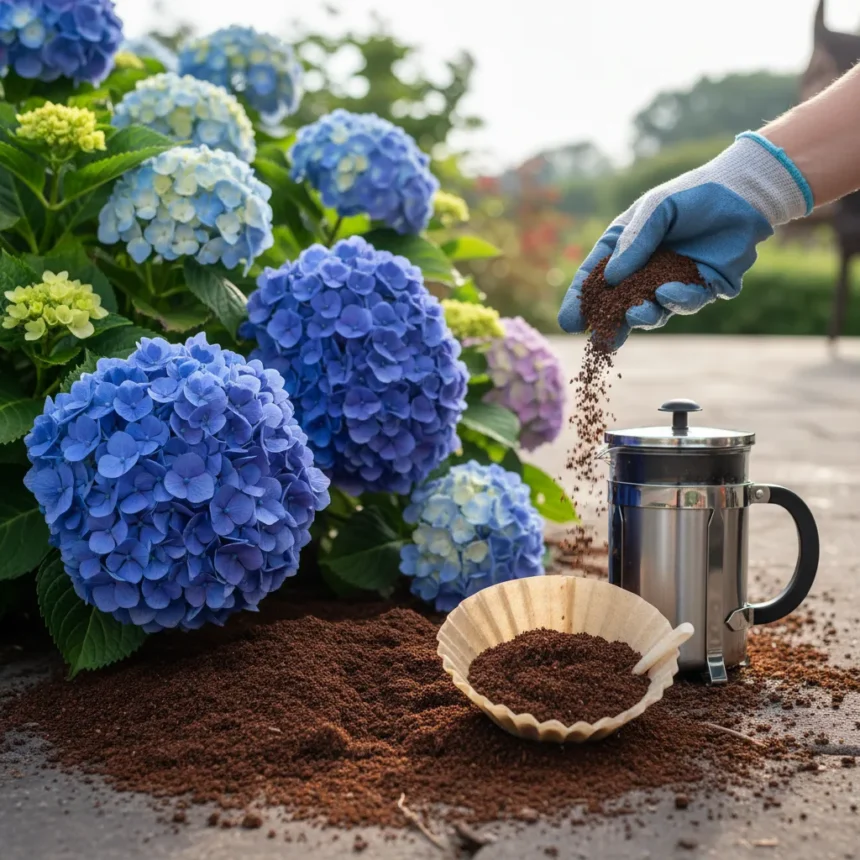
Coffee grounds hydrangeas blue is not marketing nonsense—it is soil chemistry. Hydrangea flower color depends entirely on soil acidity, and used coffee grounds are the cheapest, most sustainable way to shift blooms from pink to blue. The trick works because coffee grounds are acidic and lower soil pH, creating the 5.0-5.5 pH range that triggers blue pigmentation in bigleaf hydrangea varieties.
Key Takeaways
- Coffee grounds lower soil pH to produce blue hydrangea blooms in 4-6 weeks.
- Apply 1-2 cups of dried grounds monthly around each plant during growing season.
- Used coffee grounds work better than fresh ones—they prevent mold and excess caffeine.
- Free kitchen waste beats aluminum sulfate and chemical pH adjusters for eco-gardening.
- Results take one full growing season for complete color transformation.
Why soil pH controls hydrangea color
Hydrangea flower color is determined by soil acidity, not genetics. Acidic soil (pH below 6.0) produces blue blooms. Alkaline soil (pH above 7.0) produces pink blooms. Neutral soil creates purple or mixed-color flowers. This is not a guarantee—only bigleaf hydrangeas (Hydrangea macrophylla) reliably change color based on pH. Panicle hydrangeas and oakleaf varieties stay white or cream regardless of soil chemistry. But if you have the right variety and acidic soil, blue blooms are virtually assured.
Most garden soils lean alkaline, which is why pink hydrangeas are common. To shift to blue, you need to drop pH by at least one full point. Aluminum sulfate does this faster—results appear in weeks—but risks plant burn if overused. Coffee grounds work slower but are gentler, free, and improve soil structure as a bonus.
How to apply coffee grounds to hydrangeas
The process is simple but requires consistency. First, test your soil pH using a home kit (cost: $5-15 USD). If pH is above 6.0, acidification is needed. Collect used coffee grounds from your daily brewing and let them dry completely to prevent mold growth. Fresh grounds can introduce excess caffeine and fungal issues—used grounds are the better choice.


Spread 1-2 cups of dried grounds evenly around the base of each hydrangea plant, keeping grounds 6 inches away from the stem to avoid rot. Water the area thoroughly after application—this helps grounds break down and release acidity into the soil. Cover the grounds with 2-3 inches of organic mulch (bark, compost, or leaf litter) to retain moisture and speed decomposition. Repeat this process monthly from spring through fall during the active growing season.
Monitor soil pH every 4-6 weeks using your test kit. Blue color change typically appears within 4-6 weeks of consistent application, but full transformation takes the entire growing season. Do not expect overnight results—this is a gradual acidification process, not a chemical shock.



Coffee grounds vs. chemical alternatives
Aluminum sulfate is the traditional chemical tool for forcing blue hydrangeas. It works faster—pH drops more steeply—but requires careful dosing. Overapplication burns roots and damages plants. Vinegar and lemon juice are other acidic kitchen wastes, but they are too dilute for long-term soil pH change and require constant reapplication. Commercial pH adjusters like Miracle-Gro products work reliably but cost money and require synthetic inputs.
Coffee grounds occupy the middle ground: free, organic, slow but steady, and they improve soil as a side benefit. Used grounds add organic matter that increases moisture retention and feeds beneficial microbes. They also deter slugs naturally. The trade-off is patience—you cannot rush the process. For gardeners willing to wait one season for blue blooms without chemical risk, coffee grounds win on every front except speed.
What to watch out for
Not all hydrangeas respond to pH adjustment. White-flowering varieties (like Oakleaf hydrangeas) will not turn blue no matter how acidic the soil becomes. Confirm you have a bigleaf variety before investing effort. Overapplication of coffee grounds risks nitrogen overload if you apply more than 2 cups per month per plant. Some soils are naturally so alkaline that coffee grounds alone cannot achieve the needed pH drop—in extreme cases, aluminum sulfate or sulfur amendments are necessary.
Climate also matters. In regions with very hard water (high mineral content), acidification efforts are constantly neutralized by water chemistry. Test your water pH as well as soil pH if you live in an area with known hard water. Finally, expect variability between plants. Some hydrangeas shift blue quickly; others take longer. Genetics, variety, and individual plant vigor all play roles.


Can I use fresh coffee grounds instead of used ones?
Fresh grounds work but introduce unnecessary risk. They contain higher caffeine concentrations and moisture, which can promote mold growth around the plant base. Used grounds have already released most caffeine during brewing and dry faster. For best results, always use grounds that have already been through a coffee maker.
How long does it take to see blue color in hydrangeas?
Initial color shift appears within 4-6 weeks of consistent monthly applications. However, full transformation to deep blue takes the entire growing season (spring through fall). Do not expect dramatic blue blooms in the first month—this is a gradual process that compounds over time as soil pH slowly drops.
Do coffee grounds work on pink hydrangeas that are already established?
Yes, but conversion from pink to blue is slower than maintaining blue blooms in acidic soil. Pink hydrangeas have adapted to alkaline conditions, so shifting them requires sustained acidification. Continue monthly applications for at least one full season before expecting significant color change. Some established pink hydrangeas may never fully convert if soil alkalinity is too high.
Coffee grounds are the gardener’s shortcut to blue hydrangeas—free, safe, and surprisingly effective. Spring is the ideal time to start, and if you have a steady supply of used grounds from your kitchen, you have everything you need. Skip the chemicals, save the money, and let soil chemistry do the work.
Where to Buy
Garden Tutor Soil pH Test Kit:
Edited by the All Things Geek team.
Source: Tom's Guide




