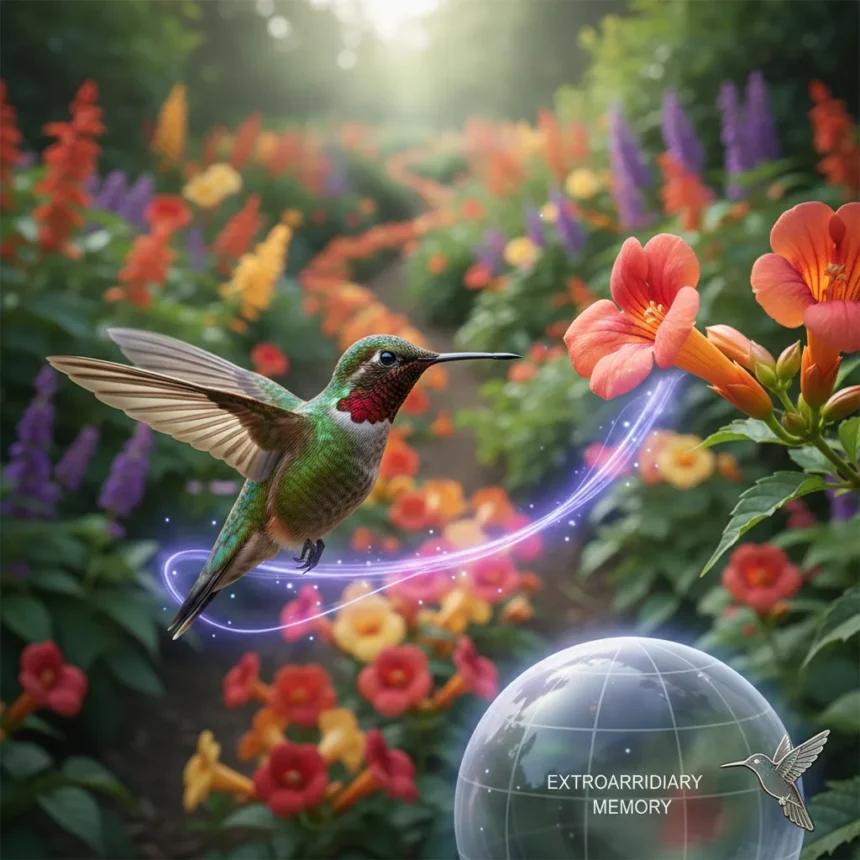
Hummingbirds possess exceptional long-term memory and the ability to see ultraviolet light invisible to humans—two superpowers that explain how they reliably find your garden and feeders year after year. These tiny birds form mental maps of safe, food-rich locations and return to them with remarkable consistency, treating previous resource spots like reliable addresses in their navigation system. Understanding how hummingbirds sense and remember their environment is the key to creating a garden they cannot resist.
Key Takeaways
- Hummingbirds remember feeder locations for up to a year or more, even after seasonal absences.
- They see ultraviolet light and color patterns invisible to humans, helping them spot nectar-rich flowers and feeders from far away.
- Hummingbirds eat primarily insects—up to 2,000 daily while feeding young—not just nectar.
- Creating a hummingbird highway with native plant clusters and consistent feeders turns your yard into a memorable refuge.
- Tube and platform feeders placed 10-12 feet from shelter attract hummingbirds while keeping them safe from predators.
The Extraordinary Memory Behind Hummingbird Return Visits
Hummingbirds possess a miraculous memory that allows them to recall feeder locations for a year or longer, even after vanishing for months during migration. This is not random luck—it is a deliberate cognitive system. Once a hummingbird discovers a reliable food source in your garden, it logs that spot into a mental map and treats it as a permanent waypoint. When the bird returns the following season, it flies directly to the location, bypassing less promising areas entirely.
This memory advantage means consistency is everything. If you stock your feeders reliably and maintain your plants, hummingbirds will return to your yard as faithfully as they return to the same nesting grounds. The birds form strong associations between specific visual landmarks and food availability, so moving a feeder suddenly can confuse them and cause them to abandon your garden in favor of a more predictable neighbor’s yard. The lesson is simple: once you establish a hummingbird feeding station, keep it in the same place and keep it full.
Ultraviolet Vision: Seeing What We Cannot
Hummingbirds can see ultraviolet light and detect color patterns completely invisible to the human eye. This sensory superpower allows them to spot nectar-rich flowers and feeders from extraordinary distances. A red feeder that looks bright to us appears even more vivid and beacon-like to a hummingbird, which perceives additional color information in the ultraviolet spectrum. Native flowers with ultraviolet markings act as visual landing strips, guiding hummingbirds directly to the best nectar sources.


This ability to see beyond human vision explains why hummingbirds seem to materialize in gardens moments after a feeder is hung. They are not reacting to a single sighting—they are responding to an entire visual landscape that includes ultraviolet cues we cannot perceive. When designing a hummingbird highway, this means choosing flowers and feeders with colors that pop in the ultraviolet range, not just the visible spectrum. Red and orange are traditional hummingbird attractors precisely because they stand out in multiple color channels.
Building a Hummingbird Highway: The Practical Steps
A hummingbird highway is a chain of native plants and feeders arranged along migration paths or yard edges to create visual cues and reliable food sources. Start by planting native flowers in dense clusters rather than scattered singletons. These clusters are easier for hummingbirds to spot and more efficient for the birds to visit. Position tube or platform feeders 10-12 feet away from shrubs and trees, creating a safe viewing zone where hummingbirds can feed without being ambushed by predators.

Install clean nectar feeders with a 1:4 sugar-to-water ratio and begin stocking them early in spring before natural flowers bloom. Maintain feeders through periods of natural food scarcity, and avoid moving them once hummingbirds have logged them into their mental maps. Add shallow water sources—hummingbirds bathe and drink from shallow pools—and plant dense climbers and shrubs to provide shelter and nesting cover. The goal is to make your garden a complete ecosystem, not just a single feeder stop.
Insects Matter More Than Nectar
Here is a counterintuitive truth: hummingbirds are primarily insect eaters, not nectar drinkers. They consume tiny spiders, mosquitoes, aphids, flies, gnats, beetles, leafhoppers, and caterpillars. Females may eat up to 2,000 insects daily while feeding young. Nectar provides quick energy for flight, but insects provide the protein and micronutrients essential for growth and reproduction.
This means your hummingbird highway should include dedicated patches of native plants that attract and support insects. Avoid pesticides entirely—they eliminate the invertebrates hummingbirds depend on. Instead, encourage natural insect populations by planting native species that host local insects. A garden rich in native plants becomes a self-sustaining food source that appeals to hummingbirds far more than a feeder alone ever could. Combine insect habitat with consistent feeders, and you create an irresistible destination.
Feeder Types and Strategic Placement
Different feeder designs attract different birds. Platform feeders welcome large birds like jays alongside smaller species like chickadees, while tube feeders specifically target finches and hummingbirds. For hummingbirds, tube feeders are ideal because their narrow feeding ports prevent larger birds from stealing nectar. Upside-down suet feeders suit woodpeckers, wrens, and titmice while preventing starlings from feeding.


Placement matters as much as design. Position feeders where you can observe them from indoors, but keep them far enough from dense vegetation that hummingbirds have an escape route if threatened. The 10-12 foot distance from shelter provides a safety buffer while still giving birds access to cover. Cluster multiple feeders together if you have several hummingbirds visiting—this reduces territorial aggression and allows more birds to feed simultaneously.
When to Start and How Long to Maintain Feeders
Begin stocking feeders early in spring, before natural flowers bloom, to support early migrants and residents. Maintain feeders through natural food scarcity periods, typically until around April in most regions. The concern that feeders delay migration is unverified—natural food timing dictates when hummingbirds depart, not the presence of human feeders. Keep feeders clean and fresh, changing nectar every few days in warm weather to prevent mold and fermentation.
FAQ
How long do hummingbirds remember a feeder location?
Hummingbirds can remember feeder locations for up to a year or longer, even after seasonal absences. This exceptional memory is why consistency matters—once a bird finds your feeder, it will return to that exact spot the following season if the feeder is still there and stocked.
What colors attract hummingbirds besides red?
Hummingbirds see ultraviolet light and respond to orange, pink, and purple as well as red. The key is choosing bright, saturated colors that stand out in both visible and ultraviolet spectra. Native flowers in these color ranges are highly attractive and provide the insects hummingbirds actually prioritize for nutrition.
Do hummingbirds eat only nectar?
No. Hummingbirds are primarily insect eaters, consuming spiders, mosquitoes, aphids, flies, and other small invertebrates. Females may eat up to 2,000 insects daily while feeding young. Nectar provides quick energy, but insects provide essential protein and micronutrients for growth and reproduction.
Creating a hummingbird highway is not complicated—it requires understanding how these birds sense their world and building a garden that speaks to their exceptional memory and ultraviolet vision. Stock feeders consistently, plant native flowers in clusters, encourage insects, and provide shelter. Once hummingbirds discover your garden, they will return year after year, treating it as a reliable address in their internal map of the world.
Where to Buy
29% OFFAmazonBirdfy Hummingbird Feeder With Dual Cameras – 2k Hd Smart Cameras Solar Powered$249.99$349.99shop now | 42% OFFAmazonFeed Garden Hummingbird Feeders for Outdoors, 2 Pack$13.95$23.99shop now | 44% OFFAmazonFeed Garden Glass Hummingbird Feeder$14.98$26.99shop now | AmazonRedboat 2 Pack Window Hummingbird Feeder$18.99shop now
Edited by the All Things Geek team.
Source: Tom's Guide