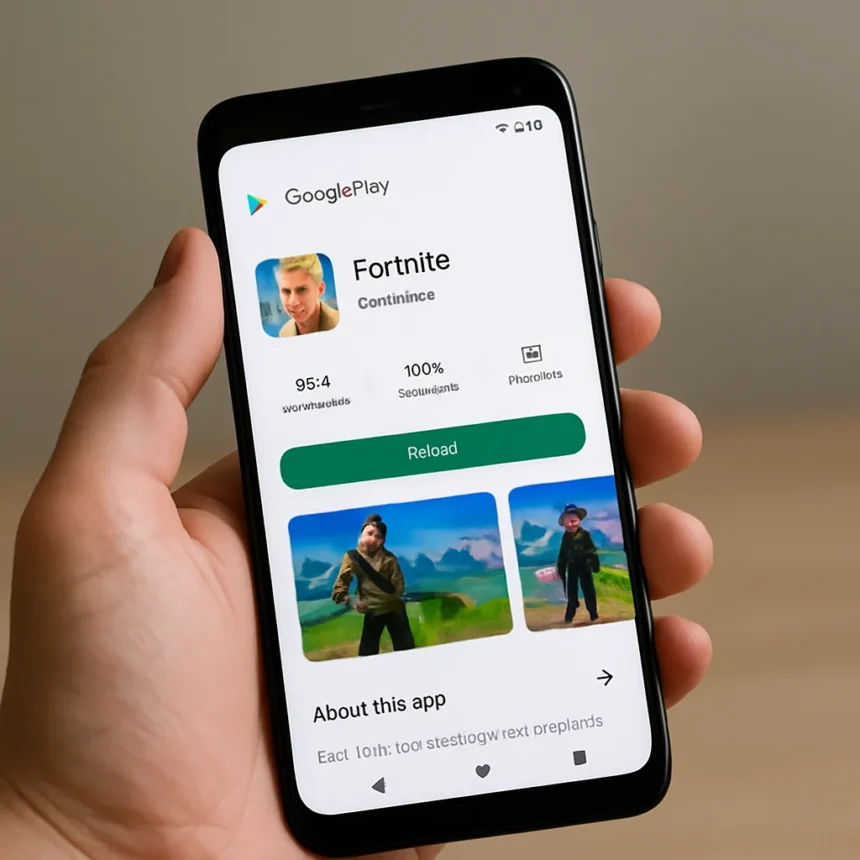
Fortnite is back on Google Play Store for all Android users worldwide, marking the end of a six-year legal standoff between Epic Games and Google. The battle royale and its full suite of modes—Battle Royale, Lego Fortnite, Fortnite OG, and Festival—are now available directly through Google’s official app store as of March 19, 2026, coinciding with Chapter 7 Season 2.
Key Takeaways
- Fortnite returns to Google Play Store March 19, 2026, after six-year removal over payment disputes
- Epic-Google settlement reduces commission from 30% to 20%, with potential 5% reduction via Level Up program
- Full Fortnite experience available: Battle Royale, Lego Fortnite, OG, Festival, and creator-made worlds
- V-Bucks and Crew Pack prices increased same day, sparking fan backlash on social media
- iPhone App Store return remains unconfirmed despite author’s hopes
The Settlement That Ended the Standoff
Epic removed Fortnite from Google Play in August 2020 after introducing its own direct payment system, bypassing Google’s 30% commission. The removal triggered years of legal wrangling. The settlement announced in March 2026 represents a compromise: Google’s commission drops from 30% to 20%, with an additional 5% reduction possible through Google’s new Level Up program for developers who use Google’s payment system. Epic also agreed to stop advocating for Google Play changes and refrain from negative public comments about the platform.
The deal includes an 800 million dollar partnership to expand Fortnite and Unreal Engine on Android. However, the settlement is far from a clean victory for Epic. The company still pays commissions, faces ongoing restrictions, and must maintain compliance with court-ordered terms. For players, the practical benefit is straightforward: no more sideloading through the Epic Games Store app or relying on Xbox Cloud Gaming and Amazon Luna as workarounds.
What Fortnite Google Play Return Means for Android Players
The Fortnite Google Play return eliminates friction for casual Android users who want the full experience without technical workarounds. Previously, players had three options: sideload the Epic Games app, stream via Xbox Cloud Gaming with Game Pass, or use Amazon Luna. Now, one tap on Google Play delivers the complete package—all game modes, cosmetics, and seasonal content in one place.


The timing matters. Chapter 7 Season 2 launches the same day, meaning new players can jump in without navigating alternative platforms. This is strategic: Epic wants maximum friction-free access during a major content refresh. The landing page on Google Play was already live before the official March 19 launch, signaling Epic’s confidence in the deal.
The iPhone Problem Remains Unsolved
The article’s author expresses hope for an iPhone App Store return, but no confirmed date exists. Apple’s situation differs from Google’s. While the Epic-Google settlement opened a path to Google Play, iOS remains locked down. Apple has made no public commitment to restore Fortnite to its App Store, and the legal relationship between Epic and Apple remains contentious. Players on iPhone still cannot access Fortnite through official channels, a gap that frustrates the broader player base.



This creates a fragmented mobile ecosystem. Android players now enjoy direct App Store access while iOS players are left with cloud streaming or older cached versions. Epic’s focus on resolving the Google dispute first suggests iPhone negotiations are either stalled or less promising.
The V-Bucks Controversy Nobody Wanted
Epic undermined the celebratory momentum by announcing V-Bucks and Crew Pack price increases on the same day as the Google Play return. Social media erupted with complaints, with players posting replies demanding Epic revert the pricing changes. The timing feels deliberate—bury bad news in a bigger announcement—and it worked against Epic’s favor. Players see the price hike as a distraction or a cash grab timed to coincide with renewed Android access.
The exact price increases were not disclosed publicly, but the backlash suggests the hikes are substantial enough to anger the community. This is a classic misstep: celebrate a win, then immediately antagonize your audience with monetization changes. The goodwill from the Google Play return evaporates fast when players notice their favorite cosmetics cost more.
What This Means for the Broader App Store Battle
The Fortnite Google Play return signals that Epic’s antitrust strategy is yielding results, at least on Android. Google’s willingness to negotiate—reducing commissions and accepting new developer-friendly programs—suggests market pressure works. However, the settlement also shows the limits of Epic’s leverage. The company had to accept ongoing fees, court restrictions on advocacy, and continued platform control.



Apple’s silence is telling. Without similar pressure or a settlement, iOS remains a closed ecosystem where Epic cannot distribute Fortnite directly. This reinforces the duopoly’s power: even after six years of legal battle and a major settlement, one of the world’s largest game publishers still cannot reach iPhone users through the official App Store.
Can I download Fortnite on Android now?
Yes, Fortnite is available on Google Play Store globally as of March 19, 2026. Search for Fortnite in Google Play, tap Install, and you’re done. The full experience—all game modes, cosmetics, and seasonal content—is included.
Will Fortnite return to the iPhone App Store?
No confirmed date exists for an iPhone App Store return. The author hopes for it, but Apple has not announced any plans to restore Fortnite. iOS players remain unable to access Fortnite through official channels.
Why did Epic and Google settle?
Both companies faced ongoing legal costs and uncertainty. Epic wanted direct access to Android users; Google wanted to avoid further antitrust scrutiny and keep developers happy. The settlement—reducing commissions and introducing new programs—satisfied enough of both sides’ concerns to end the dispute.
The Fortnite Google Play return is a watershed moment for mobile gaming, but it is also incomplete. Android players finally have friction-free access to one of the world’s largest games. iOS players still do not. The V-Bucks price hike reminds us that Epic is a business first, and even big wins come with compromises. The real test is whether this settlement actually changes the mobile app ecosystem or simply lets one company back into a system designed to extract maximum profit from developers and players alike.
Edited by the All Things Geek team.
Source: TechRadar