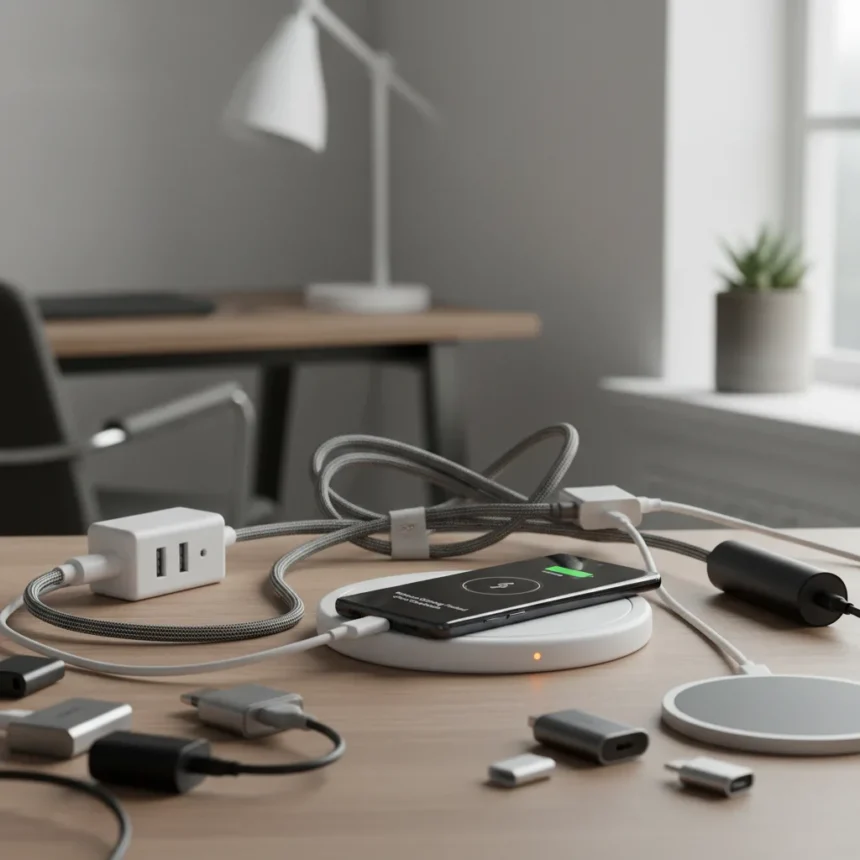
Getting Galaxy S26 Ultra wireless charging to hit 25W is a frustrating exercise in ecosystem immaturity. Samsung’s flagship supports up to 25W wireless charging, an upgrade from prior models, but most users find themselves stuck at 15W because the phone lacks built-in Qi2 magnets and Samsung’s own official cases fail to reliably deliver the faster speed.
Key Takeaways
- Galaxy S26 Ultra supports 25W wireless charging but defaults to 15W without magnetic alignment.
- Requires Samsung’s Magnet Wireless Charger, a 45W power adapter, and a magnetic case for 25W speeds.
- Samsung’s official cases (Silicone Magnet, Clear Magnet, Rugged Magnet, Slim Magnet) all achieve steady 15W, not 25W.
- Qi2 specification limits non-magnetic chargers to 15W; 25W requires magnetic alignment via MPP profile.
- Phone lacks built-in magnets to maintain Samsung’s “thinner, lighter” design philosophy.
Why 25W Wireless Charging Feels Like False Advertising
Samsung advertises 25W wireless charging as a headline feature, but the reality is far messier. The Galaxy S26 Ultra does technically support 25W, but only under a precise combination of conditions: you need Samsung’s new Magnet Wireless Charger (a magnetic puck), a 45W power adapter with stable output, and a case with proper magnetic alignment. Even then, consistency is not guaranteed. Without this exact “cocktail” of accessories, the phone throttles to 15W and stays there.
The core problem: Samsung removed built-in Qi2 magnets from the S26 series entirely. The company’s justification is thinner, lighter designs, but this decision creates a catch-22. Qi2 specification splits into two profiles—EPP (Extended Power Profile) capped at 15W for non-magnetic alignment, and MPP (Magnetic Power Profile) that enables 25W but requires magnetic coils. No 25W Qi2 chargers exist without magnets. So Samsung’s “upgrade” to 25W wireless charging is only accessible if you buy additional magnetic accessories.
Samsung’s Official Cases Don’t Even Work Reliably
The worst part? Samsung’s own cases don’t reliably deliver 25W. Testing by dbrand found that all four of Samsung’s official magnetic cases—Silicone Magnet, Clear Magnet, Rugged Magnet, and Slim Magnet—achieved steady 15W charging, not 25W. Some third-party cases like dbrand’s Tank and Grip showed 25W bursts in testing, suggesting the problem is not a fundamental hardware limitation but rather inconsistent case design and coil alignment.


This inconsistency reveals the real issue: alignment matters down to fractions of a millimeter. Coil positioning, thermal management, USB Power Delivery negotiation, and firmware checks all factor into whether the phone negotiates 25W or throttles to 15W. A case that is slightly off-center or lacks proper heat dissipation triggers thermal throttling, and the phone reverts to 15W as a safety mechanism.
The Qi2 Ecosystem Is Still Immature
This mess exists because Qi2 certification is still catching up to the specification. The Qi2 standard exists, but chargers and accessories certified to deliver 25W magnetic power are rare. Samsung jumped ahead with marketing 25W before the ecosystem matured, leaving early adopters to experiment with case combinations and hope for the best.


MagSafe accessories, which users might expect to work, often fail too. The Galaxy S26 Ultra’s vertical camera array creates compatibility issues with many MagSafe third-party cases. So users cannot even fall back on the established Apple ecosystem—they are locked into Samsung’s magnetic accessories or willing to test dbrand’s offerings.
How to Actually Get 25W Wireless Charging (or Closer to It)
If you own a Galaxy S26 Ultra and want to maximize wireless charging speed, here are the steps to try. First, restart your device: swipe down to quick settings, tap the power icon, select Restart, and confirm. Next, enable fast wireless charging by navigating to Settings > Battery > Charging settings and toggling on Fast wireless charging. Then check for software updates: go to Settings > Software update, download and install any available updates, and tap Update if prompted.
After those basics, the hardware part: use Samsung’s Magnet Wireless Charger with a 45W power adapter, and pair it with a case that has proper magnetic alignment. dbrand’s Tank and Grip cases showed promise in testing, though results varied. Samsung’s official cases are a gamble—they may deliver 15W consistently, but 25W is not guaranteed.
Is the Galaxy S26 Ultra worth buying for wireless charging?
No. If wireless charging speed matters to you, the Galaxy S26 Ultra’s 25W promise is more marketing than substance. You will almost certainly end up at 15W, and reaching 25W requires buying additional accessories that Samsung should have included or designed into the phone from the start. The S26 Ultra’s wired charging and other features may justify the purchase, but do not buy it expecting reliable 25W wireless speeds.

Do I need a specific case for 25W wireless charging?
Yes, you need a magnetic case with proper coil alignment. Samsung’s official magnetic cases do not reliably deliver 25W. Third-party options like dbrand’s Tank and Grip showed better results in testing, though consistency is still not guaranteed. Without a magnetic case, you are stuck at 15W.
Why doesn’t the Galaxy S26 Ultra have built-in magnets?
Samsung prioritized thinner, lighter designs over built-in Qi2 magnets. This design choice forces users to buy magnetic cases to access the advertised 25W speed, turning a hardware limitation into an accessory upsell.
The Galaxy S26 Ultra’s wireless charging situation is a textbook example of a company marketing a feature before the ecosystem is ready to support it. Samsung upgraded to 25W on paper, but the lack of built-in magnets and unreliable official cases mean most users will never experience that speed. If you are considering this phone, set your expectations at 15W wireless charging and treat anything faster as a bonus—not a promise.
Edited by the All Things Geek team.
Source: Android Central