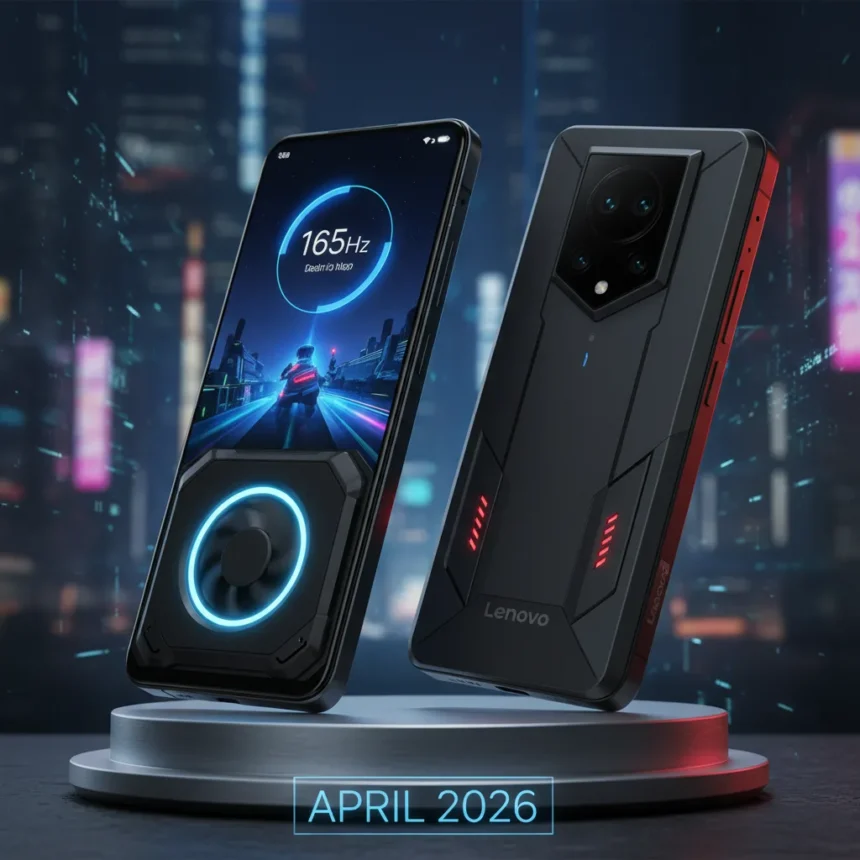
Gaming phones are back, and they are bringing serious hardware to prove it. After years of decline, manufacturers are returning to the segment with the Xiaomi Redmi K90 Max, confirmed for an April 2026 China launch, alongside the Lenovo Legion Y70 New Generation. These devices signal a genuine resurgence in purpose-built gaming phones that prioritize sustained performance and competitive gaming features over the thin-and-light trend that has dominated flagship design.
Key Takeaways
- Redmi K90 Max launches April 2026 with built-in active cooling fan for sustained thermal performance
- 165Hz display exceeds the 144Hz standard found on most current gaming phones
- MediaTek Dimensity 9500 dual-chip setup enables high-performance gaming without thermal throttling
- Gaming-optimized features include shoulder buttons, network stability tuning, and in-game audio enhancements
- Lenovo Legion Y70 New Generation confirmed but specific details remain unannounced
Why Gaming Phones Matter Now
The gaming phone category never truly disappeared, but it has been on life support for years. Mainstream flagships became powerful enough for casual mobile gaming, and manufacturers stopped investing in the specialist segment. The Redmi K90 Max changes that calculation by introducing an active cooling fan—a feature more advanced than competing solutions—that enables sustained high-performance gaming without the thermal throttling that limits frame rates during extended play. This is not a gimmick. Competitive mobile gaming demands consistent performance, and a phone that can maintain peak CPU and GPU speeds for hours matters to the audience that actually plays these games seriously.
The 165Hz display pushes beyond the 144Hz refresh rate common on current gaming phones, offering smoother animations and reduced input latency. Combined with the MediaTek Dimensity 9500 processor and a secondary chip for gaming-specific tasks, the K90 Max addresses the core problem that gaming phones have always faced: sustained performance under load. Lenovo’s Y70 New Generation will compete in this space, though Lenovo has not yet disclosed specifications.
Design and Build: Cooling Takes Priority
The Redmi K90 Max’s design reflects its gaming focus. Renders reveal an aluminum alloy frame with an ultra-narrow bezel design and a pronounced camera island that houses the active cooling fan on the right side, with two camera lenses positioned on the left. The phone maintains a relatively thin form factor despite the cooling hardware, shown in Space Silver colorway renders. This is a deliberate trade-off: the camera island protrusion is larger than on traditional flagships, but the cooling system justifies the visual compromise.


The design philosophy mirrors the Redmi K90 Pro Max, Xiaomi’s existing gaming flagship, but with enhanced thermal management as the centerpiece. For gamers, this is the right priority. A camera bump matters far less than a phone that does not throttle during a competitive match.
Gaming Features Built Into the Software and Hardware
Beyond raw specs, the K90 Max includes gaming optimizations across multiple layers. Shoulder buttons provide dedicated gaming controls, while software enhancements target network stability and in-game audio performance. These features address real pain points in mobile gaming: lag from network inconsistency and poor audio quality that diminishes immersion. The dual-chip approach allows the secondary processor to handle gaming-specific tasks independently, keeping the primary Dimensity 9500 focused on graphics and gameplay logic.



The Lenovo Legion Y70 New Generation will likely include similar gaming-centric features, though Lenovo has not detailed its approach yet. The Legion brand has a strong heritage in gaming laptops, and extending that expertise to phones could differentiate its offering from Xiaomi’s raw performance focus.
Pricing and Availability: A Niche Play
The Redmi K90 Max launches in China in April 2026, with no confirmed global pricing or availability yet. Xiaomi’s existing Redmi K90 Pro Max, a gaming-focused flagship already available, offers context on positioning. The K90 Pro Max starts around $619 for the 12GB/256GB variant and is available through global resellers like Giztop. The K90 Max will likely occupy a similar price tier, though Xiaomi has not announced final pricing.
This is a China-first strategy that mirrors how Xiaomi has handled gaming phones in the past. Global availability typically follows months later through import retailers. Readers outside China should expect to wait for official announcements or rely on third-party importers if they want the device immediately after launch.
Is the gaming phone category actually viable?
Yes, but only for a specific audience. Competitive mobile gamers, content creators who play games, and enthusiasts who demand maximum performance will find gaming phones valuable. The mass market still prefers thin, light flagships with good cameras. Gaming phones succeed by serving the niche seriously rather than trying to appeal to everyone.



How does the Redmi K90 Max compare to the K90 Pro Max?
The K90 Max is the newer model with an active cooling fan and 165Hz display, while the K90 Pro Max features a 120Hz AMOLED display, Snapdragon 8 Elite Gen 5 processor, and a triple 50MP camera system. The K90 Max targets sustained gaming performance; the K90 Pro Max balances gaming with flagship camera capabilities.
When will the Redmi K90 Max launch globally?
The Redmi K90 Max is confirmed for April 2026 China launch, but no global availability date has been announced. Xiaomi typically brings gaming phones to international markets through resellers months after the China launch.
Gaming phones are back because the market finally has a reason to care again. The Redmi K90 Max and Lenovo Legion Y70 New Generation represent a genuine commitment to the segment, not a marketing exercise. For gamers who have been waiting years for a phone that prioritizes performance over thinness, April 2026 cannot arrive soon enough.
Where to Buy
Edited by the All Things Geek team.
Source: TechRadar