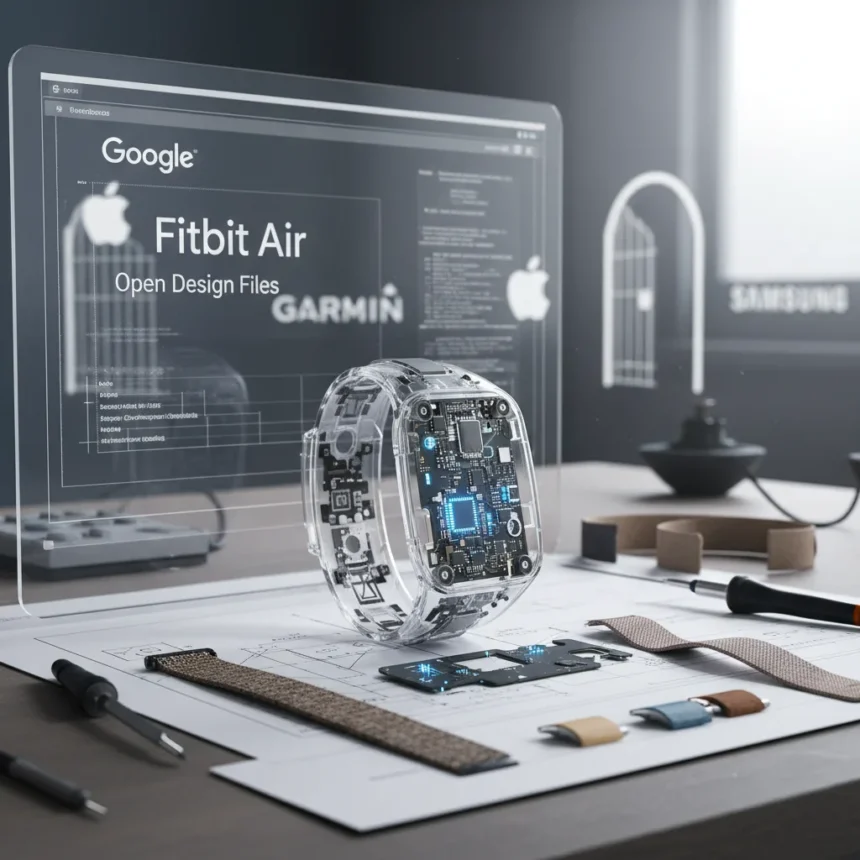
Google has made a strategic move that sets it apart in the wearables market: publishing Fitbit Air design files to encourage independent makers to build compatible accessories. This approach stands in stark contrast to how Garmin, Apple, and Samsung guard their wearable ecosystems, signaling a fundamentally different philosophy about platform openness and third-party innovation.
Key Takeaways
- Google published Fitbit Air design files, a step competitors Garmin, Apple, and Samsung have not taken.
- The move explicitly encourages independent makers to develop compatible accessories for Fitbit users.
- Open design files lower barriers to entry for third-party accessory developers.
- This strategy could expand the Fitbit accessory ecosystem beyond what proprietary competitors offer.
- The decision reflects a broader shift toward platform openness in the wearables market.
Why Google’s Fitbit Air Strategy Differs from Competitors
The wearables market has historically been dominated by closed ecosystems. Garmin, Apple, and Samsung each maintain tight control over their hardware specifications, forcing accessory makers to reverse-engineer products or negotiate exclusive partnerships. Google’s decision to publish Fitbit Air design files breaks that pattern entirely. By making technical documentation publicly available, Google is explicitly inviting independent makers to innovate around the Fitbit platform without gatekeeping or licensing restrictions.
This openness creates a structural advantage for Fitbit users. When design files are proprietary, the manufacturer alone determines which accessories exist. Third-party makers must either work within strict constraints or build incompatible products. Google’s approach removes that friction. Independent designers can now examine the Fitbit Air’s physical and electrical specifications, then create straps, mounts, charging solutions, protective cases, and other accessories that integrate smoothly with the device.
Competitors have chosen the opposite path. Apple’s wearables ecosystem is notoriously locked down—even simple bands require Apple’s approval, and third-party developers cannot access the same technical details Google is now publishing. Samsung’s Galaxy Watch maintains similar restrictions. Garmin, while slightly more permissive, still does not publish design files at the scale Google is doing with Fitbit.


What Open Design Files Mean for the Accessory Market
Publishing design files is not a marketing gesture—it is a structural decision that reshapes how an accessory ecosystem can develop. When technical specifications are available, makers can design products that fit precisely, work reliably, and integrate with the device’s form factor without guessing or testing against prototypes. This reduces development time and cost, which means smaller companies and independent makers can compete in the accessory space.
The contrast with closed competitors is instructive. Garmin, Apple, and Samsung each maintain curated accessory stores where only approved manufacturers can list products. This approach offers quality control but also creates scarcity. Users often find that the exact accessory they want does not exist because the manufacturer never greenlit it. Google’s strategy inverts that logic: instead of controlling which accessories exist, Google is enabling a broader market to decide what Fitbit users actually need.



This shift also signals confidence in the Fitbit platform itself. By opening the design files, Google is betting that a thriving third-party ecosystem will strengthen user loyalty rather than dilute the brand. Competitors’ closed approach suggests the opposite assumption—that their platforms need protection from outside interference. The market will ultimately judge which philosophy serves users better.
The Broader Implications for Wearables and Open Hardware
Google’s move reflects a larger trend in tech toward platform openness, though it remains unusual in the premium wearables space. Open-source hardware projects have thrived in maker communities for years, but consumer wearables have remained largely proprietary. Google’s Fitbit Air design files suggest the company is testing whether openness can work at scale in a mainstream consumer product.
If the strategy succeeds, it could pressure competitors to reconsider their closed approaches. Users who experience a robust third-party accessory ecosystem around Fitbit may expect similar options from Apple Watch or Galaxy Watch. Garmin, Apple, and Samsung would then face a choice: maintain gatekeeping and risk appearing restrictive, or gradually open their platforms. For now, Google has claimed first-mover advantage in an area where competitors have historically seen no advantage to openness.
The decision also positions Google as a company willing to prioritize user choice over direct accessory revenue. Apple, by contrast, generates significant income from its official accessory store. Publishing design files means Google is ceding some of that potential revenue to third-party makers. That trade-off suggests Google believes platform strength and user satisfaction matter more than short-term accessory sales—a calculation that Garmin, Apple, and Samsung have not made.



What This Means for Fitbit Users Right Now
For existing Fitbit users, the immediate impact depends on how quickly independent makers respond to the published design files. The accessibility of specifications is one thing; actual products reaching the market is another. However, the precedent is now set. Fitbit users can reasonably expect a growing range of third-party options that users of closed-ecosystem competitors may never see.
The long-term benefit is clearer than the short-term one. As more makers build around the Fitbit Air, the ecosystem becomes more attractive to new users. Someone choosing between Fitbit and Apple Watch might be swayed by the availability of affordable third-party bands, mounts, or cases that the Fitbit platform openly supports. That network effect—where a platform becomes more valuable as more accessories exist—is precisely what Google is betting on.
Could Competitors Follow Google’s Lead?
Garmin, Apple, and Samsung have not published design files at the level Google is now doing with Fitbit. The question is whether they will. Doing so would require admitting that their closed approach was overly restrictive. For Apple especially, opening the design specifications would contradict decades of messaging about quality control and ecosystem integrity. Samsung might move first, given its more pragmatic approach to third-party partnerships, but neither company has signaled any shift toward openness comparable to Google’s move.
The real test will be whether Fitbit’s open strategy actually translates to user satisfaction and market growth. If it does, competitors will face mounting pressure to follow. If it does not—if the accessory market remains small or if quality suffers—competitors can point to that outcome as vindication of their closed approach. For now, Google has made the boldest bet in the wearables market, and the rest of the industry is watching.
Will the Fitbit Air design files lead to a major third-party accessory boom?
That depends on market demand and maker interest. Publishing design files removes the technical barrier, but accessory success also requires manufacturing capacity, distribution, and marketing. Independent makers will need to fund production and reach Fitbit users. However, the open availability of specifications makes it significantly easier than trying to build accessories for closed platforms like Apple Watch or Galaxy Watch.
Can third-party accessories built from Fitbit Air design files damage the device?
Poor design or manufacturing could cause compatibility issues or hardware damage. Google’s publication of design files does not guarantee quality control. However, independent makers have strong incentives to build reliable products—a broken accessory damages their reputation and sales. Fitbit users should still exercise judgment when choosing third-party options, just as they would with any unfamiliar brand.
Why haven’t Garmin, Apple, and Samsung published design files like Google did?
Those companies view their wearables as integrated ecosystems where they control the entire experience, including accessories. Publishing design files would cede that control and potentially reduce accessory revenue. Google’s decision reflects a different business philosophy—one that prioritizes platform openness and third-party innovation over direct sales and quality gatekeeping.
Google’s publication of Fitbit Air design files represents a genuine inflection point in how wearable platforms can operate. By choosing openness over control, Google is betting that an ecosystem where independent makers thrive will ultimately serve Fitbit users better than the curated, closed approaches Garmin, Apple, and Samsung have defended for years. Whether that bet pays off will shape wearables strategy across the entire industry.
Where to Buy
Edited by the All Things Geek team.
Source: T3