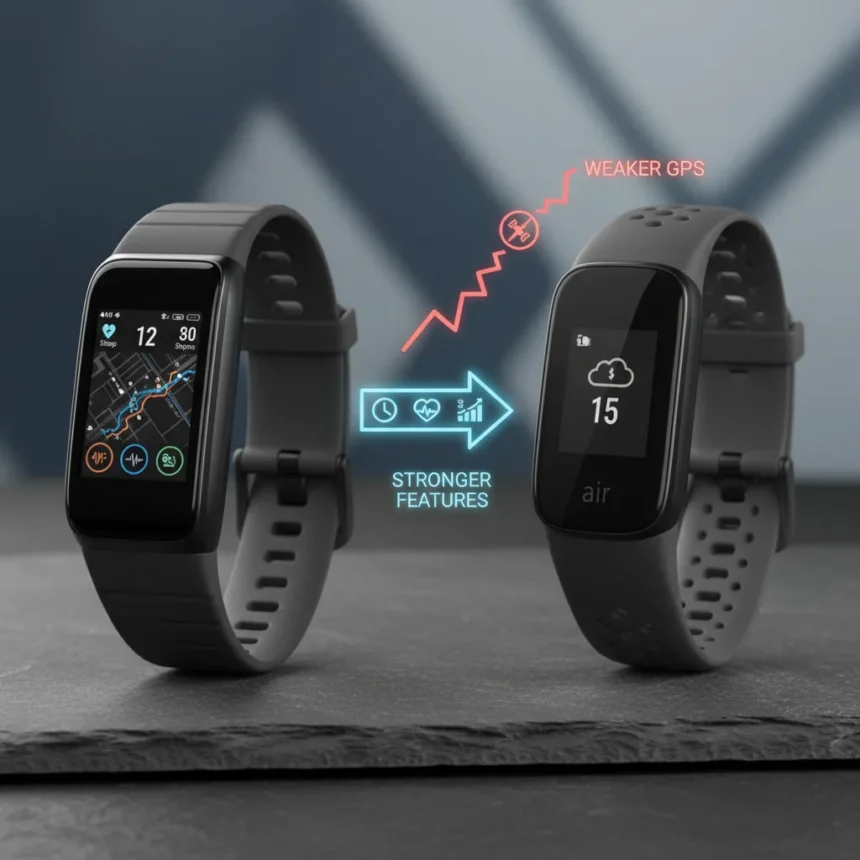
The Huawei Band 11 Pro is a fitness tracker that blurs the line between basic wearable and full smartwatch, launching this year as a direct challenge to Fitbit’s upcoming Air model. What makes it compelling is not what it does—it’s what it costs relative to what it offers. The device delivers a 1.62-inch AMOLED display with 2000-nit peak brightness, built-in GPS, A-fib detection, and 14-day battery life, all positioned as a “premium budget” option that undercuts traditional smartwatch pricing.
Key Takeaways
- Huawei Band 11 Pro features a bright AMOLED display and independent GPS positioning for route tracking.
- Built-in A-fib alerts with TÜV Rheinland CE MDR certification add medical-grade health monitoring.
- Battery life reaches 14 days maximum, or 3 days with always-on display enabled.
- GPS accuracy is the device’s critical weakness, undermining its headline positioning upgrade.
- Direct competitor is the upcoming Fitbit Air, which the Band 11 Pro may beat on value and features.
Display and Hardware: Where the Band 11 Pro Impresses
The Huawei Band 11 Pro’s 1.62-inch AMOLED screen stands out in the fitness-tracker category. At 2000-nit peak brightness, it reads clearly outdoors and indoors without the washed-out look that plagues cheaper LCD alternatives. The display is not just bright—it’s responsive. Scrolling through menus and swiping between watch faces feels fluid, not sluggish. This is where Huawei has clearly invested engineering effort, and it shows. For comparison, many fitness trackers at this price point still use monochrome or dim color screens, making the Band 11 Pro feel genuinely premium in hand.
The device includes a 300 mAh battery that Huawei claims delivers up to 14 days of standard use, or 3 days with the always-on display enabled. That battery-to-feature ratio is respectable. The device also supports iOS and Android, meaning it does not lock you into a single ecosystem—a practical advantage over some rivals that favor one platform.
Health Tracking: A-Fib Alerts and Continuous Monitoring
Where the Band 11 Pro separates itself from basic fitness trackers is in its health capabilities. The device includes a PPG sensor for atrial fibrillation (A-fib) detection, and that feature carries TÜV Rheinland CE MDR certification, which is a medical-device-level validation. That matters. A-fib is a serious arrhythmia that many people do not know they have until a stroke happens. A wearable that can flag it is genuinely valuable, not just a marketing gimmick.


Beyond A-fib, the Band 11 Pro offers 24/7 HRV (heart rate variability) monitoring, continuous heart rate tracking, and SpO₂ (blood oxygen) measurement. Sleep tracking is included, along with emotional wellbeing management features. For a device in the premium-budget category, this suite of sensors is unusually comprehensive. The Fitbit Air, once it launches, will need to match or exceed this health-tracking depth to justify its positioning.
GPS: The Headline Feature That Falls Short
Here is where the Band 11 Pro stumbles. The device includes independent GNSS and GPS positioning, which Huawei highlights as enabling distance, route, and speed tracking for running and cycling. On paper, this is a major selling point—built-in GPS is typically a smartwatch feature, not a fitness-tracker one. In practice, according to TechRadar’s assessment, the GPS accuracy does not match the marketing promise. Routes are inconsistent, distances are inflated or deflated, and the device frequently loses signal in areas where dedicated GPS watches maintain lock.


This is a critical flaw because GPS is the Band 11 Pro’s headline upgrade over the standard Band 11. If you are buying this device specifically for route tracking or distance accuracy, you will be disappointed. Fitness trackers that rely on smartphone GPS offloading are often more accurate, which defeats the purpose of paying extra for independent positioning. This gap between promise and performance is the Band 11 Pro’s biggest liability.
Huawei Band 11 Pro vs. Fitbit Air: The Value Proposition
The Fitbit Air has not launched yet, but the Huawei Band 11 Pro is already making a case against it. Fitbit owns the fitness-tracker category in terms of brand trust and software polish, but Fitbit devices historically lag on display brightness and battery life. The Band 11 Pro’s 2000-nit AMOLED screen and 14-day battery are advantages Fitbit will struggle to match without significantly raising the Air’s price. The A-fib certification on the Band 11 Pro is also a differentiator—Fitbit includes heart rate and SpO₂ tracking, but medical-grade arrhythmia detection is less common in the fitness-tracker space.
Where Fitbit typically wins is ecosystem integration, app accuracy, and GPS reliability. If the Fitbit Air launches with rock-solid GPS and deeper smartphone integration, it could still be the smarter buy despite the Band 11 Pro’s feature list. Right now, though, Huawei is offering more hardware for less, even if that hardware does not always deliver on its promises.
Should You Buy the Huawei Band 11 Pro?
If you prioritize display quality, battery life, and comprehensive health sensors, the Band 11 Pro is worth serious consideration. The A-fib detection alone could be a lifesaver, and the screen is genuinely nice. But if you run or cycle and rely on accurate GPS distance tracking, look elsewhere. The GPS accuracy issue is not a minor quirk—it is a core feature that does not work as advertised. Wait for the Fitbit Air to launch and compare directly, or if you need GPS now, consider a dedicated running watch instead of a fitness tracker.

Does the Huawei Band 11 Pro work with both iOS and Android?
Yes. The Band 11 Pro is compatible with both iOS and Android devices, so you are not locked into a single ecosystem. This flexibility is a practical advantage over some competitors that favor one platform.
How long does the Huawei Band 11 Pro battery last?
Huawei claims up to 14 days of battery life under standard use conditions, or 3 days with the always-on display enabled. Real-world battery life depends on usage patterns, but this is competitive with other fitness trackers in its category.
Is the Huawei Band 11 Pro’s A-fib detection reliable?
The A-fib feature carries TÜV Rheinland CE MDR certification, which is a medical-device-level validation. However, any wearable health feature should be treated as a screening tool, not a diagnostic device. If you receive an A-fib alert, consult a doctor for confirmation and guidance.
The Huawei Band 11 Pro is a genuinely interesting device that tries to deliver smartwatch features at fitness-tracker pricing. It mostly succeeds—except where it matters most for a device that costs extra for GPS. That contradiction is the Band 11 Pro’s defining tension: impressive on spec sheet, compromised in real-world use.
Where to Buy
$264.99 at Amazon | $264.99 at Amazon | $299.99 at Amazon
Edited by the All Things Geek team.
Source: TechRadar