





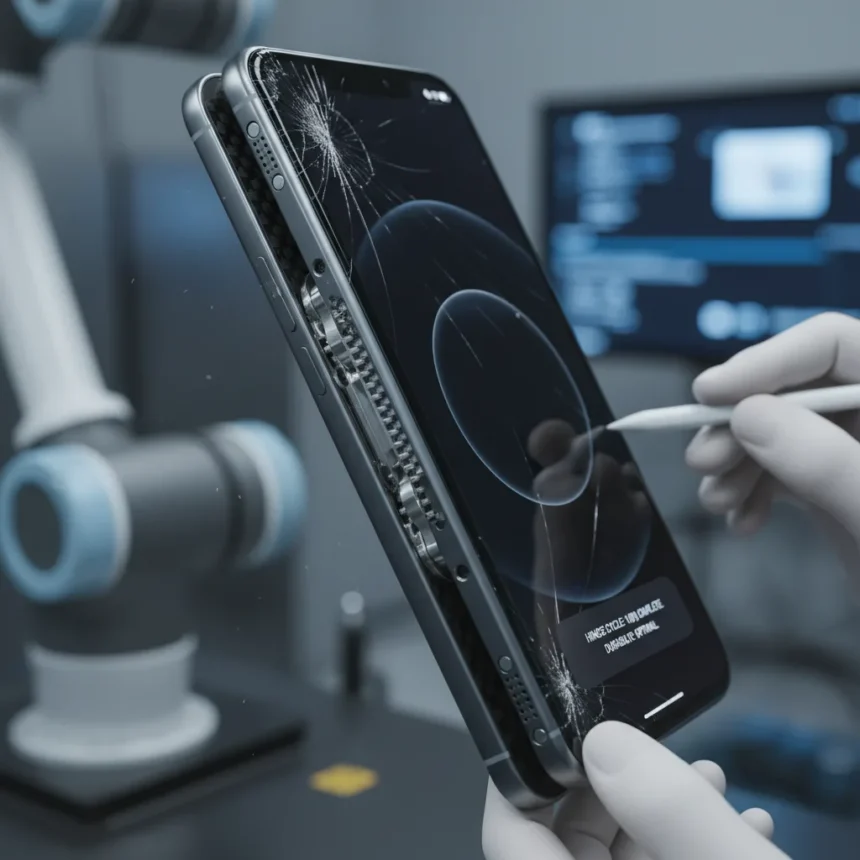
The iPhone Fold specs debate has fixated on one thing: a crease-free display. Apple is rumored to be working toward a 2026 launch of its first foldable, and the tech industry has latched onto the promise of eliminating the crease that plagues every Samsung Galaxy Z Flip and Fold on the market. But this obsession with display smoothness obscures the specs that actually determine whether a foldable survives real-world use—hinge durability, front screen functionality, and software features that justify the inevitable premium price.
Key Takeaways
- iPhone Fold rumored for 2026 launch with crease-free display, but hinge reliability is the true test of durability.
- Samsung Galaxy Z Flip 6 includes interpreter mode and Flex Mode for translation, features Apple must match or exceed.
- Apple holds patents since 2015 for self-healing displays and curved hinge designs, suggesting deeper innovation is possible.
- Front screen utility and software ecosystem matter more than eliminating one cosmetic flaw.
- Foldable hinge failures like Galaxy Z Fold 4’s brush degradation highlight why durability specs deserve more attention than display crease.
Why Hinge Durability Matters More Than Display Crease
The hinge is the keystone of any foldable phone. It determines how many times you can open and close the device before failure, whether dust and debris can infiltrate internal components, and whether the fold radius allows for a truly functional front screen. Samsung’s Galaxy Z Fold 4 experienced hinge brush failures that exposed the vulnerability of current designs. Apple’s rumored iPhone Fold, by contrast, has been studied with reference to competitors like Samsung, Motorola, and OnePlus—and Apple holds patents dating back to 2015 for curved hinges and complex internal hinge supports. These patents suggest Apple understands the hinge is where foldables win or lose credibility.
A crease-free display is cosmetic. A crease-prone hinge is catastrophic. If Apple launches in 2026 without demonstrating that its hinge can survive 100,000 folds without degradation or debris ingress, the crease-free claim becomes irrelevant. The market has already proven that consumers tolerate a crease if the device feels durable. What they will not tolerate is a $1,700 phone that breaks after six months.
The Front Screen Problem Apple Cannot Ignore
Apple’s rumored iPhone Fold is expected to be a clamshell-style design, similar to the Galaxy Z Flip 6, not a book-style fold. This means the front cover screen is critical to the user experience. On the Z Flip 6, Samsung introduced interpreter mode and Flex Mode for translation—features that transform the foldable from a novelty into a productivity tool. These modes work because the front screen is large and functional enough to display real content, not just notifications and quick controls.


The iPhone Fold specs circulating in rumors focus on a big battery and an under-display camera, but neither addresses the fundamental question: will the front screen be useful enough to justify the form factor? If Apple launches with a cramped, low-resolution cover screen that forces users to unfold the device constantly, the crease-free inner display becomes a feature nobody cares about. Samsung solved this problem by making the front screen genuinely usable. Apple must do the same, or the iPhone Fold becomes a gimmick.
Software Features Apple Needs to Justify the Price
Foldables enable unique software experiences that traditional phones cannot match. Samsung’s interpreter mode on the Z Flip 6 uses the front and back screens to display two languages simultaneously during conversations. This is not a minor feature—it is a reason to buy the device. Apple’s iPhone Fold rumors mention no such software innovation. Instead, the conversation centers on hardware specs: crease-free display, big battery, under-display camera. These are table stakes. They do not justify a premium price.



Apple holds patents for self-healing display technology, filed in 2020, which could address durability concerns beyond the crease. It also holds a 2021 patent for an external display designed to avoid a tight fold radius, suggesting Apple has considered how to make the front screen more functional. These patents hint at deeper innovation than simply eliminating a cosmetic flaw. If Apple launches the iPhone Fold without translating these patents into shipping features, it will have wasted eight years of foldable market evolution while competitors moved ahead.
The Naming Problem That Signals Deeper Issues
Apple’s rumored name—iPhone Fold—is derivative and uninspired. It sounds like a Samsung product, not an Apple innovation. Naming it iPhone Ultra would distance the device from the foldable commodity market and signal that Apple is offering something genuinely different, not just replicating Samsung’s design. This naming debate might seem trivial, but it reflects a larger problem: Apple is entering the foldable market late, after eight years of innovation from Samsung, Motorola, and OnePlus, and the rumors suggest it is copying the form factor without advancing the feature set.
The crease-free display is a marketing headline. It is the kind of spec Apple would tout in a keynote while downplaying the fact that every foldable on the market already handles the crease acceptably. Real differentiation comes from hinge durability, front screen utility, and software features that justify the inevitable premium price. If Apple launches in 2026 with nothing but a crease-free display and a bigger battery, it will have misunderstood what consumers actually need from a foldable.
What Happens If Apple Gets the Specs Right
A 2026 iPhone Fold launch could be transformative if Apple prioritizes the right specs. A hinge that survives 200,000 folds without degradation would be a genuine achievement. A front screen large and responsive enough to replace the inner display for most tasks would be a usability breakthrough. Software features like real-time translation or multi-app layouts designed for the foldable form factor would justify the premium price. These are the specs worth obsessing over. The crease-free display, if achieved, is a bonus—not the main event.



Does the iPhone Fold need a crease-free display to succeed?
No. Samsung’s Galaxy Z Flip 6 has a visible crease and remains the best-selling foldable because the device is durable, the front screen is useful, and the software features justify the price. Apple should focus on matching or exceeding these fundamentals rather than chasing a cosmetic improvement that does not change how users experience the device.
What iPhone Fold specs should Apple prioritize over display crease?
Hinge durability that exceeds 100,000 folds, a front screen large enough to use as a primary display, and software features like real-time translation or Flex Mode-style multitasking. These determine whether the iPhone Fold is a lasting product or a novelty.
Will the iPhone Fold launch in 2026?
Rumors point to a 2026 launch, though Apple has not confirmed a date. The company has had eight years to study foldable competitors and refine its own patents, so a 2026 debut would be timely if the device addresses durability and software rather than just eliminating a crease.
The iPhone Fold will succeed or fail based on specs that have nothing to do with crease elimination. Apple’s challenge is to recognize this before launch and build a foldable that actually advances the category instead of simply copying it. A crease-free display is a nice-to-have. Durability, functionality, and software innovation are deal-breakers. If Apple gets those right, the crease becomes irrelevant. If it does not, the crease-free claim becomes a hollow marketing tagline for a device that should never have shipped.
Edited by the All Things Geek team.
Source: Tom's Guide




