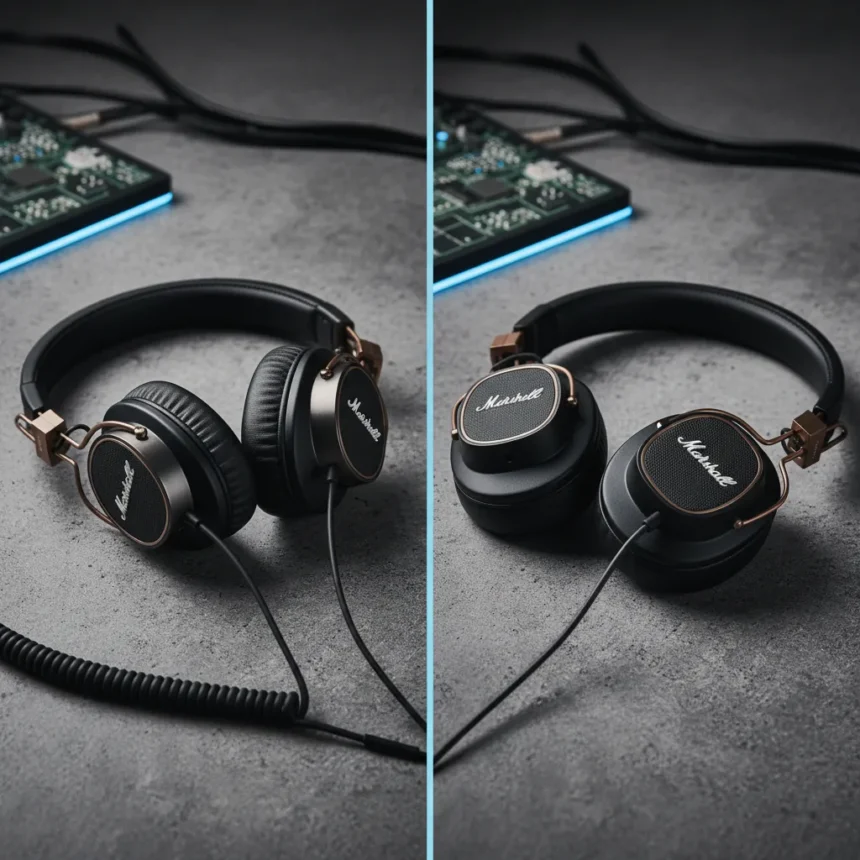
The Marshall Milton ANC is a new on-ear headphone that bridges a gap Marshall’s lineup left open: a mid-range model with genuine premium features and exceptional comfort for its category. Testing the Marshall Milton ANC against the flagship Monitor III over-ears reveals a closer match than the price difference suggests, and it challenges the assumption that you need to spend $349 to get Marshall’s best sound.
Key Takeaways
- Marshall Milton ANC deliver 50-hour battery life with ANC enabled, 80 hours without it.
- The Milton ANC retail for $229, making them $120 cheaper than the Monitor III.
- Both models feature Soundstage spatial audio, Adaptive Loudness, and replaceable batteries.
- Milton ANC batteries twist out from the left earcup—no tools required.
- The Milton ANC are more comfortable than the Major V on-ears despite using a similar form factor.
What Makes the Marshall Milton ANC Stand Out
Marshall positioned the Milton ANC as a hybrid: they borrow the Monitor III’s premium aesthetic—black finish with brass accents—while keeping the lighter, more portable on-ear design of the Major V. The result is a headphone that looks and sounds more expensive than its $229 price tag. After three weeks of testing, the comfort advantage over other on-ears in this price range is immediate and undeniable. The Milton ANC don’t clamp hard, and the padding distributes weight evenly across the top of your head rather than pressing down on your ears. That distinction matters if you plan to wear them for hours during work or travel.
The feature set is where the Milton ANC punch above their weight. They include Soundstage spatial audio and Adaptive Loudness—technologies inherited from the Monitor III—plus active noise cancellation. That combination is rare at $229. The Beyerdynamic Aventho 100 sits at the same price, and while it’s a solid competitor, it lacks ANC. The Cambridge Audio Melomania P100 at $279 adds ANC but costs $50 more. Below that, the Beats Solo 4 at $199 sacrifices active noise cancellation and the Marshall ecosystem features entirely.
Battery Life and Replaceable Batteries: A Practical Advantage
The Milton ANC deliver 50 hours of battery life with ANC enabled and 80 hours without it. That’s competitive with the Monitor III for a headphone you’ll carry in a backpack or throw in a bag. More importantly, Marshall made the batteries user-replaceable by twisting off the left earcup—no service center required. The Major V achieve 100 hours of battery life, but that’s because they’re designed for passive listening without active noise cancellation. When you factor in the Milton ANC’s ANC capability and comfort, the battery trade-off is reasonable.


Replaceable batteries matter in a way that spec sheets don’t capture. Most headphones at this price point die after two years when the battery degrades. The Milton ANC let you extend the lifespan indefinitely by swapping out the battery yourself. It’s a small detail that reflects Marshall’s design philosophy and adds real value for buyers who plan to keep their headphones for years.
Marshall Milton ANC vs Monitor III: The Real Difference
The Monitor III are the flagship over-ear model in Marshall’s lineup, priced at $349. They deliver larger drivers, deeper soundstage, and the same feature set as the Milton ANC. The Monitor III make sense if you prioritize sound quality above portability and comfort, or if you spend most of your listening time at a desk. But the Milton ANC challenge that hierarchy. They’re $120 cheaper, lighter, and genuinely comfortable for extended wear in ways that on-ear headphones often aren’t. The sound difference exists, but it’s narrower than the price gap suggests. For commuters, office workers, and anyone who values portability, the Milton ANC deliver 85 percent of the Monitor III experience at 65 percent of the cost.



The comparison also matters because it reveals what Marshall prioritizes: the Milton ANC aren’t a stripped-down budget option. They inherit core technologies from the flagship and add ANC, which the Monitor III don’t include. That’s a deliberate choice to make the Milton ANC appealing to buyers who want active noise cancellation without paying Monitor III prices.
Positioning in Marshall’s Lineup
The Milton ANC sit between two existing models: the Major V on-ears at $149 and the Monitor III over-ears at $349. The Major V offer longer battery life and a lower price, but they lack ANC and the premium aesthetic of the Milton ANC. The Milton ANC cost $80 more than the Major V, but the addition of active noise cancellation, Soundstage spatial audio, and the more comfortable design justifies the premium for most buyers. The Monitor III cost $120 more than the Milton ANC, and you get larger drivers and over-ear comfort, but you lose portability and ANC. The Milton ANC occupy the sweet spot for buyers who want premium features without Monitor III size or price.
Should You Buy the Marshall Milton ANC?
The Milton ANC are the right choice if you spend time commuting, traveling, or working in offices where you need portable, comfortable headphones with ANC. They’re also ideal if you value the Marshall ecosystem and want Soundstage spatial audio without paying flagship prices. The Monitor III make more sense if you use headphones primarily at a desk and prioritize maximum sound quality. The Major V remain the budget option for buyers who don’t need ANC and can tolerate slightly less comfortable on-ear padding. The Milton ANC don’t excel at any single metric—they’re not the longest-lasting, not the cheapest, not the most spacious-sounding. But they balance all those priorities in a way that makes them compelling for the majority of headphone buyers.
Are the Marshall Milton ANC worth the $229 price tag?
Yes, if you value ANC, comfort, and portability. The Milton ANC deliver features that competitors charge $50 to $80 more for. The replaceable battery adds long-term value that isn’t obvious at purchase. The only caveat is if you spend all your time at a desk—in that case, the Monitor III sound better and justify the extra cost.



How do the Milton ANC compare to the Major V on-ears?
The Milton ANC are $80 more expensive than the Major V but add ANC, Soundstage spatial audio, and improved comfort. The Major V last 100 hours versus the Milton ANC’s 50 hours with ANC, so if battery life is your priority and you don’t need active noise cancellation, the Major V remain the better value.
Do the Marshall Milton ANC have the same sound as the Monitor III?
No. The Monitor III are over-ears with larger drivers and a deeper soundstage. The Milton ANC deliver excellent sound for on-ears and inherit key features like Adaptive Loudness from the flagship, but they don’t match the Monitor III’s scale. The difference is noticeable if you compare them directly, but the Milton ANC sound premium for their category and price.
The Marshall Milton ANC succeed because they don’t try to be Monitor III on-ears. They’re a complete product designed for a specific use case: buyers who need portability, comfort, and premium features without flagship prices. At $229, they’re a compelling alternative to both the cheaper Major V and the pricier Monitor III. For most people, that’s exactly the headphone they should buy.
Where to Buy
Check Amazon | $349 at Amazon US | $349 | $349 | £299
Edited by the All Things Geek team.
Source: Tom's Guide