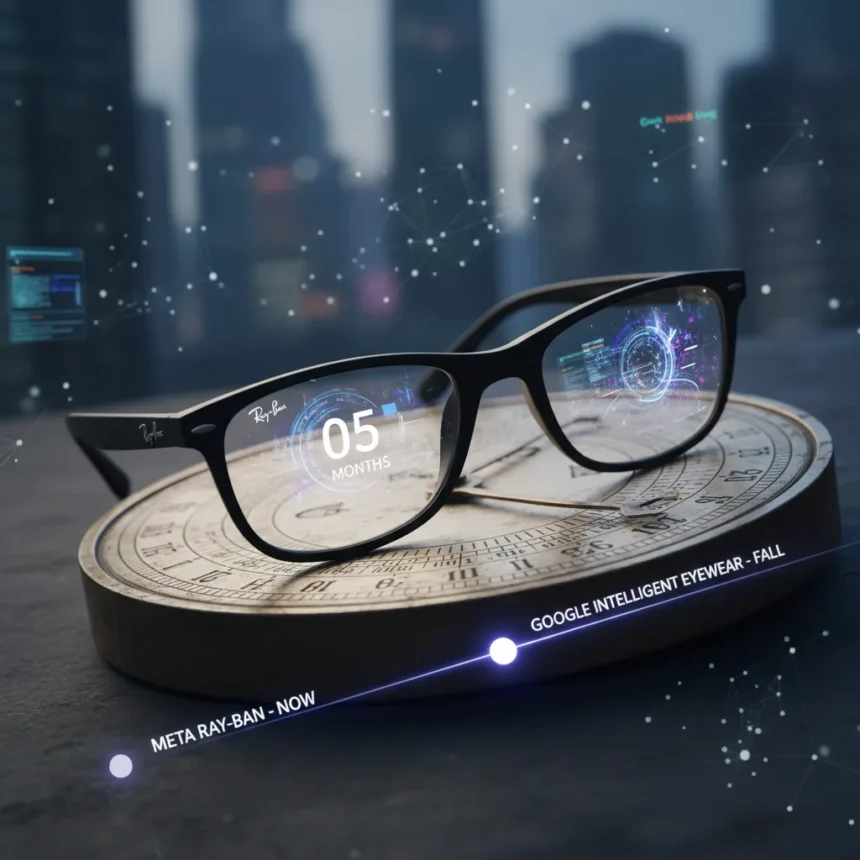
The smart glasses competition is heating up. Meta’s Ray-Ban glasses currently dominate the consumer AR space, but Google’s Intelligent Eyewear—unveiled at Google I/O—threatens to upend that advantage when it launches this fall. The window for Meta to strengthen its position is closing fast.
Key Takeaways
- Google’s Intelligent Eyewear is expected to launch this fall, creating direct competition with Meta’s Ray-Ban smart glasses.
- Meta has approximately five months to address feature gaps before Google’s product arrives.
- The competitive pressure reflects a broader shift toward AR glasses becoming mainstream consumer devices.
- Google’s entry into the smart glasses market could reshape expectations for what these devices should do.
- Feature parity and user experience will determine which platform wins early adoption.
Why Google’s Entry Changes Everything for Meta
Google’s move into smart glasses represents a genuine competitive threat to Meta’s Ray-Ban line. Google brings formidable AI capabilities, deep integration with Android and its broader ecosystem, and the resources to iterate rapidly. For Meta, this is not a distant threat—it is a five-month sprint to ensure Ray-Ban glasses remain the category leader when Google ships. The stakes are high because first-mover advantage in AR glasses could define the next computing platform.
Meta’s current Ray-Ban smart glasses have established a foothold in the market, but they are not without gaps. Google’s Intelligent Eyewear will likely expose these weaknesses immediately upon launch. Consumers comparing the two will demand feature parity, better performance, and clearer reasons to choose one ecosystem over the other. If Meta waits until after Google launches to respond, it risks ceding momentum to a competitor with superior resources and brand recognition in consumer electronics.
The Feature Gaps Meta Must Close
The research brief identifies that Meta should address exactly three specific areas before Google’s fall launch, though the full details of those three improvements are not available in the source material. What is clear from the competitive analysis is that Meta needs to focus on the features that matter most to everyday users—not just technical specifications that appeal to early adopters.


The urgency stems from Google’s demonstrated capability to deliver polished hardware and software experiences. When Google enters a category, it typically brings thoughtful design and deep software integration that smaller competitors struggle to match. For Ray-Ban smart glasses, this means Meta cannot afford incremental improvements; it needs meaningful feature additions that justify the device’s presence on your face.
What Google’s Intelligent Eyewear Means for the Market
Google’s entry legitimizes smart glasses as a category worth serious investment. Apple has been conspicuously absent from the smart glasses race, focusing instead on Vision Pro spatial computing. Meta has owned the consumer smart glasses space by default. Google’s Intelligent Eyewear changes that calculus entirely.



The competitive dynamic also raises expectations across the board. Consumers will compare Google’s glasses not just to Ray-Ban but to whatever Apple eventually releases. This three-way competition—Meta, Google, and eventually Apple—will accelerate feature development and force all players to deliver genuine utility, not just novelty. The smart glasses competition will no longer be about who can build the device; it will be about who builds the most useful, integrated, and desirable device.
Meta’s Five-Month Window: Use It or Lose It
Five months is both a long time and no time at all in consumer tech. For Meta, it is enough runway to implement meaningful software improvements, optimize existing features, and potentially introduce new capabilities that differentiate Ray-Ban glasses from whatever Google launches. It is not enough time for a complete hardware redesign, but software and firmware updates can move quickly if prioritized.
The critical question is whether Meta’s leadership recognizes the urgency. Waiting to respond after Google’s fall launch would be a strategic mistake. By then, early reviews will have established Google’s product in the minds of consumers, and Meta will be playing catch-up. Proactive improvements now—announced or rolled out before Google’s launch—keep Meta in the conversation as the category leader rather than the incumbent being challenged.
Is Google’s Intelligent Eyewear a real threat to Ray-Ban glasses?
Yes. Google has the resources, AI expertise, and ecosystem reach to build a compelling smart glasses product. If Google’s Intelligent Eyewear delivers superior features or tighter integration with Android and Google services, it could quickly capture market share from Meta. The threat is not hypothetical—it is immediate and concrete.



What features should Meta prioritize in the next five months?
The source material identifies three specific areas but does not detail them fully. Generally, Meta should focus on features that deliver daily utility: better AI integration, improved camera performance, longer battery life, or deeper social and communication capabilities. Whatever Meta chooses, it must be meaningful enough to justify upgrading or choosing Ray-Ban over Google’s alternative.
When will Google’s Intelligent Eyewear actually launch?
Google’s Intelligent Eyewear is expected to launch this fall, though an exact date has not been confirmed. This timeline gives Meta a defined deadline for improvements—roughly five months from the time of the original analysis. The fall launch window means Google will likely announce final specs and pricing in the weeks before availability.
The smart glasses competition is no longer theoretical. Google’s entry into the market with Intelligent Eyewear forces Meta to act decisively over the next five months. If Meta rises to the challenge and delivers meaningful improvements to Ray-Ban glasses before Google launches, it can defend its position as the category leader. If Meta hesitates or underestimates the threat, Google could reshape the smart glasses landscape entirely. The next five months will determine whether Meta’s Ray-Ban glasses remain the default choice for consumers or become just another option in a crowded field.
Edited by the All Things Geek team.
Source: Tom's Guide