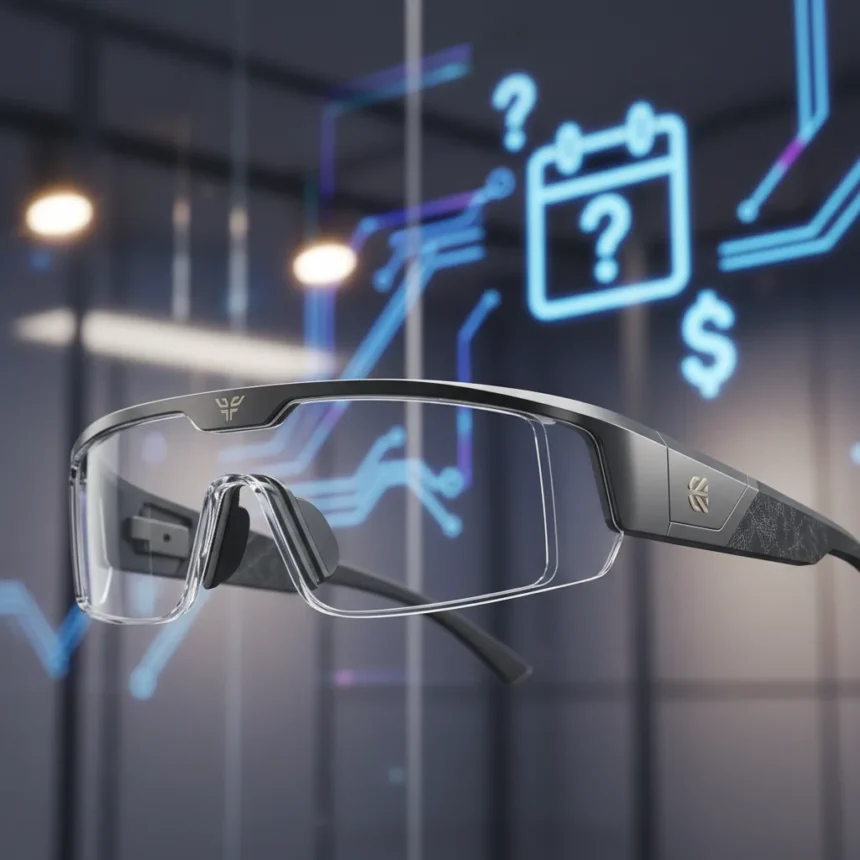
Samsung Android XR glasses finally have a public face, thanks to partnerships with Warby Parker and Gentle Monster, but the company revealed almost nothing about when you can actually buy them or what they will cost. Samsung showed off the eyewear as part of its Android XR platform strategy, positioning premium smart glasses as a direct challenge to Meta’s Ray-Ban collaboration. Yet the announcement left the most critical consumer questions entirely unanswered.
Key Takeaways
- Samsung Android XR glasses were publicly shown with Warby Parker and Gentle Monster as design partners.
- No launch date or pricing information was disclosed at the reveal.
- The glasses represent Samsung’s push into premium wearable XR hardware alongside Google’s Android XR platform.
- Two distinct design directions are being explored: a screen-free version and a display-equipped variant.
- Warby Parker is expected to deliver its first AI glasses in 2026, according to separate announcements.
What Samsung Actually Showed Us About the Android XR Glasses
Samsung pulled back the curtain on its Android XR glasses project, revealing that the company is pursuing two distinct hardware approaches rather than a single unified product. One version strips away the display entirely, relying instead on speakers, microphones, and an integrated camera for interaction. The other direction includes a small in-lens display, blending the optical clarity of traditional eyewear with subtle digital information. Neither approach is a finished consumer product—both remain development showcases designed to demonstrate Samsung’s vision for how premium smart glasses should work.
The partnership structure tells you something important about Samsung’s strategy. Warby Parker brings optical expertise and consumer retail reach, positioning the glasses toward mainstream buyers who expect both style and function from their eyewear. Gentle Monster, the South Korean luxury fashion brand, elevates the aesthetic and targets a more design-conscious, premium segment. This split approach suggests Samsung is not betting on a single market but rather building a platform flexible enough to serve both the practical everyday user and the fashion-first consumer willing to pay for premium positioning.
Why the Missing Details Matter More Than the Design
Here is what Samsung did not tell you: when these glasses will ship, what they will cost, or whether they will be available globally or in specific markets first. The headline writes itself—a major technology company shows off a major product category but withholds the two pieces of information that determine whether anyone actually buys it. This is not accidental. Samsung is clearly still working through the engineering, supply chain, and pricing strategy. Releasing partial information now keeps the brand in the conversation while buying time to sort out manufacturing and market positioning.


Compare this to Meta’s approach with Ray-Ban smart glasses, which launched with clear pricing, availability, and feature sets from day one. Meta has sold its smart glasses in multiple markets, refined the product through iterations, and built genuine consumer awareness. Samsung’s reveal, by contrast, feels like a design exercise that may or may not become a real product. The company is asking consumers and press to get excited about form factor and partnership without any concrete path to ownership.
The 2026 Timeline: What We Think We Know
Separate announcements from Warby Parker and Google suggest a 2026 delivery window for at least the Warby Parker variant of the Android XR glasses. Google, which owns the Android XR platform that powers these devices, previously indicated its own AI glasses family would arrive in 2026. But Samsung has not confirmed this timeline for its own products, and the company’s silence on pricing leaves open the possibility that the glasses could launch at a price point that excludes most consumers or at a date that slips further into the future.



The Warby Parker connection is significant here. Warby Parker has built its brand on making eyewear accessible through direct-to-consumer sales and transparent pricing. If Warby Parker is involved in bringing these glasses to market, expect the company to push for clear communication about cost and availability—that is how Warby Parker operates. Samsung’s reticence may reflect disagreement over how much information to share, or it may simply mean Samsung is not ready to commit to anything yet.
Samsung Android XR Glasses vs. the Competition
The smart glasses market is still nascent, with Meta Ray-Ban glasses as the only mainstream option currently available to consumers. Meta’s offering focuses on practical features: video recording, photo capture, hands-free calling, and music playback. The Samsung Android XR glasses, based on what has been shown, take a more exploratory approach—one version drops the display entirely, betting that voice and spatial audio are enough for interaction, while the other explores minimal in-lens displays that do not obstruct the wearer’s view.
This is a legitimate design philosophy, and it may prove more practical than competitors’ approaches. But without pricing, availability, or a launch date, Samsung is asking the market to evaluate a concept rather than a product. Meta won that conversation by shipping first and iterating in public. Samsung is still in the lab.
What Comes Next for Samsung’s XR Ambitions
Samsung’s silence suggests the company is still navigating the hardware and software challenges that come with wearable XR. Building smart glasses that look like normal eyewear while handling AI processing, camera input, audio, and wireless connectivity is genuinely difficult. Doing it at a price point that does not require a premium of several hundred dollars over regular glasses is even harder. Samsung is clearly not ready to answer those questions publicly, and rushing an announcement without that clarity would be worse than waiting.


The partnership with Warby Parker and Gentle Monster is Samsung’s way of signaling that it is serious about this category and that it understands the importance of design and brand heritage in eyewear. But a partnership announcement without a product launch date is marketing theater. Consumers do not buy partnerships—they buy products at prices they can afford, delivered when they can actually order them.
Will Samsung Android XR glasses actually launch in 2026?
Based on Warby Parker’s separate statements, a 2026 launch is plausible for at least one variant of the Samsung Android XR glasses. However, Samsung itself has not confirmed this date, and the company’s reluctance to share details suggests delays are possible. The 2026 window should be treated as an aspiration rather than a guarantee.
How much will Samsung Android XR glasses cost?
Samsung has not disclosed pricing for its Android XR glasses. Warby Parker’s existing eyewear ranges from $95 to $295 for frames alone, but smart glasses with integrated cameras, speakers, and processors will cost significantly more. Expect a premium price point, likely several hundred dollars, but Samsung has not confirmed any figure.
Are Samsung Android XR glasses available to buy now?
No. Samsung showed prototypes and design concepts, but the Android XR glasses are not available for purchase. The company has not announced a pre-order window, availability date, or which markets will receive them first. You cannot buy them today, and Samsung is not saying when you will be able to.
Samsung’s Android XR glasses reveal was a masterclass in showing without telling. The company demonstrated that it understands smart eyewear design and that it can partner with respected brands to build credibility in the category. But without a launch date, a price, or a clear product roadmap, the announcement amounts to a design study. Samsung needs to move from concept to commitment—and soon, before the market decides that someone else has already won the smart glasses race.
Edited by the All Things Geek team.
Source: TechRadar