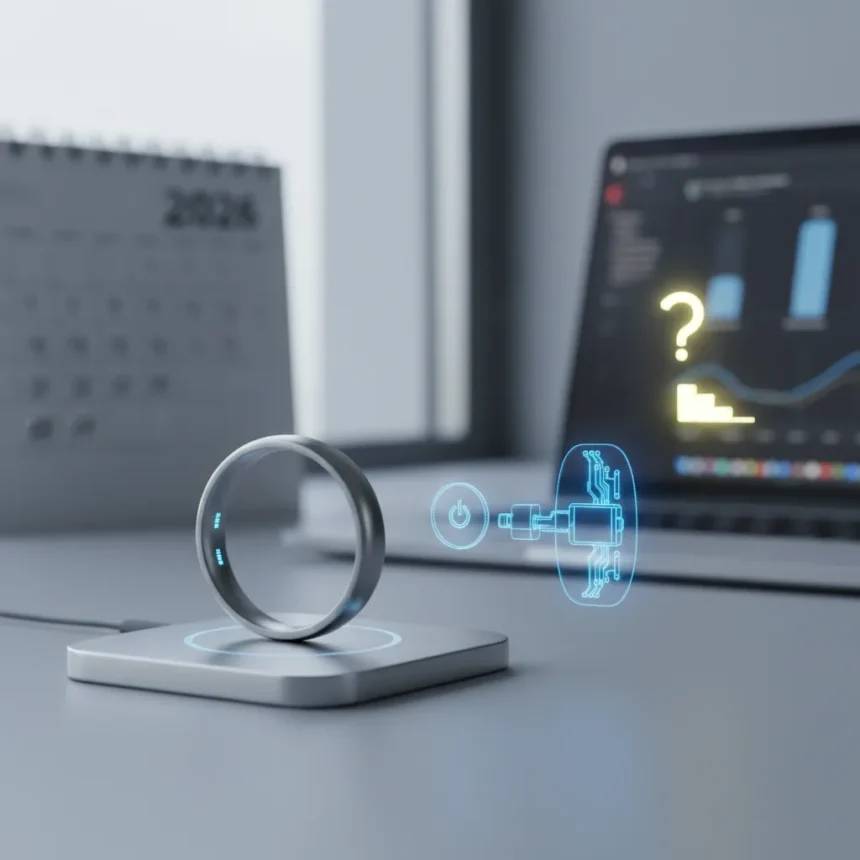
The Oura Ring 5 is Oura’s next-generation smart ring, reportedly set to launch in mid-2026 with a significantly smaller and thinner design than its predecessor. According to leaked internal documentation posted on Reddit, the Oura Ring 5 will be announced on May 28, 2026, with shipping beginning June 5, 2026. The device is described as “Oura’s newest, smaller, and more comfortable ring, designed to keep the same health-tracking capabilities and membership features members know from the Oura Ring 4″.
Key Takeaways
- Oura Ring 5 leaks suggest a smaller, thinner design launching in mid-2026 with preserved health-tracking features
- The Oura Ring 4 weighs 3.3 to 5.2 grams and delivers five to eight days of battery life per charge
- Shrinking the Ring 5 raises legitimate concerns about battery endurance, a persistent weakness in smart rings
- Oura membership costs $5.99 per month or $72 per year, with no subscription required for competing rings like Samsung Galaxy Ring
- Smart rings lack displays and GPS, limiting them compared to fitness watches for advanced workout tracking
Why Size Matters in the Smart Ring Wars
Oura’s shift toward a smaller form factor reflects a strategic bet: that comfort and wearability trump raw feature count. The Oura Ring 4, Oura’s current flagship, is made entirely of titanium and weighs between 3.3 and 5.2 grams depending on size. Despite its durability, some users find even this generation uncomfortable for all-day wear. A smaller Oura Ring 5 would address this pain point directly, making the device less noticeable on the finger and reducing the chance of snagging on clothing or catching during sleep.
This design philosophy puts Oura in direct competition with Samsung’s Galaxy Ring, which launched at $399 and deliberately avoids a monthly subscription requirement. Samsung prioritized accessibility and low friction—no membership paywalls, no ongoing costs. By shrinking the Oura Ring 5 while maintaining health-tracking features, Oura is tacitly acknowledging that design discretion matters as much as sensor sophistication in winning over skeptical consumers.
The Battery Life Problem Oura Cannot Ignore
Here is the uncomfortable truth: making a smart ring smaller almost always means sacrificing battery capacity. The Oura Ring 4 already delivers only five to eight days per charge, which is respectable but not exceptional. If Oura reduces the physical footprint of the Ring 5 to improve comfort, the battery will shrink proportionally unless the company invents a revolutionary new cell chemistry—something no smart ring manufacturer has achieved.


The leaked documentation does not specify the Oura Ring 5’s expected battery life, which is telling. Oura likely knows this is a weak point and is avoiding the conversation until launch. Compare this to the Ultrahuman Ring Pro, a competing smart ring that emphasizes battery endurance as a core selling point. If Oura Ring 5 drops to three or four days per charge due to its smaller size, the device becomes a daily charging obligation—exactly what makes smartwatches feel burdensome to many users.
What the Oura Ring 5 Keeps From Its Predecessor
The Oura Ring 4 tracks steps, calories, sleep, heart rate, skin temperature, and oxygen saturation, along with advanced metrics like stress measurement and cardiovascular age. The leaked Oura Ring 5 documentation promises to preserve these health-tracking capabilities and membership features. This means the Ring 5 will still require a $5.99 monthly or $72 annual subscription, a recurring cost that Samsung Galaxy Ring users avoid entirely.



The Oura Ring 4 is also up to 120% more accurate in certain respects than the Oura Ring 3, establishing a high bar for sensor performance. If Oura Ring 5 maintains this accuracy while shrinking the physical hardware, that would be a genuine engineering accomplishment. But it raises the question: can the company compress more capable sensors into a thinner form factor without introducing new blind spots? The answer remains unknown until the device ships.
Is the Oura Ring 5 Worth the Wait?
Smart rings occupy a unique niche in the wearable market. Unlike smartwatches or fitness trackers, they have no displays and cannot run apps or show real-time data on your wrist. This makes them ideal for users who want passive health monitoring without the constant notifications and screen time that watches encourage. The Oura Ring 5 will appeal to this exact demographic—people willing to trade convenience for subtlety.
The timing matters too. Oura is launching in a market where Samsung has already proven that smart rings can reach mainstream consumers. The Ultrahuman Ring Pro is competing on battery life and advanced features. Oura’s response is to optimize for comfort and wearability, a defensible strategy if the Ring 5 does not sacrifice too much battery endurance in the process. The May 2026 launch date gives Oura time to refine the design and address battery concerns before shipping begins in June.
How does the Oura Ring 5 compare to the Oura Ring 4?
The Oura Ring 5 is designed to be smaller and thinner than the Ring 4, which currently weighs 3.3 to 5.2 grams and delivers five to eight days of battery life. The Ring 4 features an all-titanium design and recessed sensors. The Ring 5 will preserve the same health-tracking and membership features as the Ring 4, but the smaller footprint raises concerns about battery capacity.



Do I need a subscription for the Oura Ring 5?
Yes, the Oura Ring 5 will require a membership, consistent with the Oura Ring 4. Oura’s membership costs $5.99 per month or $72 per year. This is a key difference from the Samsung Galaxy Ring, which costs $399 and does not require any subscription.
When will the Oura Ring 5 launch?
According to leaked documentation, the Oura Ring 5 is scheduled to be announced on May 28, 2026, with pre-orders starting the same day and shipping beginning June 5, 2026. These dates have not been officially confirmed by Oura and should be treated as unverified until the company makes an official announcement.
The Oura Ring 5 represents Oura’s bet that smaller is better—at least in the world of wearables. If the company can deliver a genuinely comfortable ring without gutting battery life, it could reclaim the momentum it has lost to Samsung and Ultrahuman. But if shrinking the device means charging every other day, the Ring 5 will struggle to justify its $72 annual subscription cost. The next six months will reveal whether Oura has solved this fundamental tension or simply traded one problem for another.
Edited by the All Things Geek team.
Source: Tom's Guide